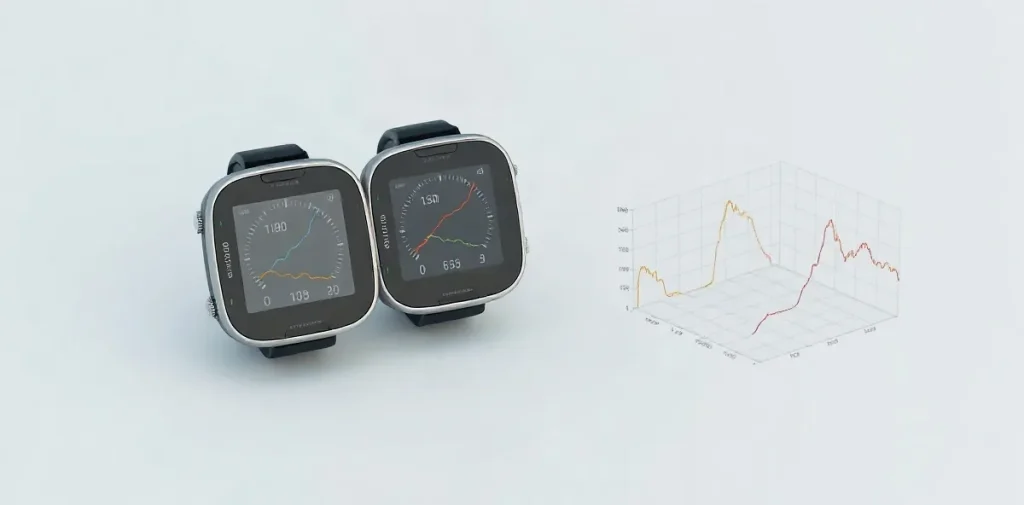
Diving computer variability is the difference in decompression guidance that instruments may display for the same dive. It matters because a computer turns depth and time into a model-based estimate of inert-gas loading; understanding that estimate helps divers interpret limits, plan conservatively and avoid treating one display as a guarantee.
Why can computers interpret the same dive differently?
A dive computer records pressure over time and uses that profile to estimate how inert gas moves into and out of body tissues. The calculation is not a direct measurement of nitrogen or helium in a diver’s body. It is a model of physiological processes, built from assumptions about gas uptake, elimination and acceptable decompression risk.
Manufacturers can use different decompression models, settings and implementation choices. Even when two devices receive similar depth-and-time information, their calculations can produce different no-decompression limits or ascent guidance. Differences may also reflect user-selected conservatism, gas settings, altitude settings or how a device handles details of a changing profile.
What does a decompression model represent?
Models simplify a complex process: inert gas dissolves in tissues under pressure and leaves them as ambient pressure falls. Tissue compartments are mathematical constructs with different assumed rates of gas uptake and elimination. They help a computer estimate whether a planned ascent remains within its chosen limits; they are not literal compartments that can be inspected inside an individual diver.
Decompression theory has developed through mathematical modelling, laboratory work, operational experience and clinical observation. No model can capture every source of individual variation, including differences in physiology, exertion, thermal conditions and prior dive exposure. A displayed limit should therefore be understood as guidance within a model, not as a sharp boundary separating safe from unsafe diving.
How do researchers compare computer guidance?
Research into variability can compare how instruments or algorithms process matched dive profiles. A controlled comparison may examine displayed no-decompression time, decompression stops, ascent instructions or the point at which a device signals a limit. Researchers also need to account for settings, breathing gases, units and profile details so that the comparison is meaningful.
Another question is what a difference means in practice. A longer displayed limit is not, by itself, evidence that one computer is safer or more accurate. That judgement depends on the model’s assumptions, the outcome being assessed and the conditions of use. Comparing outputs can reveal disagreement between tools; assessing physiological risk requires a broader evidence base.
- Algorithm: the rules and calculations used to convert a dive profile into decompression guidance.
- Conservatism setting: a user-adjustable choice that can make a computer apply more restrictive limits.
- Profile: the sequence of depth and time during a dive, including changes such as pauses or ascents.
- Decompression obligation: a requirement for staged ascent or stops under the model being used.
Why does variability matter to divers and clinicians?
For divers, differences between devices can affect planning, ascent decisions and how a team coordinates its dive. If people rely on different computers, they should agree in advance how they will manage a discrepancy rather than assume the displays will match. A computer’s alert or limit is specific to its settings and recorded profile.
Diving physicians and hyperbaric clinicians also need to understand what a computer can and cannot establish. A device can provide a useful record of exposure and decompression, but it does not diagnose decompression illness or replace clinical assessment. Symptoms after diving call for appropriate medical evaluation; suspected decompression illness should be managed with diving-medicine professionals.
How should you use a computer’s guidance?
Know the model and settings you use, and check that the selected gas and other relevant inputs are correct. Follow the training and procedures that apply to your diving, and do not treat a permissive display as a reason to exceed a plan or ignore symptoms. When a team uses different devices, discuss the most conservative practical response before entering the water.
Variability is not a defect that can be judged from a single number. It is a reminder that decompression guidance depends on a model, settings and a particular dive history. For questions about personal risk, medical fitness or symptoms, consult a diving-medicine physician.
Frequently asked questions
Can two dive computers give different limits on the same dive?
Does a more permissive computer mean a dive is safe?
What should a team do when its computers disagree?
An original research-library explainer written by the Rubicon editors. It is not a summary of a specific publication.