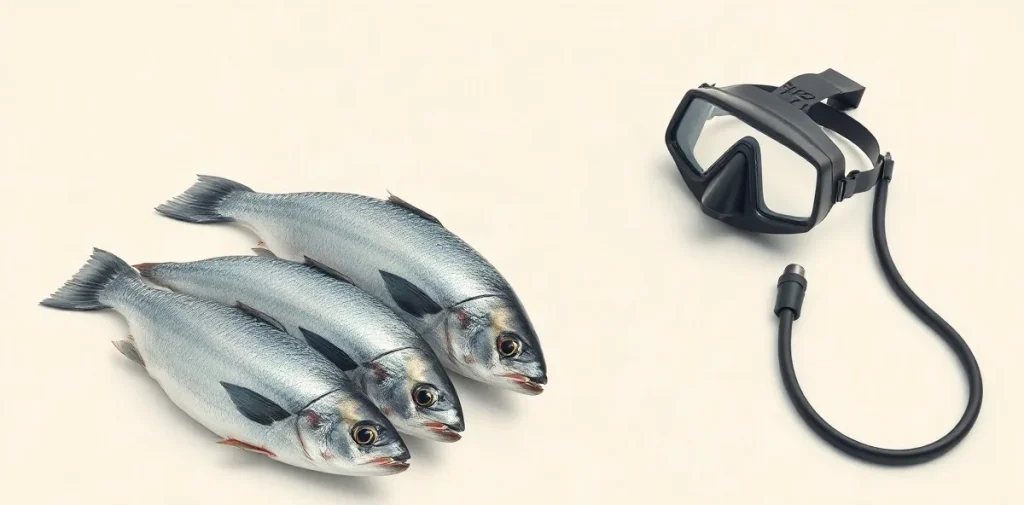
Scombroid fish poisoning is a foodborne illness caused by histamine in improperly handled fish. Its rapid, allergy-like symptoms can become a practical concern around diving: illness may impair a diver, complicate assessment of symptoms after a dive, and raise questions about treatment, including the role of cimetidine.
How does histamine poisoning happen?
Some fish contain the amino acid histidine. If the fish is not kept cold after capture, bacteria can convert histidine into histamine. Histamine is heat-stable, so cooking does not reliably make contaminated fish safe; the problem is not simply whether the fish has been cooked.
Histamine can cause flushing, headache, itching, a rash, palpitations, and gastrointestinal symptoms. The presentation can resemble an allergic reaction, although the mechanism is different: scombroid poisoning follows exposure to histamine already present in the food, rather than an immune response that produces histamine in the body.
Why is cimetidine part of the question?
Histamine acts through several receptor types. H1 receptors are involved in many familiar allergy-like effects, while H2 receptors contribute to effects including stomach acid secretion. Cimetidine blocks H2 receptors and is best known as a medicine that reduces acid production in the stomach.
That pharmacology makes cimetidine relevant to questions about histamine-mediated illness, but it does not make the medicine a general antidote. Research in this area asks how H2 blockade might fit alongside other approaches to symptoms, and how that role compares with the effects of histamine at other receptors. Treatment decisions depend on the clinical picture, not on the drug’s mechanism alone.
What makes the diagnosis difficult around diving?
A diver who becomes flushed, itchy, dizzy, or nauseated after eating fish may have scombroid poisoning, an allergic reaction, or another cause of illness. Timing, the meal, symptoms in other people who ate the same fish, and the diver’s recent exposures all help clinicians assess the possibilities. A similar symptom does not establish a shared cause.
After diving, headache, nausea, weakness, or unusual sensations also demand attention to the dive itself and other medical causes. The priority is to assess the diver’s condition and the circumstances, rather than assume that a meal explains every symptom. If symptoms are severe, worsening, or include breathing difficulty or collapse, seek urgent medical care.
What does research in this area examine?
Studies of foodborne histamine illness can examine the route from fish handling to symptoms, the clinical pattern, and how treatments act on histamine pathways. Work on a medicine such as cimetidine addresses a narrower question: whether blocking H2 receptors has a useful place in managing an illness whose effects involve more than one pathway.
For diving medicine, the broader interest is practical. Clinicians need to distinguish a food-related illness from dive-related illness, judge whether a diver is fit to enter the water, and consider how symptoms or medication could affect safe participation. The relevant questions include:
- Exposure: What fish was eaten, how was it stored, and did others who shared the meal become ill?
- Clinical pattern: When did symptoms start, what systems are affected, and are there signs of a severe reaction?
- Dive context: Did symptoms begin before, during, or after a dive, and could another dive-related problem account for them?
- Drug role: Which histamine effects might H2 blockade address, and what symptoms require other assessment or treatment?
What should divers and clinicians keep in mind?
Preventing the illness depends on proper handling and cold storage of susceptible fish. Divers should not enter the water while acutely unwell: flushing, dizziness, vomiting, or weakness can interfere with judgment and physical performance, and can make an emergency underwater harder to manage.
Medication questions belong in a clinical assessment. A diving-medicine physician can consider the illness, its severity, the treatment being used, and the demands of the planned dive before advising when a return to diving is appropriate.
Frequently asked questions
Is scombroid poisoning the same as a fish allergy?
Does cooking remove the risk?
Can a diver return to diving after an episode?
An original research-library explainer written by the Rubicon editors. It is not a summary of a specific publication.