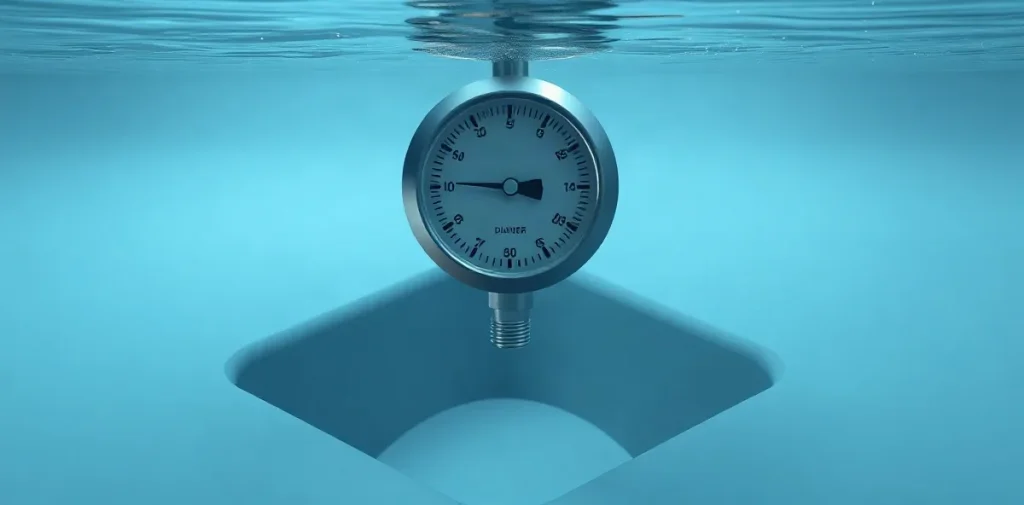
Nitrogen narcosis is a reversible change in thinking, perception and coordination that can occur while breathing compressed gas underwater. Its effects matter because impaired judgment can make a diver less able to respond to hazards, follow a plan or help a teammate, especially at depth.
What happens during nitrogen narcosis?
As a diver descends, ambient pressure rises and the partial pressure of nitrogen in the breathing gas increases. Nitrogen has anaesthetic effects on the nervous system under pressure; the resulting changes can include reduced attention, slower reasoning, altered mood and poorer coordination.
Narcosis is not the same as oxygen toxicity or decompression illness. It is associated with the pressure-dependent effects of inert gases, and it generally lessens as the diver ascends and pressure falls. The experience can vary between dives and between people, so a diver may not reliably recognise impairment in the moment.
Why does depth change the risk?
For a given breathing-gas mixture, descending increases the partial pressure of each constituent gas. That makes depth a central factor in nitrogen narcosis, while the gas mixture also matters: replacing some nitrogen with helium is one way technical divers reduce narcosis during deep dives.
Depth is not the only influence on performance. Workload, stress, fatigue, cold, poor visibility and task complexity can all make it harder to notice or compensate for impaired thinking. A dive that feels manageable in calm conditions may demand more attention when several problems occur together.
How is narcosis assessed underwater?
There is no simple field test that gives a diver a dependable measure of impairment during a dive. Divers and researchers may consider observable changes in task performance, communication, judgment or coordination, but these signs are not a precise gauge of an individual’s level of narcosis.
Studies of narcosis examine how pressure, breathing gases and task demands relate to cognitive and motor performance. This work sits alongside broader research into gas physiology, deep diving and human factors: the practical concern is not only whether a gas has anaesthetic effects, but how those effects interact with real underwater tasks.
- Partial pressure: the pressure contributed by one gas in a breathing mixture; it rises with ambient pressure.
- Inert gas: a gas that does not normally support metabolism, such as nitrogen or helium.
- Task loading: the combined mental and physical demands placed on a diver.
- Gas planning: choosing a breathing mixture and depth limits appropriate to the dive.
How do divers reduce the operational hazard?
Planning is the main safeguard: divers choose depth limits, gas mixtures and procedures suited to the dive, then avoid treating a familiar depth as automatically safe. A controlled ascent can reduce pressure-related narcosis, but it does not replace a planned response to an emergency or resolve every other cause of impaired performance.
Teams can also reduce avoidable task loading through clear procedures, practiced communication and sensible workload management. If you suspect narcosis in yourself or another diver, follow the team’s training and dive plan; a diving-medicine physician should assess persistent or unexplained symptoms after the dive.
How does this relate to hyperbaric medicine?
Nitrogen narcosis is primarily a concern of compressed-gas diving, where elevated ambient pressure changes the effects of inspired gases. Hyperbaric medicine also considers how pressure and gas exposure affect the body, but narcosis should not be confused with treatment complications or decompression disorders.
For diving physicians and hyperbaric clinicians, the subject connects acute changes in cognition with exposure conditions and operational safety. For scientific divers, the same issue affects whether complex observations, instrument use and record-keeping remain reliable at depth.
Frequently asked questions
Does nitrogen narcosis affect every diver in the same way?
Does narcosis continue after a diver ascends?
Can a diver diagnose narcosis in a teammate?
An original research-library explainer written by the Rubicon editors. It is not a summary of a specific publication.
Related reading on Rubicon
- Common Misconceptions About Nitrogen Narcosis and Safety
- How Pressure Amplifies Nitrogen Narcosis Effects on Divers
- Understanding Nitrogen Narcosis: Depth, Effects, Prevention
- The Diving Reflex: What Happens Underwater
- Nitrogen Narcosis in Diving
- Repeated Hyperbaric Exposure and Nitrogen Narcosis
- More on Dive Medicine
- Browse the Research Library