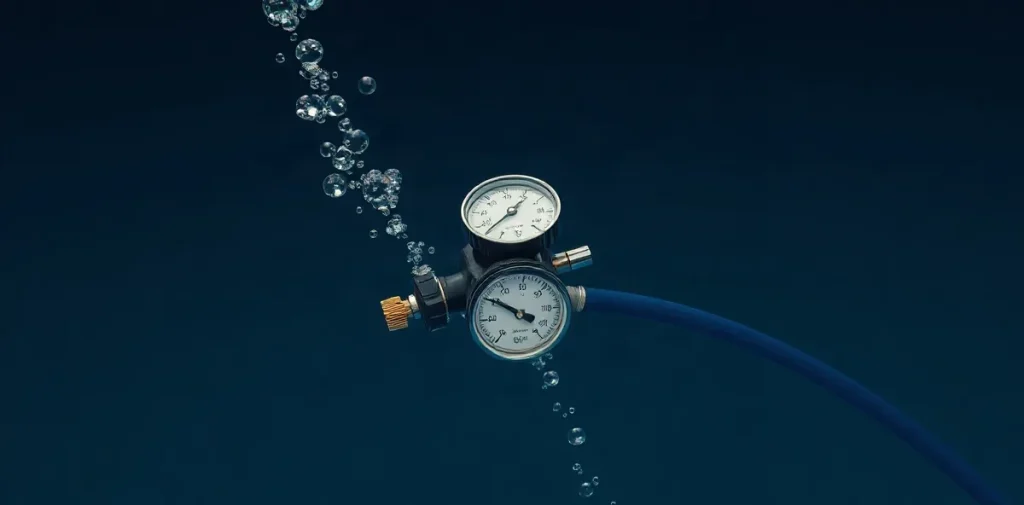
Diving and asphyxia research examines how breathing can fail or become ineffective underwater, and how oxygen deprivation affects the body. It connects the mechanics of breathing and gas supply with the physiology of hypoxia, the medical consequences of asphyxia, and the practical problem of recognising danger before a diver loses consciousness.
What does asphyxia mean in diving?
Asphyxia describes a state in which the body cannot obtain or use enough oxygen, often because ventilation is blocked or inadequate. In diving, the route to that state matters: a diver may be unable to breathe, may breathe gas with insufficient oxygen, or may have breathing impaired by a medical or equipment problem.
Hypoxia is the resulting shortage of oxygen at the tissues. It can impair judgement and coordination, then cause confusion, loss of consciousness and, if the problem continues, life-threatening injury. Carbon dioxide also matters: inadequate ventilation can allow it to accumulate, adding distress and affecting the diver’s ability to respond.
Why does the underwater setting change the problem?
Underwater, a diver depends on a breathing system that must deliver gas at the surrounding pressure. A problem that might be manageable at the surface can become urgent when the diver cannot reach air freely, is task-loaded, or must make a controlled ascent. The environment also complicates rescue and assessment.
Breathing is not simply a matter of having gas available. The diver must be able to move it through the airways and lungs, while the equipment supplies a suitable breathing mixture at the right pressure. Understanding asphyxia therefore brings together respiratory physiology, gas supply, equipment function and the circumstances of the dive.
What questions do researchers examine?
Research in this area can ask how oxygen deprivation develops, how quickly it affects brain and body function, and which physiological signs may signal deterioration. It can also examine how ventilation, oxygen availability, carbon dioxide retention and surrounding pressure interact under controlled conditions.
Methods depend on the question and may include physiological measurements, controlled laboratory exposures, clinical observation or analysis of diving incidents. Researchers must distinguish the effect of reduced oxygen from other stresses, such as increased carbon dioxide, exertion or pressure. In human research, safety and ethical limits are central: dangerous exposures cannot be treated as routine tests.
- Ventilation: movement of air or breathing gas into and out of the lungs.
- Hypoxia: inadequate oxygen reaching body tissues.
- Hypercapnia: excess carbon dioxide in the blood, often associated with inadequate ventilation.
- Gas delivery: the supply of breathable gas through equipment under the pressure conditions of a dive.
How does this field relate to other diving research?
Asphyxia sits alongside several connected lines of diving research. Studies of gas mixtures and narcosis examine how breathing gases affect the nervous system; work on breathing equipment considers whether gas can be delivered reliably; and dive medicine addresses the consequences when physiology or equipment fails. These problems can overlap during an emergency, so separating their mechanisms is important.
The subject also has a long place in underwater and hyperbaric research because pressure changes the conditions in which breathing takes place. Laboratory and simulated-depth approaches can help isolate particular variables, while clinical and incident-based work can illuminate how multiple factors combine in practice. Neither approach removes the need to consider the diver, equipment and environment together.
What should divers and clinicians take from it?
For divers, the central lesson is that impaired breathing or gas delivery can quickly become a medical emergency. Recognising a problem and acting within training and established emergency procedures matter; a suspected episode of oxygen deprivation requires prompt attention, not an attempt to diagnose its cause underwater.
For diving physicians and hyperbaric clinicians, the research area helps frame questions about the event: what gas was available, whether ventilation was effective, what symptoms occurred, and how pressure and exertion may have contributed. Because similar symptoms can have different causes, assessment and treatment belong with clinicians experienced in diving medicine.
Frequently asked questions
Is asphyxia the same as hypoxia?
Can carbon dioxide be part of a breathing emergency?
Who should assess a suspected diving-related oxygen problem?
An original research-library explainer written by the Rubicon editors. It is not a summary of a specific publication.
Related reading on Rubicon
- Understanding the Physiology of Breath-Hold Diving
- The Science of Diving SSI: Education and Physiology Insights
- Diving Science: Physiology and Tech Behind Safe Dives
- The Physiology Behind Oxygen Toxicity in Deep Dives
- Physiology of Breath-Hold Diving: Research Summary
- Breath-Hold Diving Physiology and Japan’s Ama
- More on Dive Medicine
- Browse the Research Library