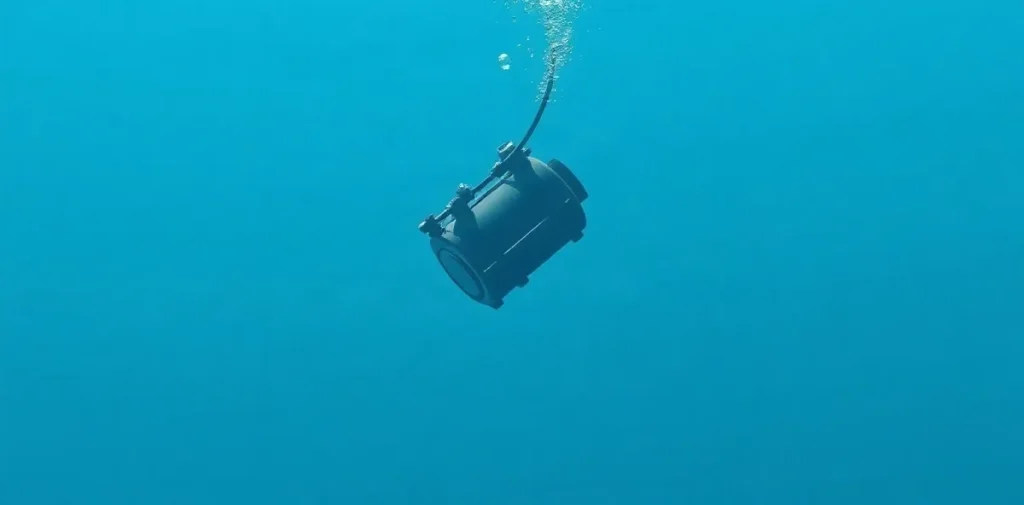
A buoyancy compensator is an inflatable device that lets a diver adjust buoyancy and maintain a chosen position in the water. Its use is closely tied to physiology: gas volume changes with depth, while breathing, exposure protection and carried equipment affect how much buoyancy control a dive requires.
How does a buoyancy compensator control position?
Adding gas to the compensator increases its volume and displacement, producing more upward force. Releasing gas reduces that force. The diver uses these adjustments alongside breathing and weighting to manage descent, hovering and ascent.
A stable hover is not simply a matter of adding air until the diver stops sinking. The compensator, exposure suit, cylinder and other equipment all contribute to buoyancy, and their effects change during a dive. A diver’s trim—the orientation of the body in the water—also affects movement and control.
Why does buoyancy change with depth?
Water pressure increases as a diver descends, compressing gas-filled spaces. The compensator becomes less buoyant as its gas volume shrinks; on ascent, the gas expands and buoyancy increases. These linked changes make buoyancy control a continuous task rather than a single adjustment at the surface.
Breathing also alters buoyancy. Inhaling expands the chest and increases displacement; exhaling reduces it. Divers can use small, ordinary breathing changes to refine a hover, but relying on large breaths to compensate for poor weighting or control can make depth management less predictable.
- Gas expansion: rising gas volume can increase buoyancy during ascent.
- Lung volume: breathing changes displacement and can shift a diver’s position.
- Weighting: too much or too little lead changes how much compensator gas is needed.
- Trim: body orientation influences stability, movement and access to the gas-release controls.
What does buoyancy control mean for dive physiology?
Buoyancy management influences the effort required to swim and hold depth. Poor control can lead to repeated corrections, unnecessary exertion or an unplanned ascent. Exertion matters because a diver’s breathing and gas use respond to workload, while an uncontrolled ascent can create pressure-related risks.
During ascent, expanding gas must be vented as needed to prevent buoyancy from increasing unchecked. Divers need to understand how their equipment releases gas in different orientations and to keep the release mechanism accessible. The details depend on the compensator design and the diver’s position in the water.
Which equipment and skills shape the task?
Compensators differ in their arrangement and operation, but the underlying task is the same: adjust buoyancy while keeping control of depth and body position. A diver must be familiar with the device’s inflation and release controls, how it behaves when full or nearly empty, and how to vent it while ascending.
Weighting and equipment configuration are part of that process. A suitable setup allows the diver to control buoyancy without carrying unnecessary lead or depending on a large volume of compensator gas. Training and practice help make adjustments deliberate, especially when a diver is task-loaded or working in limited visibility.
Why is this subject relevant to diving medicine?
Buoyancy control connects equipment use to the physiology of pressure exposure and breathing. It matters in recreational and scientific diving, and in clinical settings where divers’ health, fitness or ability to manage equipment may be part of a broader assessment. The same principles also inform research into workload, depth control and ascent behaviour.
Equipment problems, unfamiliar configurations and changes in a diver’s physical capacity can all affect control. Questions about fitness to dive, symptoms after a dive or a medical condition require individual assessment by a diving-medicine physician; general buoyancy guidance is not a substitute for that evaluation.
Frequently asked questions
Is a buoyancy compensator a substitute for correct weighting?
Why can buoyancy increase during ascent?
Can breathing alone control depth?
An original research-library explainer written by the Rubicon editors. It is not a summary of a specific publication.
Related reading on Rubicon
- How Buoyancy Control Devices Enhance Diver Safety
- Dive Medicine Primer: Essential Physiology Every Diver Knows
- Glossary of Essential Underwater Physiology Terms for Divers
- Why Divers Get Cold Faster Underwater
- Breath-Hold Diving Patterns and Diver Physiology
- Decompression Bubbles, Salmon and Diver Physiology
- More on Equipment
- Browse the Research Library