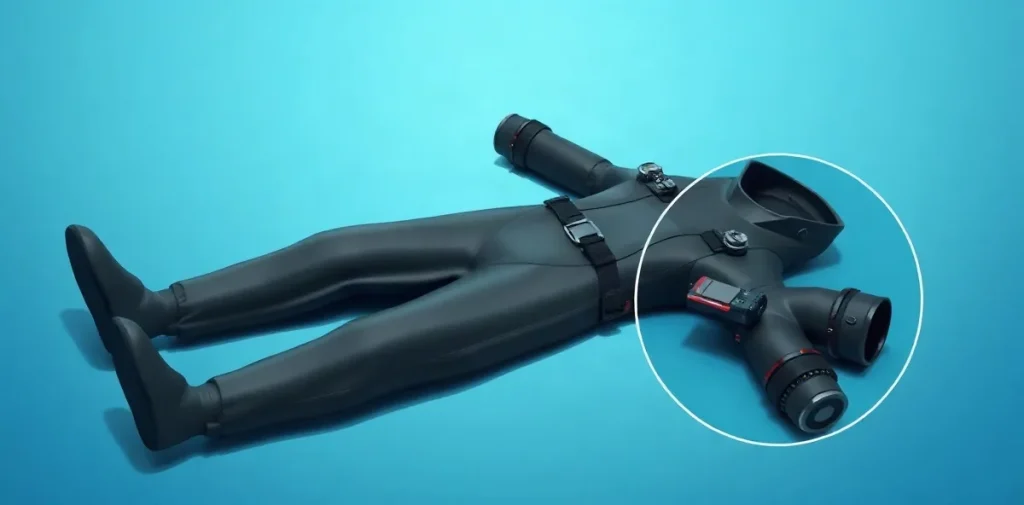
Dry suit surveys examine how commercially available suits are designed and how their features can be compared for diving use. The subject matters because a dry suit is both thermal protection and part of a diver’s life-support equipment: its fit, seals, valves and materials affect comfort, mobility and control underwater.
What does a dry suit survey examine?
A market survey sets out to describe and compare equipment available to divers. For dry suits, that means looking beyond the basic question of whether a suit keeps water out. Construction, materials, closure systems, neck and wrist seals, valves, pockets and options for insulating undergarments can all shape how a suit works in practice.
Such comparisons are useful because products can differ in design even when they serve the same broad purpose. A survey can organise those differences into features that divers, equipment specialists and researchers can assess, rather than treating “dry suit” as a single standardised design.
Why do fit and thermal protection matter?
A dry suit keeps water away from the body, but it does not generate heat. Thermal protection depends on the suit, the undergarment worn beneath it, the diver’s fit and the conditions of the dive. A suit that is too tight can restrict movement or compress insulation; excess material can make movement and buoyancy control more difficult.
Heat loss underwater can impair comfort, dexterity and judgment. Those effects matter to recreational divers as well as scientific divers, whose tasks may require sustained concentration and fine motor control. Suit choice therefore belongs alongside exposure protection planning, not just a checklist of product features.
How can suits be compared fairly?
Equipment assessment begins by separating observable design features from performance under defined conditions. A comparison might record materials and construction, then examine aspects such as fit, mobility, sealing and operation of valves. The method matters: a feature list can describe a suit, while controlled testing is needed to evaluate how it performs in a particular task or environment.
For a useful comparison, evaluators need consistent criteria and clear descriptions of test conditions. Results can depend on the wearer, undergarment, water temperature, depth, workload and maintenance state. A finding about one configuration should not automatically be treated as a verdict on every suit or every dive.
- Fit: whether the suit allows movement without excessive restriction or loose material.
- Seals and closures: how the design limits water entry and can be donned, removed and maintained.
- Valves: how inflation and exhaust controls support buoyancy management.
- Thermal system: how suit materials work with the chosen undergarment and dive conditions.
- Use and upkeep: how construction and components affect inspection, repair and routine handling.
How does suit design affect buoyancy and safety?
Gas added to a dry suit helps manage suit squeeze as ambient pressure rises, and the diver can vent gas during ascent. This gas changes buoyancy. Divers therefore need to understand their suit’s inflation and exhaust controls and practise using them; suit handling is part of buoyancy management, not a separate skill.
Fit and equipment condition also matter. A damaged seal, leaking closure or faulty valve can compromise the suit’s function, while excess gas can migrate and become difficult to control. Inspection, appropriate training and equipment configuration help address these risks. If a medical condition or cold exposure raises a health concern, consult a diving-medicine physician.
Where do equipment surveys fit in diving research?
Dry suit comparison belongs to the practical side of diving research: it connects equipment design with the human and environmental demands of underwater work. It complements research on thermal stress, buoyancy, gas management and diver performance. For scientific diving, those connections are especially relevant when equipment must support a task without obstructing movement or attention.
A survey is a starting point for asking better questions, not a universal ranking. Divers choosing equipment can use comparisons to identify relevant design differences, then check manufacturer guidance, servicing requirements and suitability for their own training and conditions. The right choice depends on the diver, the task and the complete exposure-protection system.
Frequently asked questions
Does a dry suit keep a diver warm by itself?
Why compare dry suit features if all suits keep water out?
Can a market comparison identify the best suit for every diver?
An original research-library explainer written by the Rubicon editors. It is not a summary of a specific publication.
Related reading on Rubicon
- Scuba Diving Equipment: Essential Gear for Every Diver
- How to Safely Maintain and Use Scuba Diving Equipment
- Shark Cage Diving Equipment and Safety for Close Encounters
- The Diving Reflex: What Happens Underwater
- Argon as Diving Suit Inflation Gas
- Atmospheric Diving Suits: Research Summary
- More on Equipment
- Browse the Research Library