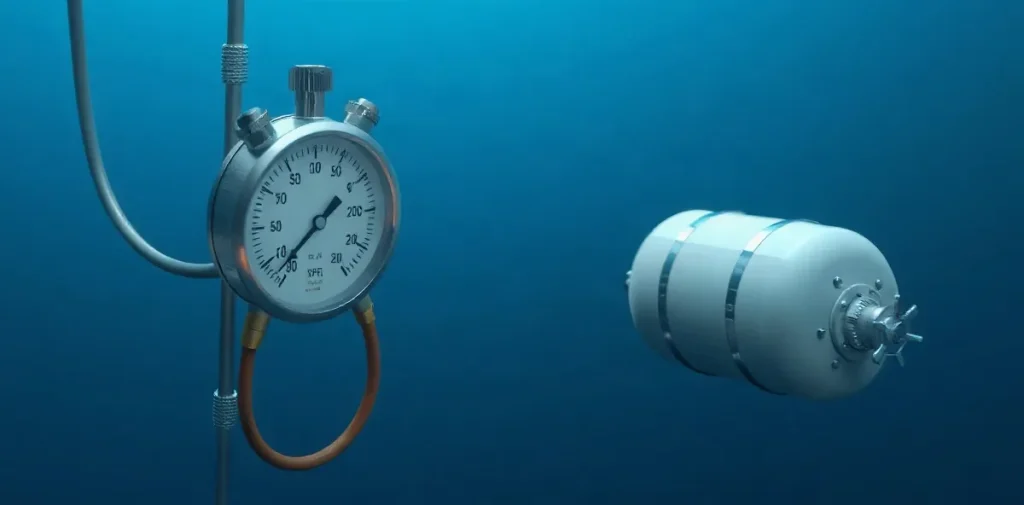
Hydrogen breathing gas research asks whether hydrogen can serve as part of a diver’s breathing mixture and what changes when it replaces some of the gases used in conventional mixtures. The question links gas physics to pressure, breathing mechanics, nervous-system effects and operational safety—issues that become especially important in deep diving.
Why consider hydrogen in a breathing mixture?
As depth increases, ambient pressure rises and the gas a diver breathes is compressed. The density of a breathing mixture can affect the work needed to move it through the airways and diving equipment. Gas selection is therefore not simply a matter of supplying oxygen; the properties of every component matter under pressure.
Hydrogen is a very light gas, which makes its physical behaviour relevant to questions about breathing at depth. But a gas cannot be judged by one property alone. Any proposed mixture must also be assessed for physiological effects, compatibility with equipment, reliable delivery and the practical demands of a dive.
What does pressure change for the diver?
Pressure affects both the environment and the gases in a diver’s lungs. The partial pressure of each gas—the share of total pressure contributed by that gas—rises as ambient pressure rises, even when the mixture’s proportions stay the same. This is central to understanding oxygen exposure and the effects of inert gases during a dive.
Gas density also matters because dense gas can increase respiratory effort. A diver who must work harder to breathe may have less reserve for exertion, stress or equipment problems. The relationship among depth, mixture composition, gas flow and breathing resistance is one reason research on alternative gases belongs to both physiology and engineering.
Which physiological questions need testing?
Studies of a candidate breathing gas examine how it behaves in the body under relevant pressure conditions, not just how it performs in a laboratory container. Researchers may consider breathing mechanics, gas exchange, neurological effects and the diver’s ability to function during exposure. Results can depend on the mixture, pressure, exposure duration and activity, so each condition needs careful definition.
Hydrogen also raises a basic safety issue: it is flammable. Its use in a breathing system therefore brings gas handling and ignition control into the same research picture as physiology. Equipment materials, seals, gas mixing, storage and delivery procedures all have to be considered alongside the effects on the diver.
How is a candidate diving gas evaluated?
Research into breathing gases combines controlled exposure with measurement of physiological and operational variables. The exact methods depend on the question, but the underlying task is to separate the effects of gas composition and pressure from factors such as workload and exposure time. That calls for careful control of the breathing mixture and the conditions in which it is used.
- Gas properties: composition, density and behaviour under pressure.
- Physiology: ventilation, gas exchange, breathing effort and neurological response.
- System safety: mixing, storage, delivery and compatibility with equipment.
- Operational limits: depth, exposure conditions, workload and emergency procedures.
No single measurement settles whether a gas is suitable for diving. A gas that offers a useful physical property still has to meet physiological and engineering requirements, and any operational use depends on a complete assessment of the mixture and system.
Why does this research matter beyond one gas?
The study of hydrogen sits within a wider effort to understand how breathing mixtures can support diving at pressure. It connects to research on gas narcosis, oxygen exposure, respiratory work, decompression and the design of life-support systems. These problems overlap: changing one component can alter both the diver’s exposure and the demands placed on the equipment.
For divers and scientific teams, the practical stakes are clear. Breathing gas is a life-support system, and its safe use depends on known limits, reliable procedures and appropriate training. Diving physicians and hyperbaric clinicians need to understand the physiological questions behind gas selection; any individual medical or fitness decision belongs with a diving-medicine physician.
Frequently asked questions
Why study hydrogen for diving?
Does a lighter gas automatically make breathing easier?
Who should advise on a diver’s medical fitness?
An original research-library explainer written by the Rubicon editors. It is not a summary of a specific publication.
Related reading on Rubicon
- Gas Laws Every Diver Must Know for Safe Diving Practice
- Diving: Science, Practice, and Destinations
- The Science of Diving SSI: Education and Physiology Insights
- Diving Physics: Gas Laws, Pressure Effects, and Safety
- Pulmonary Function and Deep Mixed-Gas Diving
- The Diving “Law-ers”: Scientists Behind the Gas Laws
- More on Diving Science
- Browse the Research Library