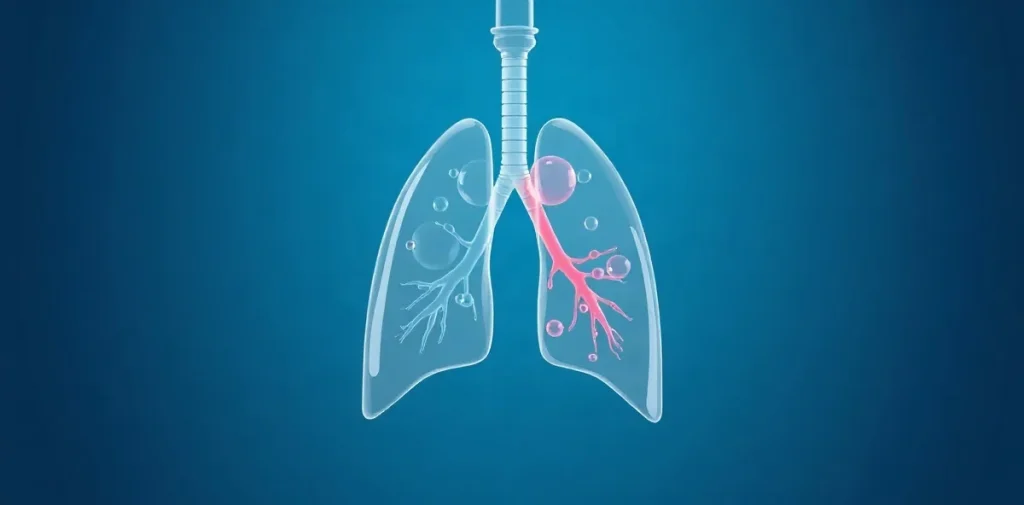
Alveolar gas research examines how the mixture of gases in the lungs changes during a breath-hold. In competitive divers, maximal holds create a useful setting for studying respiratory physiology under strain; the same processes matter to breath-hold safety and to clinical understanding of oxygen and carbon dioxide.
What does alveolar gas reveal during a breath-hold?
Alveoli are the small air spaces where oxygen and carbon dioxide move between the lungs and blood. Their gas composition is not fixed: it shifts with breathing, gas exchange, circulation and the amount of air remaining in the lungs.
During a breath-hold, oxygen continues to pass from the alveoli into the blood, while carbon dioxide moves in the opposite direction. The balance changes over time, and the rate depends on factors such as metabolic demand, lung volume and circulation. Measuring alveolar gas before and after a maximal hold therefore helps frame what happens across the respiratory pause.
Why study maximal holds in competitive divers?
A maximal breath-hold places respiratory control and gas exchange under unusual demands. Competitive divers train to tolerate the urge to breathe, but that sensation is not a direct gauge of oxygen available to the brain. Carbon dioxide contributes strongly to respiratory drive, while falling oxygen can become dangerous without producing an equally clear warning.
This makes the subject relevant beyond performance. Breath-hold physiology helps clinicians and researchers distinguish the sensations that prompt a diver to breathe from the underlying changes in blood gases and oxygen delivery. It also provides context for understanding loss of consciousness associated with hypoxia, particularly when a diver continues a hold despite mounting physiological stress.
How do researchers examine the gas changes?
Studies of this kind compare alveolar gas at defined points around a breath-hold, such as before and after the effort. The central task is to obtain samples that represent the gas in the alveoli and interpret them in relation to the timing and conditions of the hold.
Interpretation depends on more than a single gas measurement. Researchers consider whether the participant has recently breathed, the lung volume at the start, the duration and intensity of the hold, and the timing of sampling. These conditions shape the comparison and help separate the effects of breath-holding from differences in preparation or recovery.
- Oxygen: moves from alveolar gas into the blood and supports tissue metabolism.
- Carbon dioxide: is produced by metabolism, transported to the lungs and contributes to the urge to breathe.
- Lung volume: affects the amount of gas available at the start and changes during a hold.
- Sampling time: determines which stage of the breath-hold or recovery the measurement represents.
How does this fit into diving physiology?
Breath-hold studies sit alongside wider research into gas exchange, respiratory control and oxygen supply during diving. They address a different exposure from compressed-gas diving, where pressure changes alter gas density and the amount of gas dissolved in the body. Both fields, however, ask how changing respiratory conditions affect human physiology and safety.
Alveolar measurements can help connect the mechanics of breathing with changes occurring in the blood. They are not, by themselves, a complete account of oxygen delivery: circulation, tissue demand and the brain’s sensitivity to low oxygen also matter. For diving physicians and hyperbaric clinicians, that distinction is useful when interpreting respiratory measurements alongside a diver’s clinical condition.
What should divers and clinicians take from the subject?
The key practical point is that perceived comfort, breath-hold duration and oxygen status are not interchangeable. A diver may feel an urge to breathe because carbon dioxide is rising, while oxygen availability is changing on a separate trajectory. Training or a familiar sensation cannot reliably establish that a maximal hold remains safe.
Research on gas composition helps clarify these mechanisms, but it does not turn a laboratory measurement into individual clearance for diving. Questions about breath-hold practice, symptoms or medical fitness belong with a diving-medicine physician, who can consider the person and the circumstances.
Frequently asked questions
What is alveolar gas?
Why measure gas around a breath-hold?
Does the urge to breathe show that oxygen is dangerously low?
An original research-library explainer written by the Rubicon editors. It is not a summary of a specific publication.
Related reading on Rubicon
- Understanding the Physiology of Breath-Hold Diving
- Diving Physics: Gas Laws, Pressure Effects, and Safety
- Understanding Venous Gas Emboli and Diver Safety
- Gas Laws Every Diver Must Know for Safe Diving Practice
- Alveolar Gas Before and After Maximal Breath-Holds
- PAO2 and PACO2 During Breath-Hold
- More on Diving Science
- Browse the Research Library