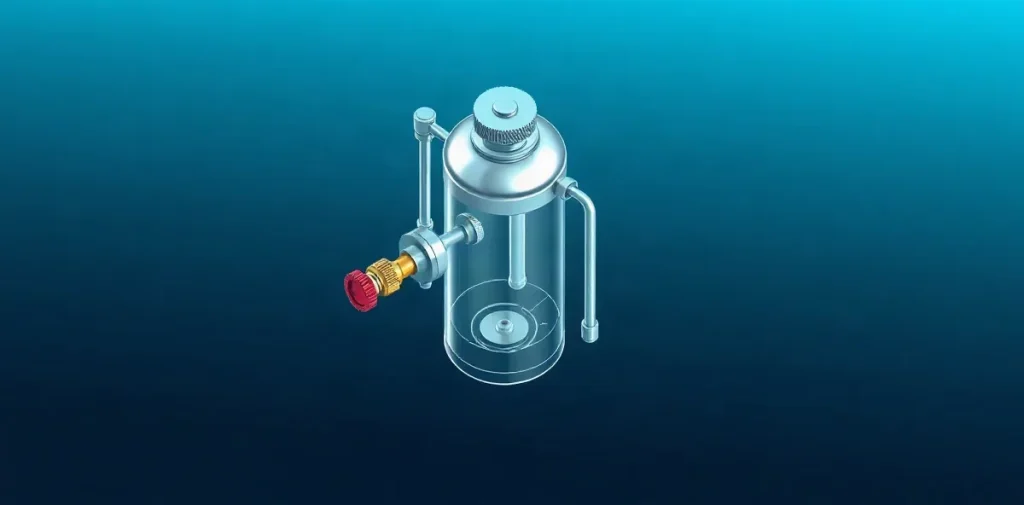
A compressed-gas cylinder stores breathing gas under pressure for use by divers and in hyperbaric settings. Its role is more than supplying air: cylinder pressure, gas composition, regulators and operating procedures shape how gas reaches a person and how safely it can be used.
How does a cylinder supply gas underwater?
Water pressure rises with depth, so a diver needs breathing gas delivered at a pressure close to the surrounding pressure. A cylinder holds gas at much higher pressure than the diver breathes; a regulator reduces that pressure in stages and supplies gas on demand.
The cylinder is one part of a breathing system. Its valve, regulator, hoses and mouthpiece must work together, while the gas supply must be sufficient for the planned dive and any foreseeable interruption or increased breathing demand.
Why do pressure and gas composition matter?
Pressure affects both the amount of gas available and the body’s response to breathing it. As depth increases, the partial pressures of the gases in a breathing mixture rise. This can alter oxygen exposure and the effects of inert gases, making gas selection and depth limits central to dive planning.
Air is not the only breathing gas used in diving. Nitrox, helium-containing mixtures and oxygen have different roles and constraints; a mixture suitable for one depth or phase of a dive may be unsafe in another. Cylinder identification and gas analysis help prevent a diver from breathing an unsuitable mixture.
- Working pressure: the pressure rating and condition of the cylinder and its valve.
- Gas composition: the mixture’s oxygen and inert-gas proportions, verified before use.
- Regulator delivery: the system’s ability to provide gas at the required ambient pressure.
- Gas planning: the quantity needed for the dive, including contingencies.
What changes in hyperbaric medicine?
Hyperbaric treatment exposes a patient to increased ambient pressure while breathing a prescribed gas, commonly oxygen, in a treatment chamber. The chamber environment and the gas-delivery system are engineered for clinical use; a scuba cylinder is not a substitute for chamber equipment or clinical supervision.
Compressed gas also matters in the chamber’s support systems and emergency planning. Clinicians and technical staff consider how gas is supplied, controlled and monitored, along with oxygen exposure and fire risk. The relevant equipment and procedures depend on the chamber and treatment protocol.
What safety checks are important?
A cylinder must be suitable for its intended service and maintained under the applicable inspection and filling requirements. Damage, corrosion, an unsuitable valve, contamination or incorrect gas can create hazards even when the cylinder appears to contain ample pressure.
Before a dive, check the cylinder’s identification and pressure, confirm the breathing mixture, and test the regulator and connected equipment. Follow training and local procedures for handling and storage; do not use a cylinder with uncertain contents or condition.
Gas planning is also a physiological safeguard. At depth, breathing resistance and gas density can increase the effort of ventilation, while an unexpected loss of supply can become urgent. Training, a suitable reserve and a plan for sharing or switching gas address different parts of that risk.
How does cylinder research fit into diving science?
Research on compressed-gas cylinders sits at the meeting point of equipment engineering, gas physics and human physiology. It concerns how a stored supply is specified and delivered, and how pressure and mixture affect breathing during underwater work or treatment under pressure.
These questions connect with broader work on regulator performance, gas consumption, oxygen exposure, inert-gas narcosis and decompression. For divers and clinicians, the practical issue is not simply how much gas a cylinder holds, but whether the full system supplies the right gas under the conditions in which it will be used.
Frequently asked questions
Is a compressed-gas cylinder the same as a scuba tank?
Why does a diver need a regulator?
Can a diver choose any gas mixture for a dive?
An original research-library explainer written by the Rubicon editors. It is not a summary of a specific publication.