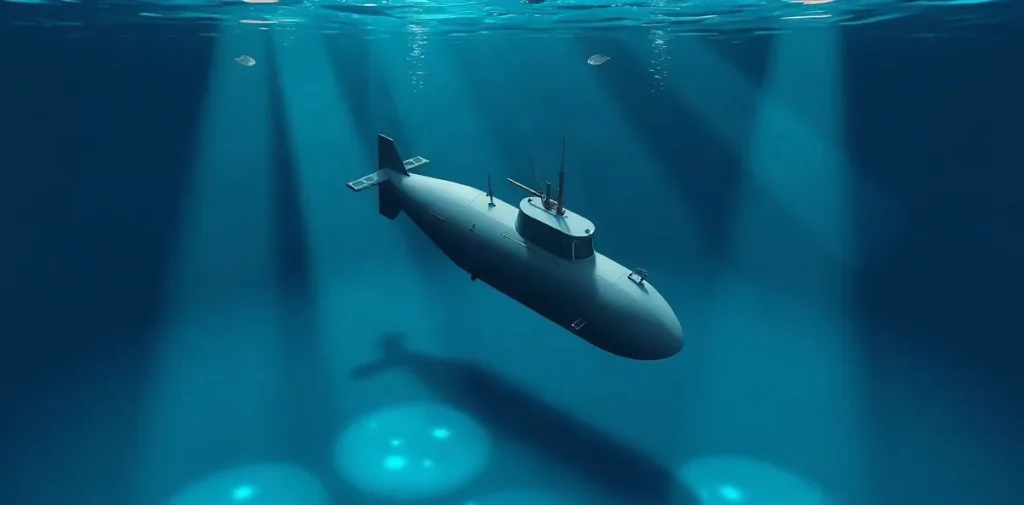
NSMRL: A Small Command with A Huge Presence for the Submarine Force is a publication by Daniel and Lamb. Its subject is the role of NSMRL in supporting the submarine force, a topic that connects naval research, human performance and the technical demands of working underwater. Understanding that connection matters to diving science because people and equipment must function reliably in a demanding environment.
What does submarine-force support have to do with diving science?
Submarine operations and diving are distinct activities, but both require people to work within conditions that can constrain movement, communication, workload and access to assistance. Research relevant to a submarine force can therefore touch questions familiar to diving medicine and underwater physiology: how the environment affects performance, how tasks can be made safer, and how technical systems support people operating underwater.
The title frames the publication around NSMRL and its relationship with the submarine force. That makes it a useful point of entry into the institutional side of underwater research: scientific and technical capability is valuable not only when it produces knowledge, but when that knowledge can inform operational needs.
Which physiological and operational issues matter underwater?
Underwater work changes the conditions in which the body and mind perform. Water removes heat from the body more readily than air, breathing equipment adds resistance and dead space, and restricted movement can make routine tasks harder. The importance of each factor depends on the activity, the equipment and the surrounding environment.
In submarine settings, the relevant questions also include how people manage demanding tasks within a confined, engineered environment. Workload, fatigue, attention and coordination can affect performance. These are not isolated medical concerns: they intersect with equipment design, operating procedures and the way a task is organised.
- Human performance: the effects of workload, fatigue and environmental conditions on task execution.
- Underwater physiology: the body’s responses to immersion, cold and the demands of breathing under pressure.
- Human–equipment interaction: whether systems support safe, effective work in restricted conditions.
- Operational translation: how research questions connect to the needs of people working underwater.
These concepts help readers place a publication about submarine-force support alongside broader research on diving and work in constrained environments. The physiological details vary with the task, so a specific operational question needs its own context.
How does research connect to operational needs?
Research in an applied setting often begins with a practical problem: a task, an environmental constraint or a need to understand how a system performs with people using it. The work may involve physiology, engineering or human factors, and those fields can overlap. The central issue is whether the research question reflects the conditions in which the knowledge may be used.
For diving and submarine operations, the path from science to practice is especially important because environmental exposure can make small design or procedural details consequential. A breathing system, a thermal constraint or a demanding sequence of tasks can alter the conditions under which a person performs. Research can help clarify those interactions, while operational evaluation determines how well a proposed approach fits the actual task.
The publication’s title places NSMRL within this relationship between research capability and the submarine force. For readers in diving medicine, it offers a way to consider how research institutions support operational communities, as well as how underwater science extends beyond decompression and clinical care.
Why is this subject relevant to divers and clinicians?
Diving physicians and hyperbaric clinicians need to understand more than the diagnosis and treatment of pressure-related illness. Their wider field includes the effects of immersion, breathing systems, thermal stress and physical or cognitive workload. Those factors can influence a diver’s ability to complete a task and can shape the questions clinicians ask when evaluating fitness and risk.
Scientific divers face related challenges, even when their work is not part of a submarine operation. Their scientific goals must be balanced against the demands of underwater work, equipment and environmental exposure. A research publication concerned with a submarine force can therefore prompt useful comparisons, while leaving the differences between operational settings clear.
For individual health or fitness decisions, general background is not a substitute for assessment by a diving-medicine physician. The relevant advice depends on the person, exposure and planned activity.
Frequently asked questions
What is the publication about?
Why should diving professionals read about submarine operations?
Does this subject apply to individual dive-medical decisions?
Citation details
- Title: NSMRL: A Small Command with A Huge Presence for the Submarine Force
- Authors: Daniel, Christopher; Lamb, Daniel
- Record type: Publication
- Repository record: Rubicon Research Repository, handle 123456789/3610
This page is an original summary written by the Rubicon editors from the publication’s bibliographic record. It does not reproduce the paper, its abstract or its data; consult the publication itself for its methods and findings.