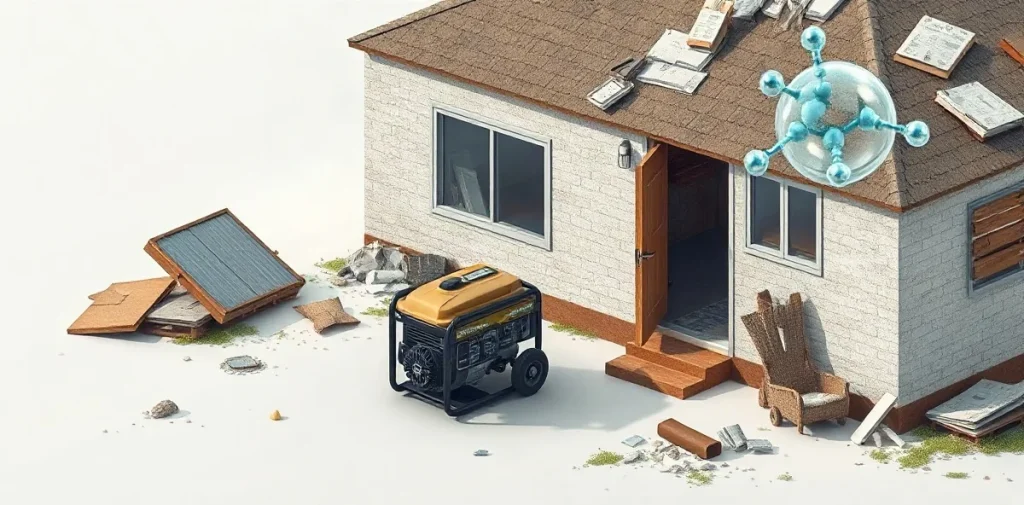
Dying to Play Video Games: Carbon Monoxide Poisoning from Electrical Generators Following Hurricane Ike is a 2009 meeting abstract by Smith and colleagues. Its subject is generator-related carbon monoxide poisoning after a hurricane—a public-safety problem with direct relevance to oxygen transport, emergency care and the expertise shared by hyperbaric medicine and diving medicine.
Why is carbon monoxide poisoning a hyperbaric-medicine subject?
Carbon monoxide is a gas produced by incomplete combustion, including combustion in fuel-powered generators. It is hazardous because it can accumulate in enclosed or poorly ventilated spaces without providing a reliable warning to the people exposed. After a storm disrupts electricity, generators may be used to supply power, making safe placement and ventilation critical.
Once inhaled, carbon monoxide binds to haemoglobin, the protein in red blood cells that carries oxygen. This reduces the blood’s capacity to transport oxygen and can also interfere with oxygen release to tissues. The resulting injury is not simply a matter of low oxygen in the surrounding air: the gas disrupts oxygen delivery within the body.
Hyperbaric medicine addresses conditions in which oxygen delivery is impaired and considers whether treatment with oxygen at elevated pressure may have a role. Carbon monoxide exposure is one of the medical problems considered in this field. The meeting venue therefore places the topic within a professional setting where oxygen physiology, toxic exposure and treatment under pressure are relevant concerns.
What makes generator exposure dangerous after a hurricane?
Storm damage can interrupt electrical service while creating an urgent need for power. A generator may seem like a practical solution, but its exhaust contains carbon monoxide, and operating the equipment in or near an enclosed space can allow the gas to build up. The danger comes from the combination of combustion, poor air exchange and exposure that may not be immediately apparent.
Carbon monoxide poisoning can affect the brain and heart as well as other tissues that depend on oxygen. Symptoms can be nonspecific, and a person may not recognise the cause while exposure continues. Emergency assessment therefore has to consider the circumstances, possible ongoing exposure and signs of impaired oxygen delivery, rather than relying on a single symptom.
- Exposure source: combustion exhaust from a generator or other fuel-burning equipment.
- Exposure setting: enclosed or inadequately ventilated spaces where gas can accumulate.
- Physiological effect: impaired oxygen transport and delivery to tissues.
- Clinical concern: potentially serious injury affecting neurological and cardiovascular function.
How does the topic connect to diving medicine?
Divers and people exposed to carbon monoxide face different circumstances, but both fields must understand how gases affect oxygen availability and tissue function. Diving medicine routinely considers gas exposure, pressure, breathing systems and the consequences of disrupted oxygen delivery. Hyperbaric clinicians bring related expertise to evaluating the use of oxygen under pressure for selected medical conditions.
The connection is also practical. Divers may encounter combustion sources around boats, shore facilities or emergency power equipment, while scientific and occupational diving can take place in settings where reliable power and safe air quality matter. Carbon monoxide risk is not made safe by being near water or by having diving equipment available; prevention depends on avoiding contaminated air and responding appropriately to suspected exposure.
For diving physicians, the subject reinforces the value of distinguishing environmental hazards from decompression illness and other diving-related conditions. A history of generator use or combustion exposure can be clinically important. Decisions about diagnosis and treatment, including whether hyperbaric care is appropriate, belong to qualified medical professionals; a diving-medicine physician should be consulted when a diving context is involved.
What questions do studies of this kind address?
Work focused on generator-related poisoning after a major storm sits at the intersection of environmental exposure, emergency response and hyperbaric care. Studies and clinical discussions in this area commonly examine how exposure occurs, how affected people are recognised and assessed, and how treatment decisions are made. These are broad questions about managing a preventable toxic hazard, not only about the properties of the gas itself.
The title also points to an important public-health setting: a hurricane’s aftermath, when ordinary infrastructure and routines may be disrupted. Understanding poisoning in that context can inform awareness of generator hazards and the coordination between emergency services and clinicians. The meeting abstract belongs to a wider conversation about how hyperbaric medicine applies oxygen physiology to urgent problems outside the traditional diving environment.
Frequently asked questions
How does carbon monoxide interfere with oxygen delivery?
Why can a generator create a poisoning hazard?
Why is this topic relevant to diving clinicians?
Citation details
- Title: Dying to Play Video Games: Carbon Monoxide Poisoning from Electrical Generators Following Hurricane Ike
- Authors: Smith, L; Maus, E; Fife, C; McCarthy, J; Koehler, M; Hawkins, T; Hampson, N
- Year: 2009
- Published in: Undersea and Hyperbaric Medical Society Annual Meeting, Las Vegas, Nevada, USA. Undersea and Hyperbaric Med 2009; 36(4)
- Identifiers: 1066-2936
- Record type: Meeting abstract
- Repository record: Rubicon Research Repository, handle 123456789/9155
This page is an original summary written by the Rubicon editors from the publication’s bibliographic record. It does not reproduce the paper, its abstract or its data; consult the publication itself for its methods and findings.
Related reading on Rubicon
- Recognizing Signs of Carbon Monoxide Poisoning in Diving
- Scuba Diving After Flying: How Long to Wait
- How Carbon Dioxide Buildup Affects Rebreather Safety
- HBO Versus NBO for Carbon Monoxide Poisoning
- Carbon Monoxide Poisoning in Recreational Diving
- More on Dive Medicine
- Browse the Research Library
