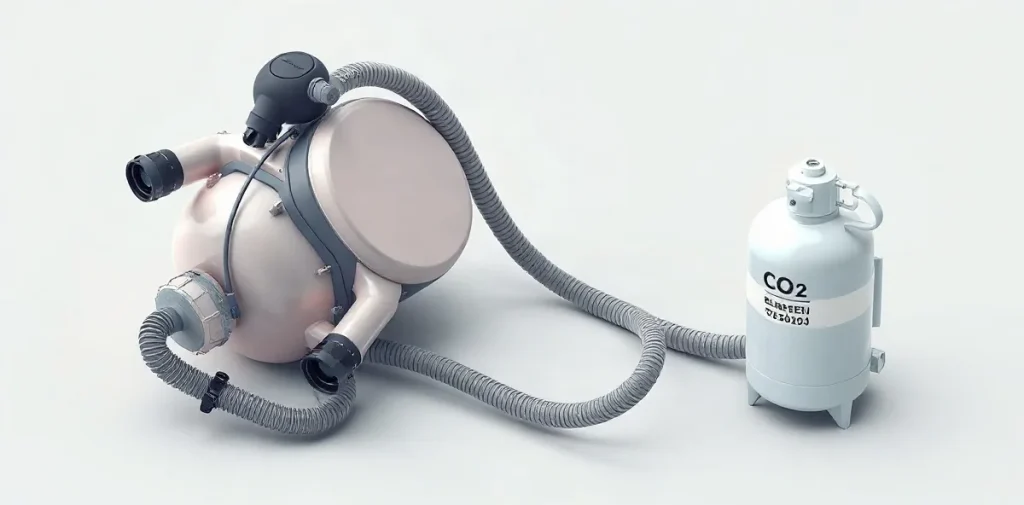
Carbon dioxide buildup in rebreather systems directly compromises diver safety by causing hypercapnia, which impairs cognitive function, induces discomfort, and can lead to unconsciousness or death if not properly managed. Effective control of CO2 levels is critical to preventing these life-threatening consequences during a dive.
Rebreathers recycle exhaled gas to extend underwater time and reduce gas consumption, but this closed or semi-closed system also traps carbon dioxide that the diver exhales. Unlike open-circuit scuba, where CO2 is expelled into the water, rebreathers rely on chemical scrubbers to remove CO2 from the breathing loop. Failure of this system or improper usage can cause dangerous CO2 accumulation, posing a unique and serious hazard.
Understanding how carbon dioxide buildup affects rebreather safety is essential for divers, instructors, and equipment designers alike. This article explores the physiological risks, the mechanisms behind CO2 retention in rebreathers, and the practical steps to minimize these dangers, ensuring safer diving experiences with these sophisticated underwater breathing apparatuses.
| Scrubber Material | Typical Duration (min) | Cost per Canister (USD) | Limitations |
|---|---|---|---|
| Sofnolime 797 | 90-180 | $50 | Sensitive to moisture, requires correct packing |
| Baralyme | 60-120 | $40 | Lower CO2 capacity, shorter duration |
| Lithium Hydroxide | 120-180 | $70 | Higher cost, toxic dust hazard |
| Sorb 8 | 100-150 | $55 | Less common, moderate moisture sensitivity |
- 0.5% Maximum safe inspired CO2 concentration per US Navy Diving Manual
- 90-180 minutes Typical CO2 scrubber duration under moderate workload
- $50 Approximate cost of a Sofnolime 797 scrubber canister
- 30% Proportion of rebreather accidents involving CO2 toxicity factors (DAN 2025)
What physiological dangers arise from elevated CO2 in rebreather diving?
Elevated carbon dioxide (CO2) in rebreather diving primarily causes hypercapnia, which impairs neurological function and stresses cardiovascular and respiratory systems, posing serious physiological dangers. Symptoms begin when end-tidal CO2 reaches approximately 45 mmHg (about 6% CO2 in exhaled gas), while central nervous system toxicity emerges at inspired CO2 levels above 8%, leading to headache, confusion, and potentially unconsciousness.
Hypercapnia and CNS effects
Hypercapnia in divers manifests as increased levels of CO2 in the bloodstream, with end-tidal CO2 exceeding 45 mmHg being a critical threshold for symptom onset. Above an inspired CO2 concentration of 8%, central nervous system toxicity can occur, causing cognitive impairment and loss of consciousness, which are especially dangerous underwater. The US Navy Diving Manual (Revision 7, 2016) sets a strict safety limit, recommending that inspired CO2 remain below 0.5% during dives to prevent such adverse effects.
Physiological stress from CO2
CO2 buildup triggers physiological responses such as elevated respiratory rates and increased cardiac output, which place additional strain on diver health. This compensatory mechanism attempts to clear excess CO2 but also raises metabolic demand, potentially leading to premature fatigue or exacerbation of underlying conditions. Maintaining inspired CO2 under 0.5% as per established military standards helps mitigate these stresses and preserves diver safety.
- End-tidal CO2 symptom threshold: ~45 mmHg (6% CO2)
- CNS toxicity onset: >8% inspired CO2
- US Navy limit for inspired CO2: <0.5% (Diving Manual Revision 7, 2016)
How do rebreather technologies reduce CO2 buildup risks?
Scrubber materials and duration
Rebreather technologies reduce CO2 buildup risks primarily through the use of chemical scrubbers that absorb exhaled carbon dioxide, with canisters typically costing around $50 per unit. A common example is Sofnolime 797 (Medisorb), which chemically captures CO2 in the breathing loop. These scrubbers generally provide effective CO2 removal for durations ranging from 90 to 180 minutes, depending on factors such as diver workload and the scrubber’s volume. Adequate scrubber duration is critical to prevent CO2 breakthrough, which can lead to hypercapnia and serious safety hazards during a dive.
Sensors and gas addition systems
Modern rebreathers also incorporate real-time CO2 sensors and oxygen addition systems to maintain safe gas compositions and alert divers to rising CO2 levels. For instance, the rEvo rebreather employs a nondispersive infrared (NDIR) sensor capable of detecting CO2 concentrations with alarms triggered at thresholds above 0.5%. Additionally, oxygen partial pressure is regulated through automatic or manual addition systems, such as those found in Poseidon’s SE7EN rebreather. These systems help maintain proper oxygen partial pressures, thereby reducing CO2 retention by optimizing metabolic gas exchange and minimizing hypercapnia risk.
- Sofnolime 797 (Medisorb) scrubber canister: approximately $50 each
- Scrubber duration range: 90 to 180 minutes depending on workload and volume
- CO2 sensor alarm threshold: 0.5% CO2 concentration (rEvo NDIR sensor)
- Gas addition example: automatic/manual oxygen addition in Poseidon SE7EN rebreather
What behaviors and dive practices minimize CO2 buildup in rebreather use?
Workload management
Minimizing carbon dioxide buildup in rebreather diving starts with controlling physical exertion, as maintaining moderate work rates under 1.3 liters of oxygen consumption per minute significantly reduces CO2 production and scrubber demand. Divers who exceed this threshold risk overwhelming the scrubber’s capacity to absorb CO2, increasing toxicity hazards during the dive. Limiting exertion to this oxygen consumption rate helps keep CO2 levels within safe limits and extends scrubber duration, which typically caps at around 120 minutes of effective use depending on the model.
Equipment preparation and breathing technique
Strict adherence to equipment preparation protocols is critical to prevent CO2 accumulation. Per the EN 14143 standard established in 2013, regular pre-dive scrubber packing and thorough leak testing must be performed to ensure optimal scrubber efficiency and airtight integrity. Additionally, divers should avoid breath-holding and maintain smooth, controlled breathing patterns to prevent localized CO2 buildup in the breathing loop. These practices help avoid dead space rebreathing and improve gas exchange, reducing the risk of hypercapnia during the dive.
- Maintain oxygen consumption below 1.3 liters/min to limit CO2 production.
- Follow EN 14143 (2013) for scrubber packing and leak testing before each dive.
- Limit dive duration to scrubber capacity, typically no more than 120 minutes.
- Avoid breath-holding; use smooth, continuous breathing patterns to prevent CO2 accumulation.
When do CO2 scrubbers fail to prevent dangerous buildup despite precautions?
CO2 scrubbers can fail to prevent dangerous carbon dioxide buildup when factors such as channeling, high metabolic rates, improper packing, moisture contamination, or sensor malfunction reduce their efficiency or leave divers unaware of rising CO2 levels. These failures compromise scrubber capacity and diver safety despite standard precautions.
Scrubber performance degradation
Channeling in the absorbent material—where gas bypasses the chemical media—can decrease effective CO2 absorption by up to 50%, as documented by DAN Europe in 2019. Additionally, Sofnolime, a widely used absorbent, loses its efficiency drastically when improperly packed or contaminated by moisture, conditions that impair its chemical reaction with CO2. These issues reduce the scrubber’s ability to maintain safe CO2 levels throughout the dive.
Limitations under high workload
During strenuous dives, oxygen consumption rates exceeding 2 liters per minute can overwhelm typical scrubber capacities in under 30 minutes, causing rapid CO2 buildup. Moreover, the failure or absence of CO2 sensors means divers may not detect dangerous elevations in carbon dioxide concentration, increasing the risk of hypercapnia.
- Channeling can cut CO2 absorption efficiency by up to 50% (DAN Europe, 2019)
- High oxygen consumption rates above 2 L/min may exhaust scrubber capacity within 30 minutes
- Moisture contamination drastically reduces Sofnolime’s CO2 absorption efficiency
- Absence or failure of CO2 sensors leaves divers unaware of rising CO2 levels
How are industry standards and training addressing CO2 risks in rebreather diving?
Training protocols
The diving industry addresses CO2 risks in rebreather diving primarily through enhanced training requirements emphasizing CO2 awareness and management. Since 2024, the International Association of Nitrox and Technical Divers (IANTD) mandates that all rebreather courses include specific CO2 risk education to improve diver recognition and response to elevated CO2 levels. Additionally, many agencies require divers to complete refresher courses and undergo equipment inspections at least every 12 months to ensure ongoing competence and operational safety. These measures are reinforced by findings from Divers Alert Network’s 2025 incident reports, which identified CO2 toxicity factors in approximately 30% of rebreather-related accidents, underlining the critical need for continuous education and vigilance.
Standards and regulations
International standards provide concrete technical requirements to mitigate CO2 buildup risks in rebreather systems. The European Committee for Standardization’s EN 14143 (2013) specifies minimum criteria for CO2 scrubber duration and the implementation of CO2 monitoring devices, setting benchmarks that manufacturers and training organizations must meet. Compliance with these standards ensures that scrubbers maintain effective absorption for their rated time, typically measured in minutes ranging from 60 to 180, depending on the model and dive profile. Furthermore, annual equipment checks mandated by many agencies help confirm adherence to these standards and detect any degradation in scrubber material or sensor performance before dives.
- IANTD’s mandatory CO2 risk training since 2024
- DAN’s 2025 report: 30% of rebreather accidents involve CO2 toxicity
- EN 14143 (2013) scrubber duration requirements: 60–180 minutes minimum
- Mandatory equipment inspections every 12 months
Frequently asked questions
What is the maximum safe inspired CO2 level during rebreather diving?
How long does a typical Sofnolime scrubber last in a recreational dive?
Can CO2 sensors detect buildup early enough to prevent poisoning?
What common mistakes increase CO2 buildup risk?
Key takeaways
- Hypercapnia symptoms start near 6% CO2 in exhaled gas
- Sofnolime 797 scrubbers cost about $50 and last up to 3 hours
- Maintaining workload under 1.3 L O2/min reduces CO2 production
- EN 14143 standard requires scrubber testing and CO2 monitoring
- DAN reports 30% of rebreather accidents involve CO2 toxicity