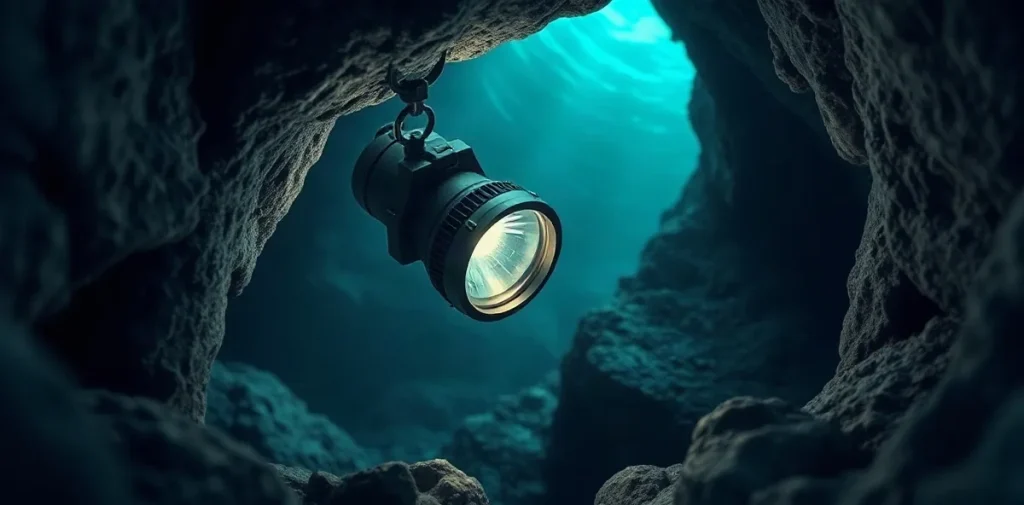
What is the best dive light for different underwater conditions?
The best dive light varies depending on the environment but must balance brightness, battery life, and durability; for example, a 1000-lumen light with at least 3 hours runtime suits most recreational dives, while technical divers require longer battery life and higher impact resistance. Selecting a model like the Bigblue AL1200P or the Suptig 2000LM based on dive type ensures optimal visibility and safety.
How important is brightness and what lumen levels suit various dives?
Brightness, measured in lumens, directly affects underwater visibility and color rendering. Recreational divers typically need dive lights producing between 800 and 1200 lumens to illuminate dark areas and enhance color perception at depths up to 40 meters.
Brightness benchmarks for dive lights
- 800–1200 lumens: Suitable for recreational dives and cave entrances.
- 1500–2000 lumens: Recommended for technical diving and wreck penetration.
- Over 2000 lumens: Used in deep technical and commercial diving for maximum visibility.
Models like the Bigblue AL1200P (1200 lumens) and OrcaTorch D620 (1600 lumens) exemplify these categories, balancing powerful output with manageable size.
What battery life should a dive light have for safety and convenience?
Battery life is critical for dive safety, as a light failure can compromise visibility and orientation. Recreational dive lights generally offer 2 to 4 hours of continuous use, while technical and cave diving lights should provide at least 6 hours to ensure coverage for longer or multiple dives.
Typical battery runtimes and power sources
- Rechargeable lithium-ion batteries: Common in models like the Suptig 2000LM, offering up to 5 hours at full brightness.
- Disposable alkaline batteries: Less common, with runtimes around 2 hours at moderate output.
- Swappable battery packs: Found in professional lights enabling extended dives.
| Model | Brightness (lumens) | Battery Life (hours) | Price (USD) |
|---|---|---|---|
| Bigblue AL1200P | 1200 | 3.5 | 95 |
| Suptig 2000LM | 2000 | 5 | 120 |
| OrcaTorch D620 | 1600 | 4 | 150 |
| Light & Motion Sola Dive 1200 | 1200 | 4 | 180 |
How does durability affect dive light choice for harsh environments?
Durability is essential, especially in saltwater, cold temperatures, or when subjected to knocks and drops. Dive lights must have corrosion-resistant materials, high impact ratings, and reliable seals to prevent water ingress. An IPX8 rating or higher is standard for professional dive lights.
Durability criteria to consider
- Material: Aircraft-grade aluminum or reinforced polycarbonate housings resist corrosion and impact.
- Waterproof rating: IPX8 ensures submersion beyond typical recreational depths.
- Impact resistance: Models tested to withstand drops from at least 2 meters.
For example, the OrcaTorch D620 features a tough aluminum body with IPX8 waterproofing and drop resistance, making it suited for technical diving in rugged conditions.
Which features improve usability and convenience underwater?
Additional design aspects like beam angle, switch type, and mounting options contribute significantly to dive light usability. Wide beam angles provide broader illumination, while narrower beams focus light for penetrating visibility in murky water or caves.
Key usability features
- Beam angle: Adjustable or fixed between 15° (spot) and 120° (flood).
- Switch type: Magnetic or push-button switches operable with gloves.
- Mounting options: Handheld, helmet, or wrist mounts depending on dive activity.
The Bigblue AL1200P offers a flood beam with a strong magnetic switch, ideal for general recreational diving, while the Suptig 2000LM provides modular mounts for technical applications.
What price range should divers expect for quality dive lights?
Quality dive lights suitable for 2026 diving conditions range from about $90 to $200, depending on brightness and features. Budget models below $100 often compromise on battery life or durability, while premium lights with advanced optics and long runtimes can exceed $200.
Price categories and representative models
- Entry-level ($90–$120): Bigblue AL1200P, Suptig 1500LM
- Mid-range ($120–$180): Suptig 2000LM, OrcaTorch D620
- High-end (above $180): Light & Motion Sola Dive 1200
Frequently asked questions
What is the recommended lumen output for cave diving?
How long should a dive light battery last for a typical recreational dive?
Are rechargeable batteries better than disposables in dive lights?
What waterproof rating should I look for in a dive light?
Key takeaways
- Dive lights between 800 and 2000 lumens suit most recreational and technical dives.
- Battery life of 3 to 6 hours ensures safety and convenience for longer dives.
- Durability features like IPX8 waterproofing and impact resistance are critical in harsh environments.
- Usability improvements include adjustable beam angles and glove-friendly switches.
- Prices range from about $90 for basic models to over $180 for premium dive lights.
Conclusion
Choosing the right dive light in 2026 requires matching brightness, battery life, and durability to your diving conditions and style. Recreational divers benefit from models like the Bigblue AL1200P that provide balanced performance at accessible prices, while technical divers should prioritize higher lumen outputs and rugged designs exemplified by the Suptig 2000LM or OrcaTorch D620. Considering runtime, waterproof rating, and ergonomic features ensures reliable illumination and enhanced underwater safety across various environments.