Updated: October 22, 2026
Nitrogen narcosis is often misunderstood as a predictable and uniform effect with a simple onset depth, but in reality, its symptoms vary widely among divers and can be influenced by multiple factors beyond just depth. Recognizing these nuances is essential for maintaining diver safety and avoiding preventable incidents underwater.
Despite being a well-known phenomenon in the diving community, nitrogen narcosis remains surrounded by myths and misconceptions that can lead to complacency or inappropriate responses during a dive. From the belief that it only occurs beyond a fixed depth to the assumption that it affects all divers equally, these misunderstandings obscure the complex physiological and environmental dynamics at play. This article delves into the common misconceptions about nitrogen narcosis and highlights their implications for diver safety.
Understanding the true nature of nitrogen narcosis is critical not only for recreational divers pushing their limits but also for dive professionals and instructors responsible for training and emergency preparedness. By unpacking the reality behind the myths, divers can better anticipate, recognize, and manage the subtle and sometimes unpredictable signs of narcosis, ultimately enhancing underwater safety and confidence.
What is the actual depth threshold for nitrogen narcosis onset?
Depth thresholds
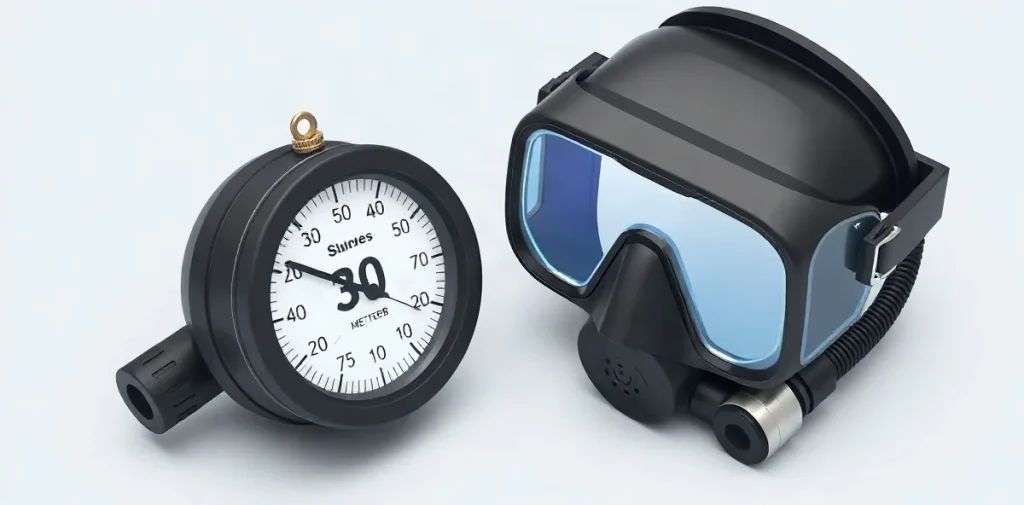
The actual depth threshold for the onset of nitrogen narcosis symptoms typically begins at about 30 meters (100 feet) of seawater during air dives. This depth is widely recognized because it marks the point where many divers start to experience cognitive and motor impairments linked to nitrogen’s narcotic effects, as documented in the 2024 Divers Alert Network (DAN) report.
Similarly, the NOAA Diving Manual, 6th edition (2019), confirms that noticeable impairment risks increase significantly beyond the 30-meter mark. While some individuals may experience mild effects slightly shallower or deeper, 30 meters serves as a practical operational guideline for dive planning and risk assessment.
Scientific consensus
The consensus among diving medicine experts and institutions is that nitrogen narcosis onset varies but becomes reliably measurable at depths around 30 meters. Factors influencing this threshold include individual susceptibility, dive conditions, and gas mixtures. The DAN 2024 report emphasizes this depth as a critical reference for diver safety training and procedural standards.
- DAN 2024 report: narcosis symptoms typically start near 30 meters (100 feet) of seawater.
- NOAA Diving Manual (2019): increased impairment risk apparent beyond 30 meters on air dives.
How does nitrogen narcosis affect diver cognition and motor skills?
Nitrogen narcosis significantly impairs diver cognition and motor skills, leading to measurable declines in memory, judgment, and manual task performance at depths beyond 30 meters. These effects increase in severity with depth, posing substantial risks to diver safety and operational efficiency.
Cognitive effects
Cognitive impairment due to nitrogen narcosis includes diminished short-term memory and compromised decision-making abilities. A 2023 study conducted by the Undersea and Hyperbaric Medical Society documented these effects becoming noticeable at depths exceeding 30 meters. Divers at this depth showed reduced capacity to recall recent information and exhibited poorer judgment, which can critically affect dive planning and emergency response.
Motor skill impact
Motor coordination also deteriorates under nitrogen narcosis, with manual task performance dropping by as much as 20% at 40 meters depth. This was demonstrated in a 2022 experimental dive series at the University of Aberdeen, where divers showed slower and less precise hand movements. Such declines increase the risk of errors when handling equipment or executing complex underwater tasks.
- Onset of cognitive impairment: beyond 30 meters depth (Undersea and Hyperbaric Medical Society, 2023)
Why is it incorrect that nitrogen narcosis always causes unconsciousness?
Nitrogen narcosis does not always cause unconsciousness; in fact, loss of consciousness due to narcosis is extremely uncommon and generally only arises during very deep technical dives beyond 60 meters. The International Association of Nitrox and Technical Divers (IANTD) guidelines from 2025 emphasize that most recreational divers experience much milder effects well before reaching depths associated with unconsciousness risks.
Severity spectrum
The symptoms of nitrogen narcosis range widely depending on depth and individual susceptibility. According to a 2024 risk assessment by Divers Alert Network (DAN), typical manifestations include euphoria, impaired judgment, slowed reaction times, and mild cognitive disruption rather than unconsciousness. The threshold depth where serious impairment is more likely is around 50 to 60 meters, with unconsciousness being a rare outcome primarily reported in dives exceeding this range. Most divers encounter subtle effects at depths between 30 and 40 meters, highlighting a broad spectrum of severity rather than a binary state of being conscious or unconscious.
Misinterpretation risks
Misunderstanding nitrogen narcosis as invariably causing unconsciousness can lead to misplaced fear and poor dive planning. Recognizing the actual thresholds and symptoms is critical for diver safety. Key factors include:
- Depth threshold: unconsciousness risk is significant mainly beyond 60 meters, per IANTD 2025 standards.
- Common symptoms: euphoria and slowed reactions occur frequently at 30–40 meters, as noted by DAN 2024.
Overestimating the severity may cause divers to neglect gradual symptom recognition and appropriate response, which are essential for safe diving practices.
When do common safety practices fail to prevent nitrogen narcosis?
Limitations of symptom self-monitoring
Common safety practices fail to prevent nitrogen narcosis when divers rely solely on subjective recognition of symptoms, which often appear too late for effective intervention. The Divers Alert Network (DAN) emphasizes that narcosis symptoms can be subtle or mistaken for other issues, causing delayed responses that increase risk. DAN’s 2026 guidelines therefore recommend adhering to an objective maximum depth limit of 40 meters during air dives to proactively reduce the chance of narcosis rather than waiting for symptoms to manifest.
Relying on personal symptom awareness alone ignores the variability in individual susceptibility and environmental factors. Studies confirm that narcosis can impair judgment before overt signs are noticeable, undermining diver safety if no strict depth or time controls are in place. This highlights the need for standardized operational limits and monitoring tools rather than subjective self-assessment.
Gas mixture considerations
Nitrogen narcosis risk significantly increases when divers use standard air mixtures beyond 40 meters without switching to enriched gas blends. The International Association of Nitrox and Technical Divers (IANTD) updated its technical diving protocols in 2025 to recommend replacing air with Trimix or similar helium-enriched mixtures at depths past this threshold. This reduces nitrogen partial pressure and narcosis potential.
- Maximum recommended depth on air: 40 meters, per DAN 2026 guidelines
- Use of Trimix blends with reduced nitrogen fraction recommended beyond 40 meters, according to IANTD 2025 protocols
Ignoring these gas mixture recommendations exposes divers to a higher likelihood of narcosis-induced cognitive impairment, which standard safety practices alone cannot counteract. Incorporating appropriate gas switching protocols is essential to maintain diver safety in deeper environments.
How can divers effectively mitigate the risks of nitrogen narcosis?
Divers can effectively mitigate the risks of nitrogen narcosis primarily by managing their breathing gas mixtures and controlling dive depth. Using gas blends with reduced nitrogen partial pressure and adhering to conservative depth limits significantly lowers the likelihood of narcosis symptoms, enhancing diver safety and cognitive function underwater.
Gas management
Switching from air to trimix gases that include helium is a proven method to reduce nitrogen narcosis risk. The helium component dilutes the nitrogen fraction, decreasing narcotic effects while maintaining adequate oxygen levels. Divers often choose commercial trimix blends from reputable suppliers such as Air Liquide or Praxair, with costs ranging from $150 to $300 per fill depending on the gas composition and location.
Depth control
Limiting dive depth is another critical factor in preventing nitrogen narcosis. Both Divers Alert Network (DAN) and NOAA diving standards recommend that recreational divers using air should not exceed 30 meters depth to minimize narcosis risk. Staying within this threshold ensures nitrogen partial pressure remains at a level that is unlikely to impair judgment or motor skills. Divers planning to explore beyond 30 meters typically require specialized training and gas mixtures to maintain safety.
- Maximum recommended air dive depth without trimix: 30 meters (DAN and NOAA standards)
What to do when a diver may be narcosed
If a buddy becomes unusually slow, distracted, overconfident, or confused at depth, treat the change as a possible safety problem rather than waiting to prove its cause. Narcosis cannot be reliably diagnosed by a single underwater test, and other problems—including hypoxia, carbon dioxide retention, cold stress, or equipment trouble—may also affect behavior.
- Signal and pause. Get the diver’s attention using your agreed-upon hand signal and stop the task. Do not ask them to solve a complicated problem or manage a new emergency alone.
- Check the immediate situation. Confirm that both divers are breathing from functioning regulators, have no entanglement or buoyancy problem, and can communicate. Use the team’s pre-agreed signals; do not remove a regulator underwater.
- Make a controlled ascent. If conditions allow, ascend together to a shallower depth while maintaining buoyancy control and following the dive plan, computer, and required decompression stops. Do not make a rapid ascent as a response to suspected narcosis.
- Reassess in easier conditions. At shallower depth, check whether the diver can follow simple signals and manage basic tasks. If not, end the dive and follow the team’s established assistance and emergency plan.
- After surfacing, document and evaluate. Note the depth, gas, timing, symptoms, and any other possible contributors. Seek medical assessment for persistent confusion, unusual behavior, or other concerning symptoms; do not assume every problem was narcosis.
Before entering the water, agree on a turn or abort signal, who will lead the ascent, and how the team will handle a diver who cannot respond. Divers using staged decompression should follow their training and planned procedures rather than improvising stops.
A practical prevention checklist before a deep dive
Prevention starts with a dive plan that does not depend on a diver noticing impaired judgment at the moment it develops. Use this checklist with the depth limits and procedures taught by your training agency; it does not replace certification or a dive-specific gas plan.
- Set a depth ceiling and task limit. State the maximum planned depth in metres and the planned bottom time, and agree on conditions that end the dive early. A recreational diver should remain within their training and certification limits; PADI’s Advanced Open Water course, for example, includes a deep-dive experience to a maximum of 30 m/100 ft, while technical dives require appropriate training and planning.
- Choose gas for the planned depth. Verify the cylinder label and have the breathing gas analysed before the dive. For nitrox, calculate the maximum operating depth from the analysed oxygen fraction and the oxygen partial-pressure limit used in the plan; common training calculations use 1.4 bar as the working limit, but follow your agency’s procedures. Nitrox does not remove nitrogen narcosis.
- Plan the team response. Review buddy separation, lost-buddy procedure, ascent route, gas reserves, and what to do if someone appears impaired. Keep the plan simple enough to follow under stress.
- Check personal readiness. Do not use alcohol or recreational drugs before diving; postpone if illness, severe fatigue, or anxiety is likely to compromise performance. Review medications with a diving-medicine clinician when their effects or fitness to dive are uncertain.
- Use independent checks. Confirm the depth and gas settings on the dive computer, but also verify the plan with your buddy and the cylinder marking. A computer reports depth and settings; it cannot diagnose narcosis or make a diver safe at an unsuitable depth.
For training and operational planning, consult the standards and materials of your certifying agency, such as PADI, SSI, or NAUI, and the NOAA Diving Manual. If the planned depth or gas is beyond your qualification, change the plan or obtain the required training and supervision.
Frequently asked questions
Can nitrogen narcosis affect divers at shallow depths?
Is nitrogen narcosis permanent after exposure?
Does using enriched air (Nitrox) eliminate nitrogen narcosis risk?
What equipment helps monitor and avoid nitrogen narcosis?
What are the symptoms of nitrogen narcosis, and at what depth do they occur?
What does “наркоз у дайверов” mean?
How can divers prevent nitrogen narcosis?
Can a diver tell for sure that they are narcosed underwater?
Key takeaways
- Narcosis symptoms commonly start at 30 meters depth during air dives.
- Loss of consciousness from narcosis is rare and mostly occurs beyond 60 meters.
- Objective depth limits and gas mixture management reduce narcosis risk effectively.
- Trimix blends with helium are recommended for technical dives exceeding 40 meters.
- Self-assessment of symptoms is insufficient; dive computers aid in safety compliance.