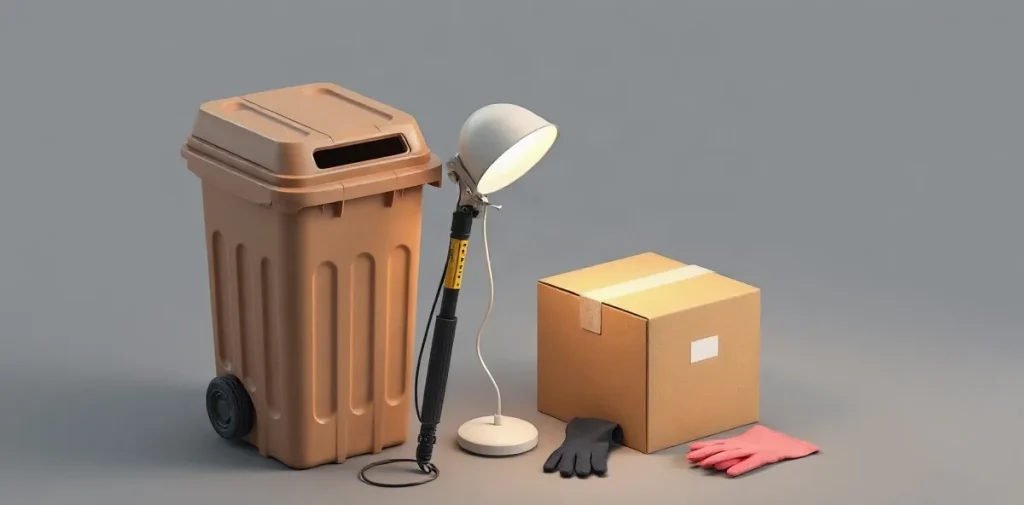
Dumpster diving is the recovery of discarded items from waste containers; do it only where access is lawful, and avoid anything that may be hazardous or contaminated. A practical approach starts with permission, careful inspection and a clear limit on what you will take.
Useful finds can come with risks that are not visible at a glance: sharp objects, chemicals, spoiled food or unstable loads. This guide explains how to assess a site, protect yourself and decide when to leave an item behind.
| Check | What to look for | Decision |
|---|---|---|
| Condition | Visible damage, contamination, or signs of spoilage | Take only if it appears usable and safe |
| Access | Property boundaries, warning signs, and business requests | Do not enter restricted areas; leave when asked |
| Handling | Dark or unseen contents inside the container | Use a flashlight and grabber tool |
| Site | Loose rubbish or an obstructed sidewalk | Leave the area clean and keep the path clear |
- $200 and $500 Typical fine range for a first-offense trespassing misdemeanor
What is dumpster diving, and what can you find?
Dumpster diving is the search of waste containers for goods that are still usable, whether for personal use or resale; the term includes containers beyond dumpsters.
Goods and food
Discarded goods can be ready to use, repairable, or damaged in ways that leave them functional. A blemished item, for example, may still work even if it is not suitable for ordinary retail sale.
Food recovery is also part of dumpster diving. Allegra Lab frames it as political activism: rescuing discarded food can question the practices of the food industry, not just provide something to eat.
- Functional: usable as found, though its appearance may be imperfect.
- Repairable: worth recovering if you can fix the fault.
- Food: recovered as food, with its condition assessed before use.
Personal use or resale
The same recovered item may serve a household need or be resold. That choice depends on its condition and whether it can be used or repaired—not simply on the fact that it was thrown away.
How do you assess an item before taking it?
Assess a discarded item where it sits: look it over in good light, check for damage that could affect its use, and leave it if you cannot inspect it safely.
A closed or dark container is not a place to search by touch. Do not reach blindly inside; use a flashlight to see what is there, and a grabber tool to bring an item within view. If you cannot inspect it without putting your hand or body into an unseen space, leave it.
- Cosmetic damage: Scratches, dents or a blemished surface may be appearance issues rather than evidence that an item has stopped working. Decide whether the item’s actual function matters more to you than its finish.
- Functional damage: Look for broken parts, cracks, missing components or other visible defects that could prevent normal use. If you cannot tell whether the item works, do not assume it does.
- Food: Check it carefully for signs of spoilage or contamination. Leave food that looks spoiled or has been exposed to contamination; appearance alone cannot establish that it is safe.
- Use and value: Take only items you have a practical use for. A product that might sell for money is not necessarily safe, complete or functional.
Before taking anything, consider whether you can inspect, transport and use it without taking avoidable risks. If its condition remains uncertain, leave it behind.
How can you recover discarded goods more safely and responsibly?
Recover discarded goods more safely by covering your skin, lighting the container, using a grabber instead of reaching inside, and leaving the site clean and without confrontation.
- Protect yourself: Wear thick gloves, long sleeves, and sturdy boots. Use a flashlight or headlamp to see what is inside before taking anything.
- Keep your hands out of unseen spaces: Use a grabber tool to lift items from dark or obstructed areas. Wash your hands thoroughly after handling waste.
- Leave the site tidy: Take only what you need, put nothing back carelessly, and do not scatter rubbish or block a sidewalk.
- Respect the business: If staff ask you to leave, leave. A recovery attempt is not worth turning into a confrontation.
A grabber helps you avoid putting your hands where you cannot see, but it does not make an unsafe container safe to enter. If an item is buried, sharp, or difficult to reach, leave it rather than rummaging blindly.
When can dumpster diving become trespassing or disorderly conduct?
Dumpster diving can become trespassing when a bin is on property you are not allowed to enter, and disorderly conduct when your actions disturb others or you refuse to leave. Check local rules, property boundaries and warning signs before approaching a bin.
Property access
Trespassing rules vary by state, and a business can restrict access to its property. A bin visible from a sidewalk is not necessarily open for public access: check whether reaching it would take you onto private property, and obey signs or instructions that bar entry. Local rules can also affect whether access is permitted.
A first-offense misdemeanor for trespassing typically carries fines between $200 and $500. The consequences depend on the state and the circumstances, so check the applicable local rules before you go.
Under the Fourth Amendment, intrusions into private spaces tend to become a problem. Respect property boundaries rather than treating a discarded item as permission to enter.
Conduct at the site
Disorderly conduct can arise from what happens at the bin, even where the property itself is public. In most states, scattering trash, blocking sidewalks or refusing to leave when asked can be grounds for a charge.
- Scattered waste: Keep discarded material contained and leave the area clean.
- Blocked sidewalk: Keep the path clear for people passing.
- Request to leave: Leave when asked, rather than continuing to search.
Before approaching a dumpster, check both the access rules and the business’s restrictions; at the site, keep the sidewalk clear and take your search elsewhere if asked to leave.
What are the limits of dumpster diving?
Dumpster diving is limited by uncertainty about an item’s condition, contamination, physical hazards, and whether you are allowed to enter the waste area. A clean-looking object is not proof that it is safe or functional.
A discarded appliance may have hidden damage, and packaging may not reveal what has leaked onto or into an item. Do not treat appearance as a test: avoid anything wet, broken, sharp, or exposed to unknown substances, and do not take food when its handling or storage is uncertain.
Business waste areas may be restricted, even when a dumpster is easy to reach. If staff or security ask you to leave, end the search and leave the property; do not argue or return to the area.
Gloves, long sleeves, sturdy boots, and a grabber can reduce direct contact with waste, but they do not make an unsafe container safe. Do not climb inside or reach into a space you cannot inspect; a grabber cannot remove the risk of unstable contents, sharp objects, or unknown contamination.
Keep different meanings of “diving” separate
Follow-up reading should match the subject: diving boards concern a structure used for entering water, diving bell spiders concern an animal, and dumpster diving raises questions about access to discarded property. Search for those subjects separately, and check the applicable local law before entering a waste area.
Frequently asked questions
What does dumpster diving mean?
What should I wear when dumpster diving?
Is dumpster diving legal everywhere?
How can I avoid reaching into dangerous waste?
Sources
- robingreenfield.org — “Robin Greenfield's Guide to Dumpster Diving – Robin Greenfield”
- US Recycling Equipment — “What You Should Know About Dumpster Diving”
- Reviews by Wirecutter — “Why Do Stores Throw Away So Many Perfectly Good Products? I Went Dumpster Diving to Find Out”
- allegralaboratory.net — “'Rescuing’ food: Dumpster Diving as Political Activism – Allegra Lab”
- mainorwirth.com — “Is Dumpster Diving Legal: Laws You Should Know – Mainor Wirth”