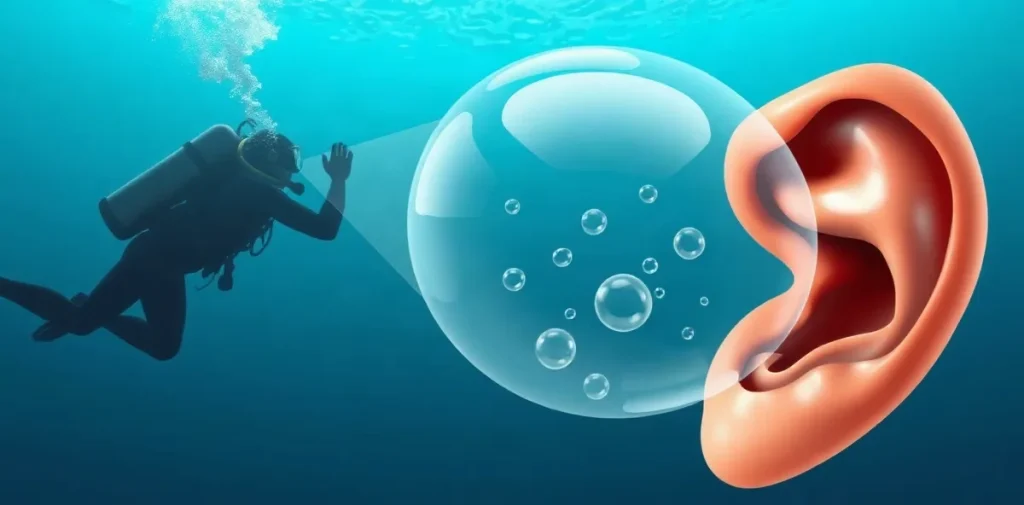
Inner ear decompression sickness (IEDCS) manifests quickly with symptoms like vertigo and hearing loss, requiring immediate recognition and action to reduce severity and improve outcomes. Prompt identification of these symptoms within hours after diving, followed by hyperbaric oxygen therapy, is essential to prevent permanent damage.
What Are the Early Symptoms of Inner Ear Decompression Sickness?
The earliest signs of IEDCS typically include sudden onset vertigo, tinnitus, hearing loss, and imbalance. These symptoms usually appear within 2 to 6 hours after surfacing from a dive. Vertigo is reported in over 70% of cases, often accompanied by nausea and vomiting. Hearing loss may be unilateral and can progress rapidly. According to the Undersea and Hyperbaric Medical Society (UHMS) guidelines from 2023, vertigo and tinnitus as presenting symptoms should raise immediate suspicion for IEDCS.
Symptom Timeline and Intensity
- Vertigo onset: typically within 1 to 3 hours post-dive
- Tinnitus and hearing loss: often appear concurrently or shortly after vertigo
- Nausea and imbalance: occur in approximately 60% of cases alongside vertigo
Failure to identify these early symptoms can delay treatment, increasing the risk of permanent vestibular damage.
How Can Divers Differentiate Inner Ear DCS from Other Conditions?
Differentiating IEDCS from middle ear barotrauma or benign positional vertigo is crucial. IEDCS symptoms arise after decompression and are linked to recent diving history, whereas middle ear barotrauma results from pressure changes during descent or ascent. Benign positional vertigo tends to be positional and not linked to diving.
Diagnostic Criteria
- History of rapid or deep ascent within the last 6 hours
- Presence of neurological signs such as nystagmus or ataxia
- Exclusion of ear infection or mechanical injury through otoscopic examination
According to a 2025 review in the Journal of Dive Medicine, audiometric testing and vestibular function tests can aid diagnosis, with abnormal caloric testing supporting IEDCS diagnosis.
What Immediate Steps Should Be Taken if Inner Ear DCS Is Suspected?
Immediate cessation of diving and administration of 100% oxygen is the first-line emergency response. Oxygen reduces bubble size and improves tissue oxygenation. The diver should be placed in a supine position to minimize vertigo symptoms and transported to a hyperbaric treatment facility without delay.
Emergency Response Protocol
- Administer 100% oxygen at surface level immediately
- Keep the patient hydrated to support circulation
- Arrange hyperbaric oxygen therapy (HBOT) within 6 hours of symptom onset
Prompt hyperbaric treatment significantly improves recovery rates; studies show that starting HBOT within 6 hours reduces permanent hearing loss by over 40% (UHMS, 2024).
What Are the Recommended Hyperbaric Treatment Protocols for IEDCS?
The US Navy Treatment Table 6 remains the standard for HBOT in treating IEDCS, involving 2.8 atmospheres absolute (ATA) for 4 hours 45 minutes with oxygen breathing intervals. Some centers also use Table 5 variants for less severe cases or for initial assessment.
Comparison of Common Protocols
| Protocol | Pressure (ATA) | Duration | Oxygen Breathing |
|---|---|---|---|
| US Navy Table 6 | 2.8 | 4h 45m | Mostly continuous with air breaks |
| US Navy Table 5 | 2.8 | 2h 20m | Continuous oxygen |
Facilities like the Duke University Medical Center Hyperbaric Unit have reported over 80% symptomatic improvement using Table 6 for IEDCS patients treated within 12 hours.
How Can Divers Reduce Their Risk of Developing Inner Ear DCS?
Risk reduction involves conservative dive profiles, avoiding rapid ascents, and adhering to decompression schedules. Divers with pre-existing inner ear issues should be particularly cautious. Using dive computers with real-time decompression monitoring, such as the Shearwater Teric model priced around $1,400, can help manage ascent rates.
Key Preventive Measures
- Ascend no faster than 9 meters per minute
- Perform safety stops at 5 meters for 3 to 5 minutes
- Avoid repetitive deep dives within 24 hours
- Maintain hydration and avoid alcohol before diving
Adherence to the 2026 Divers Alert Network (DAN) guidelines significantly lowers incidence rates of IEDCS among recreational divers.
- 70% vertigo incidence in IEDCS cases
- 6 hours critical window for hyperbaric treatment
- $1,400 approximate cost of a dive computer with ascent monitoring
- 2.8 ATA pressure used in US Navy HBOT protocols
Frequently asked questions
Can inner ear decompression sickness occur after shallow dives?
Is hearing loss from inner ear DCS always permanent?
What specialist should a diver see after suspected IEDCS?
Are there any home treatments for inner ear DCS?
Key takeaways
- Early recognition of vertigo and hearing loss within hours post-dive is vital for IEDCS diagnosis.
- Differentiation from other ear conditions requires careful history and examination.
- Immediate oxygen administration and rapid access to hyperbaric treatment reduce long-term damage.
- US Navy Treatment Table 6 is the accepted standard for IEDCS HBOT.
- Conservative dive profiles and adherence to ascent rates mitigate IEDCS risk.
Conclusion
Recognizing the early signs of inner ear decompression sickness is a critical skill for divers and dive professionals to minimize lasting harm. Rapid onset vertigo and hearing loss following dives should prompt immediate oxygen therapy and urgent referral for hyperbaric treatment, ideally within 6 hours. Adhering to safe ascent practices and using advanced dive computers can further reduce the risk, helping ensure divers’ inner ear health remains intact.