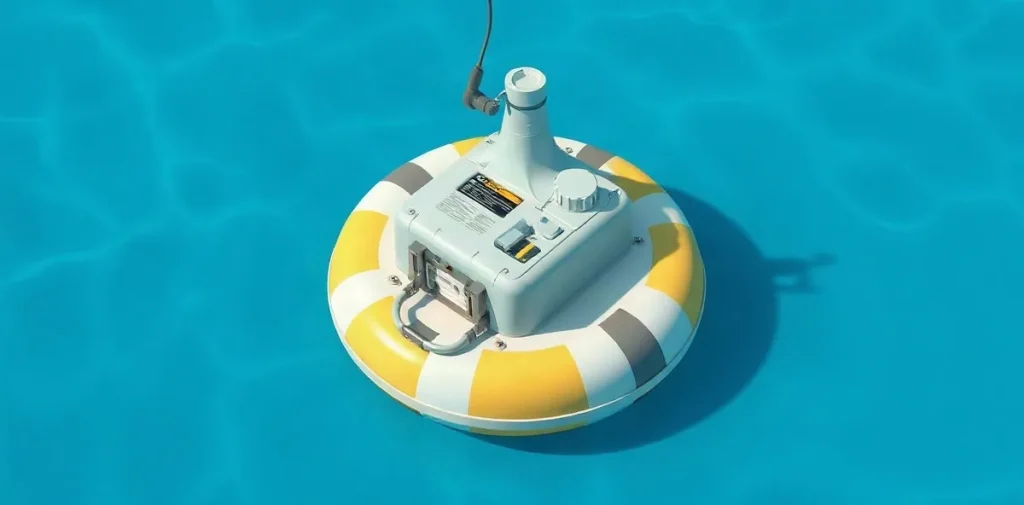
Diving in support of buoy engineering: The RTEAM project is a 1989 journal article by Kery about scientific diving conducted in support of buoy engineering. The subject brings underwater work into an engineering setting: divers may need to inspect, install or maintain equipment while managing the effects of immersion, depth and task demands.
What connects scientific diving and buoy engineering?
A buoy is an engineered structure that operates in water, where components may be submerged, exposed to currents and difficult to reach from the surface. Diving can provide direct access for engineering work, but it also adds constraints that do not apply to a task performed on dry land.
The article’s title places diving in a supporting role within a project concerned with buoy engineering. That framing matters: a dive is not an end in itself, but part of a broader operation in which underwater access, technical requirements and diver safety must be considered together.
What makes underwater engineering work demanding?
Immersion changes how a person moves and works. Water resistance makes movement harder, buoyancy affects positioning, and limited visibility or access can make a task more difficult to perform and verify. Equipment must function in the underwater environment while allowing the diver to work effectively.
Depth and time underwater also shape the operation. As pressure increases with depth, breathing gas is delivered at the surrounding pressure; the diver’s gas supply, exposure and return to the surface therefore need to be managed as part of the dive plan. The task itself can add exertion, which affects breathing and gas consumption.
- Buoyancy and trim: control of position and orientation while working near a structure.
- Task loading: the physical and mental demands of carrying out engineering work underwater.
- Environmental access: visibility, current, depth and the ability to reach the relevant equipment.
- Decompression: management of pressure exposure and ascent to reduce decompression risk.
- Operational coordination: matching the dive plan, equipment and work sequence to the engineering task.
Why does the engineering task matter to dive planning?
A planned depth and duration are only part of a working dive. The diver must also be able to reach the work site, maintain a useful position, communicate with the team and complete the task without exceeding the operation’s limits. A change in conditions or an unexpected delay can alter the practical demands of the dive.
Scientific diving often involves work that needs observation, measurement or direct interaction with an underwater subject. Engineering support shares that dependence on reliable access, but the work may also require tools, careful handling and coordination with people responsible for the larger project. Planning has to account for both the scientific-diving environment and the technical objective.
How does this subject fit into diving research?
Diving research spans physiology, medicine, equipment and the organisation of underwater work. Buoy engineering support sits at the intersection of these concerns: engineering creates the task, while diving science considers how people and equipment can carry it out under pressure and in an aquatic environment.
This kind of subject is useful to scientific divers and project teams because it keeps the operational context visible. The same principles—task demands, environmental conditions, equipment suitability and pressure exposure—are relevant whenever divers work on submerged infrastructure, although the details vary with the site and job.
What should readers take from the project’s context?
Kery’s article belongs to a 1989 scientific-diving symposium volume, placing its subject within a professional discussion of diving used to support research and practical underwater work. Its title identifies a project-based application rather than a general account of decompression or clinical treatment.
For current operations, historical project work is best read alongside the procedures and equipment requirements that apply today. A task involving underwater engineering needs planning suited to its actual depth, conditions, work sequence and diver qualifications; medical concerns should be discussed with a diving-medicine physician.
Frequently asked questions
What is the RTEAM project about?
Why does buoy engineering involve diving?
What diving considerations are relevant to underwater engineering?
Citation details
- Title: Diving in support of buoy engineering: The RTEAM project
- Authors: Kery, SM
- Year: 1989
- Published in: In: Lang, MA; Jaap, WC (ed). Diving for Science…1989. Proceedings of the American Academy of Underwater Sciences annual scientific diving symposium 28 September – 1 October 1989 Wood Hole Oceanographic Institution, Woods Hole, Massachusetts, USA
- Record type: Journal article
- Repository record: Rubicon Research Repository, handle 123456789/10199
This page is an original summary written by the Rubicon editors from the publication’s bibliographic record. It does not reproduce the paper, its abstract or its data; consult the publication itself for its methods and findings.