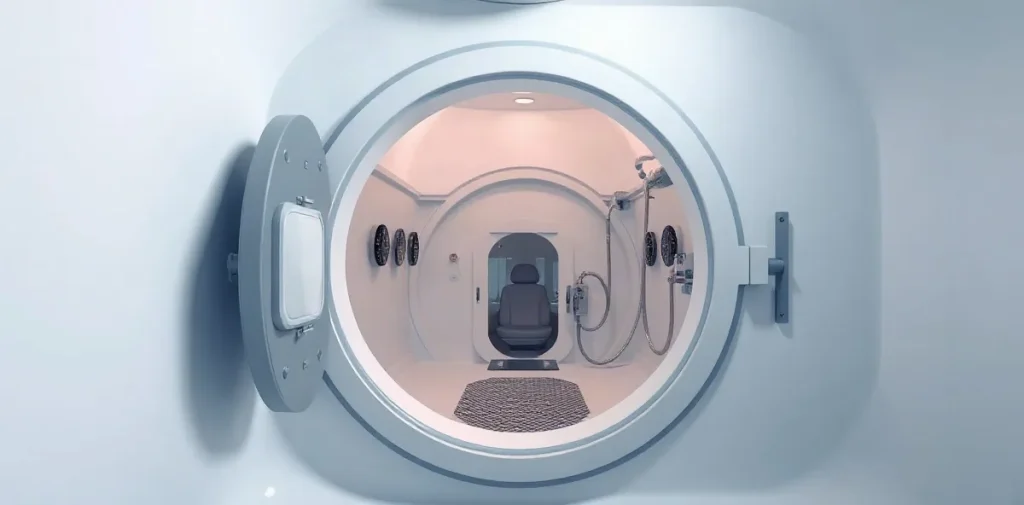
The Nursing Role in Hyperbaric Medicine is a 1997 meeting abstract by Josefsen and colleagues in Undersea & Hyperbaric Medicine. Its subject is nursing practice in hyperbaric care: a clinical role that matters because treatment takes place in a pressurised environment where patient care, equipment, communication and safety must work together.
What does nursing involve in hyperbaric medicine?
Hyperbaric medicine uses increased ambient pressure, commonly in a chamber, in conjunction with breathing oxygen or another prescribed gas. The environment changes how gases behave in the body and introduces clinical and operational demands not encountered in an ordinary treatment room. Nursing is part of the team that provides care while treatment proceeds under these conditions.
The work associated with this subject concerns how nursing responsibilities fit into the delivery of hyperbaric treatment. That includes the practical connection between a patient’s clinical needs and the requirements of a pressurised setting. Clear procedures and coordination are important because treatment depends on both sound clinical care and reliable chamber operation.
Why does pressure change the clinical setting?
As ambient pressure rises, the partial pressure of a gas also rises when its proportion in the breathing mixture stays constant. This affects gas exchange and the amount of gas that can dissolve in body fluids. Oxygen is therapeutically useful in hyperbaric care, but exposure must be controlled: oxygen at elevated partial pressure can have adverse effects.
Pressure also affects enclosed gas spaces in the body and equipment. During compression and decompression, gas volumes change, so equalising pressure and following chamber procedures are important considerations. These principles connect hyperbaric nursing with the wider physiology and safety knowledge used in diving medicine.
What clinical and operational considerations matter?
Care in a chamber involves more than observing the patient. Staff need to account for the treatment plan, the patient’s condition, communication methods, chamber environment and the stages of pressurisation and return to surface pressure. How these tasks are organised is a central concern for clinical teams working in hyperbaric settings.
- Patient observation: noticing changes in comfort or condition and communicating concerns promptly.
- Pressure and gas exposure: understanding that chamber pressure and breathing gas influence physiological response.
- Equipment and procedures: working within chamber-specific operating and emergency arrangements.
- Team coordination: maintaining clear communication among the patient, nursing staff and other members of the treatment team.
These are general considerations, not a substitute for local clinical protocols or professional training. Individual treatment decisions belong with the responsible hyperbaric team; divers with medical concerns should consult a diving-medicine physician.
How does this topic connect to diving medicine?
Hyperbaric medicine and diving share core concerns about pressure, gas exposure and human physiology. Divers may enter hyperbaric care for conditions associated with diving, while the principles used in chamber treatment also inform broader understanding of pressure-related illness. Nursing practice therefore sits at the intersection of clinical care, chamber operations and the physiology of breathing gases.
The subject also reflects the development of hyperbaric medicine as a team-based specialty. Physicians assess indications and treatment, while trained clinical and technical staff support safe delivery. Studying professional roles helps clarify how complex treatment systems function without reducing care to a single device or intervention.
Frequently asked questions
What is hyperbaric medicine?
Why is nursing important in a chamber?
How is hyperbaric care relevant to divers?
Citation details
- Title: The Nursing Role in Hyperbaric Medicine
- Authors: Josefsen, L; Woodward, C; Lewis, D; Hodge, J; Camporesi, EM
- Year: 1997
- Published in: Undersea & Hyperbaric Medicine 1997
- Record type: Meeting abstract
- Repository record: Rubicon Research Repository, handle 123456789/264
This page is an original summary written by the Rubicon editors from the publication’s bibliographic record. It does not reproduce the paper, its abstract or its data; consult the publication itself for its methods and findings.
Related reading on Rubicon
- The Role of Pre-Dive Safety Checks in Preventing Accidents
- The Role of Redundant Systems in Enhancing Dive Safety
- Microbubbles’ Role in Decompression Stress and Risk
- Dive Medicine Primer: Essential Physiology Every Diver Knows
- Thesis Research in Diving and Hyperbaric Medicine
- More on Dive Medicine
- Browse the Research Library
