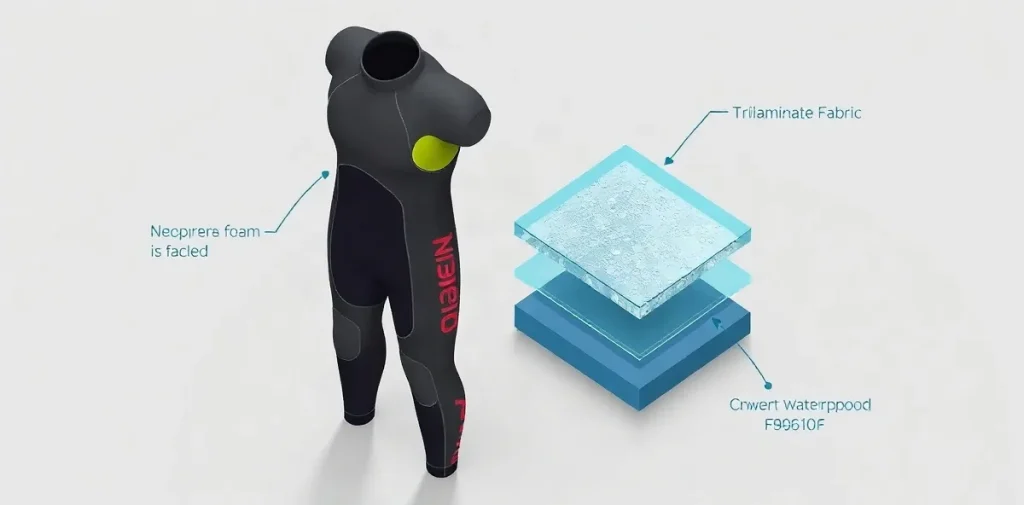
Dive suit materials differ primarily in thermal protection and durability, with neoprene and trilaminate being the most common. Neoprene suits provide excellent insulation through thickness options up to 7 mm, ideal for cold water, while trilaminate suits prioritize durability and dry diving capabilities but offer less inherent warmth. The choice depends on the diver’s environment, thermal needs, and budget.
What are the main materials used in dive suits and how do they differ?
The two dominant materials in dive suits are neoprene and trilaminate, each with distinct properties tailored to different diving conditions. Neoprene is a synthetic rubber known for its closed-cell structure that traps gas bubbles, providing insulation. Trilaminate combines a waterproof outer shell with a breathable membrane and inner lining, mainly used in dry suits for cold and contaminated water diving.
Material Characteristics
- Neoprene: Thickness ranges from 3 mm to 7 mm, with thicker suits offering better insulation but reduced flexibility.
- Trilaminate: Typically 1.5 to 2.5 mm thick, designed for durability and water sealing rather than insulation.
- Other Materials: Some suits use limestone-based neoprene for eco-friendliness or incorporate titanium layers for added warmth.
How does thermal protection vary between neoprene and trilaminate suits?
Neoprene suits provide direct thermal insulation due to their foam structure, with 7 mm suits maintaining core temperature in water as cold as 4°C. Trilaminate suits, by contrast, rely on an insulating undergarment because the material itself is thin and non-insulating.
Thermal Performance Comparison
| Suit Type | Thickness (mm) | Insulation (Clo Equivalent) | Recommended Min Water Temp (°C) |
|---|---|---|---|
| Neoprene (Bare) | 7 | 0.8 | 4–10 |
| Neoprene (5 mm) | 5 | 0.6 | 10–15 |
| Trilaminate (with undergarment) | 2 | Variable (0.7+) | 0–10 (with proper layering) |
Why is durability important and how do materials compare in this regard?
Durability affects a dive suit’s lifespan and resistance to abrasion, punctures, and UV damage. Trilaminate suits excel due to their tough outer shell, often lasting 5–10 years with regular use, while neoprene suits, especially thicker models, typically last 3–5 years before compression and degradation affect performance.
Durability Factors
- Trilaminate: Resistant to cuts and chemical damage, ideal for diving in contaminated or rocky environments.
- Neoprene: Susceptible to tears and UV degradation; requires careful maintenance and storage.
- Care and Maintenance: Proper rinsing and drying can extend suit life by up to 30%.
How do costs vary between neoprene and trilaminate dive suits?
Neoprene suits generally cost less upfront, with entry-level 5 mm suits priced between $150 and $400. Premium neoprene suits with titanium lining or Yamamoto limestone neoprene can reach $600–$900. Trilaminate dry suits require additional investment, starting at $1,200 and often exceeding $2,000 for models with high-grade seals and valves.
Price Range Overview
| Material | Typical Price Range (USD) | Additional Costs |
|---|---|---|
| Neoprene 5 mm | $150–$400 | Boots, gloves extra |
| Neoprene 7 mm Titanium-lined | $600–$900 | Gloves, hood included |
| Trilaminate Dry Suit | $1,200–$2,500 | Undergarments $100–$300 |
What diving conditions best suit neoprene versus trilaminate suits?
Neoprene suits are optimal for warm to moderately cold water scuba diving due to their direct insulation and flexibility. Trilaminate suits are favored for very cold water, contaminated environments, or professional diving where dry conditions and durability are critical.
Environmental Suitability
- Neoprene: Recreational diving in 10–25°C water, ideal for tropical to temperate zones.
- Trilaminate: Cold water below 10°C, polluted or hazardous water, and commercial diving scenarios.
- Hybrid Options: Some divers use neoprene dry suits to combine insulation with dryness at a higher price point.
Frequently asked questions
Can neoprene suits be used for dry diving?
How often should I replace my neoprene dive suit?
Are trilaminate suits suitable for warm water diving?
What is the environmental impact of neoprene suits?
Key takeaways
- Neoprene suits provide superior thermal insulation up to 7 mm thickness, ideal for cold to temperate waters.
- Trilaminate suits offer greater durability and dry diving capability but require insulating undergarments.
- Neoprene suits generally cost less but have a shorter lifespan compared to trilaminate suits.
- Selection depends on diving environment, temperature, and budget constraints.
- Maintenance significantly affects suit longevity, especially for neoprene.
In conclusion, choosing the right dive suit material hinges on matching thermal protection and durability needs to specific diving environments. Neoprene remains the go-to for most recreational divers seeking warmth and flexibility, especially in water temperatures above 4°C. For serious cold-water or professional divers requiring dry conditions and rugged construction, trilaminate suits paired with high-quality insulating undergarments represent the best investment despite their higher upfront cost. Understanding these differences ensures divers optimize comfort, safety, and gear lifespan in 2026 and beyond.