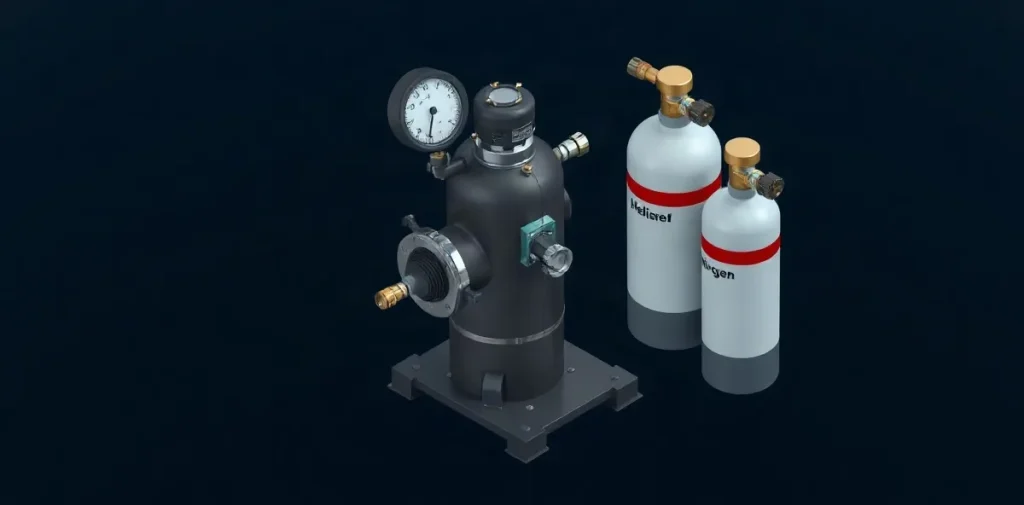
Research into reversing nitrogen narcosis with helium pressure examines how changing the gases a diver breathes under pressure affects impaired nervous-system function. It sits at the intersection of gas physiology and deep-diving science: narcosis can alter judgment and coordination, while helium changes the breathing mixture and its physical effects at depth.
What is nitrogen narcosis?
Nitrogen narcosis is a reversible change in nervous-system function associated with breathing nitrogen under elevated pressure. Its effects can include impaired attention, judgment, memory and coordination. The degree and character of impairment vary between divers and circumstances, so narcosis is not simply a predictable feeling of intoxication.
As depth increases, the partial pressure of nitrogen in a breathing gas rises. Partial pressure is the share of total pressure contributed by one gas; it helps explain why a familiar gas mixture can have different physiological effects underwater than at the surface. Narcosis matters because a diver may feel capable while performing less reliably on a task.
Why examine helium and pressure together?
Helium is used in diving gases partly because it has lower narcotic effects than nitrogen. Yet a question about helium and nitrogen narcosis is not just a comparison of gases: pressure itself changes, and the breathing mixture must be considered alongside the conditions under which it is breathed.
Research framed around reversal asks how narcosis-related impairment responds when helium is introduced in a pressurised setting. That question can help distinguish the effects of gas composition from those of pressure and clarify how reversible changes in performance relate to the physical conditions of a dive. It does not make helium a simple antidote or remove the need to manage depth and gas choice carefully.
How do studies of narcosis approach the question?
Studies can compare performance under controlled pressure and gas conditions, using tasks that test functions relevant to diving. Depending on the research question, these may assess attention, reaction, coordination or problem-solving. The central challenge is to vary gas composition or pressure in a way that makes their separate contributions interpretable.
Different experimental approaches address related but distinct parts of the problem. Research on the narcotic potency of gases asks how they affect performance; work on the roles of nitrogen, oxygen and carbon dioxide examines how several components of compressed air may contribute. Experiments on helium and pressure add a question about whether changes in the breathing environment alter narcosis-related impairment.
- Gas composition: which gases are breathed, and at what partial pressures.
- Pressure: the ambient conditions that change the partial pressure of each gas.
- Performance: the task used to assess attention, judgment or coordination.
- Interpretation: whether an observed change follows from gas, pressure or their interaction.
What does this mean for divers and clinicians?
For divers, narcosis is a practical human-factors concern, not merely a laboratory effect. Impaired judgment or coordination can complicate navigation, communication and responses to an unexpected problem. A diver’s own sense of impairment is not a dependable substitute for planning a suitable gas and depth profile.
Diving physicians and hyperbaric clinicians need to distinguish narcosis from other causes of altered performance or mental state. Gas exposure, pressure and the broader clinical situation all matter. Questions about an individual’s fitness to dive or symptoms after a dive belong with a diving-medicine physician, rather than being settled by general information about gas effects.
How does this research fit into diving science?
Gas narcosis research is part of a wider effort to understand how pressure and breathing mixtures affect human function underwater. It connects laboratory measures of performance with operational questions about deep diving, while also intersecting with the study of oxygen, carbon dioxide and the diving response. Each line of work isolates a different piece of a complex environment.
The value of studying helium alongside pressure is therefore broader than selecting a breathing gas. It helps frame how researchers test causal mechanisms, how clinicians interpret impairment, and why dive planning must account for both the gas and the conditions in which it is breathed. The specific implications depend on the diver, the task and the exposure.
Frequently asked questions
Is nitrogen narcosis the same as oxygen toxicity?
Does helium eliminate narcosis?
Why measure performance rather than ask how a diver feels?
An original research-library explainer written by the Rubicon editors. It is not a summary of a specific publication.
Related reading on Rubicon
- How Pressure Amplifies Nitrogen Narcosis Effects on Divers
- Common Misconceptions About Nitrogen Narcosis and Safety
- Understanding Nitrogen Narcosis: Depth, Effects, Prevention
- Diving Physics: Gas Laws, Pressure Effects, and Safety
- Reversal of Nitrogen Narcosis by Helium Pressure
- Repeated Hyperbaric Exposure and Nitrogen Narcosis
- More on Diving Science
- Browse the Research Library