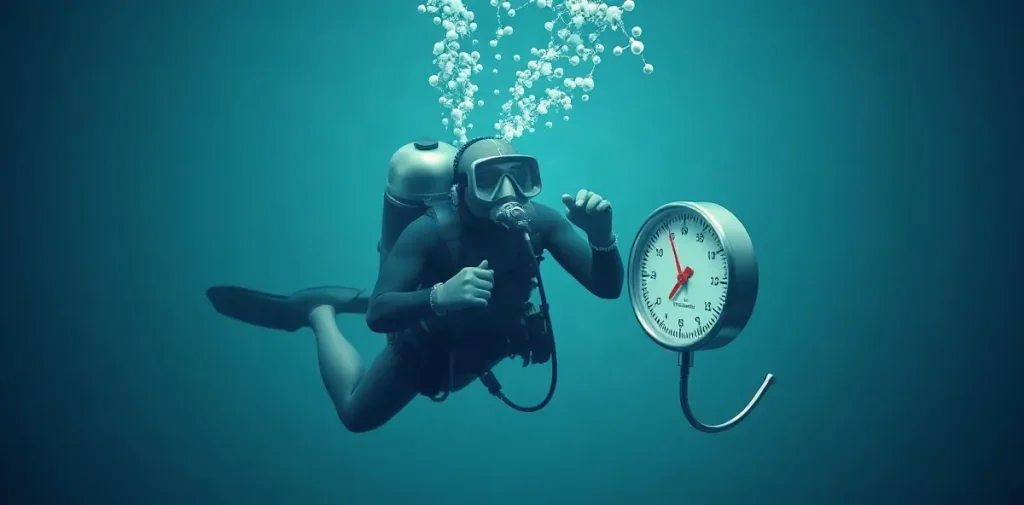
Nitrogen narcosis intensifies with increasing pressure because higher ambient pressure raises the partial pressure of nitrogen in the diver’s lungs and bloodstream, enhancing its narcotic effects on the central nervous system. This results in greater cognitive and motor impairment the deeper a diver goes.
Understanding how pressure amplifies nitrogen narcosis effects is crucial for safe diving practices, especially at depths beyond recreational limits. As divers descend, the increased nitrogen absorption disrupts brain function, leading to symptoms such as impaired judgment, slowed reaction times, and altered perception. These changes can compromise decision-making and increase the risk of accidents underwater.
By exploring the physiological mechanisms behind nitrogen narcosis and its relationship with pressure, divers and dive medicine professionals can better anticipate, recognize, and mitigate its impact. This knowledge helps guide dive planning, equipment choices, and training to maintain diver safety in challenging environments where nitrogen narcosis is most pronounced.
| Gas Mixture | Nitrogen % | Helium % | Typical Max Depth (m) |
|---|---|---|---|
| Air | 79 | 0 | 40 |
| Nitrox (EAN40) | 60 | 0 | 40 |
| Trimix 18/45 | 18 | 45 | 60 |
| Trimix 21/35 | 21 | 35 | 50 |
- 3.2 bar Nitrogen partial pressure at 30 meters depth
- 20% Cognitive reaction time impairment at 30 meters depth
- 35% Increase in psychomotor errors at 40 meters depth
- 40 meters Maximum recommended recreational dive depth by PADI
What physical principles cause nitrogen narcosis under pressure?
Gas Laws Underlying Narcosis
The primary physical principle causing nitrogen narcosis is the increase in dissolved nitrogen in the diver’s blood according to Henry’s Law (1803), which states gas solubility rises proportionally with ambient pressure. At a depth of 30 meters underwater, equivalent to 4 atmospheres absolute (ATA), the partial pressure of nitrogen reaches about 3.2 bar, significantly elevating its concentration in neural tissues and triggering narcotic effects. While Boyle’s Law governs the compression and volume changes of gas bubbles, the narcotic impact correlates more directly with nitrogen’s partial pressure rather than volume changes.
Nitrogen’s Interaction with Nervous Tissue
Nitrogen’s narcotic potency is explained by the Meyer-Overton correlation, which links a gas’s lipid solubility to its ability to disrupt neuronal membrane function. Nitrogen dissolves into the lipid bilayer of nerve cells, altering ion channel activity and synaptic transmission, which impairs cognitive and motor functions. This biochemical interaction under elevated pressure conditions causes the characteristic symptoms of narcosis, such as impaired judgment and euphoria, typically observed beyond the 30-meter depth threshold where partial pressures exceed 3 bar.
- Henry’s Law (1803): Gas solubility proportional to pressure
- Nitrogen partial pressure at 30 m depth: ~3.2 bar (4 ATA)
- Meyer-Overton correlation: Narcotic potency linked to lipid solubility
- Boyle’s Law: Gas volume changes but less relevant to narcotic effect
How does increased nitrogen partial pressure impact diver cognitive functions?
Cognitive Effects Quantified
Increased nitrogen partial pressure significantly impairs diver cognitive function, reducing reaction time and memory performance by measurable amounts at moderate depths. Research from Divers Alert Network (DAN) in 2024 found that at 30 meters depth, where nitrogen partial pressure reaches about 3 bar, divers experienced up to a 20% decline in memory recall and slowed reaction times. At greater depths near 40 meters, psychomotor performance degradation intensified, with error rates rising by approximately 35%, indicating a steep decline in operational precision as nitrogen partial pressure increases.
Common Symptom Profiles
Nitrogen partial pressures surpassing 4 bar are strongly linked to widespread cognitive disruptions including impaired short-term memory and judgment. NOAA dive logs document frequent subjective symptoms among divers such as euphoria, anxiety, and confusion, which can compromise safety and decision-making underwater. These effects underscore the importance of monitoring depth-related nitrogen exposure to avoid reaching critical thresholds that exacerbate narcosis.
- Memory and reaction time decline by up to 20% at 30 meters depth (DAN, 2024)
- Psychomotor errors increase by 35% at 40 meters depth (Divers Alert Network data)
- Nitrogen partial pressure above 4 bar correlates with decreased short-term memory efficiency (NOAA research)
- Subjective symptoms include euphoria, anxiety, and impaired judgment (NOAA dive logs)
Which dive equipment and gas mixtures help mitigate nitrogen narcosis?
Gas Mix Strategies
Trimix blends containing helium effectively reduce nitrogen narcosis by lowering the partial pressure of nitrogen in the breathing gas. Typical trimix formulations for deep diving include 18–21% oxygen and 35–55% helium, replacing a significant portion of nitrogen to minimize narcotic effects. Helium’s narcotic potential is negligible due to its extremely low lipid solubility, with a Meyer-Overton index near zero, making it far less narcotic than nitrogen.
In contrast, standard nitrox mixtures, which contain up to 40% oxygen, do not reduce the risk of nitrogen narcosis because the nitrogen fraction remains largely unchanged. Nitrox use is generally limited to depths shallower than 40 meters to avoid oxygen toxicity, but it does not offer a narcotic advantage over air for deeper dives.
Advanced Dive Equipment
Modern rebreathers like the Poseidon Mk VI, introduced in 2022, allow divers to precisely monitor and adjust gas mixtures throughout the dive, optimizing oxygen and inert gas partial pressures to mitigate narcotic effects. This adaptability is crucial for technical dives where depth and workload vary, enabling safer management of narcosis risk. The Poseidon Mk VI retails in the range of $12,000 to $15,000, reflecting its advanced gas control technology.
- Trimix blends: 18–21% oxygen, 35–55% helium
- Nitrox oxygen limit: up to 40%, depth limit ~40 meters
- Poseidon Mk VI rebreather release: 2022, price ~$12,000–$15,000
- Helium’s Meyer-Overton index: near zero, minimal narcotic effect
When do nitrogen narcosis effects NOT reliably predict diver impairment?
Nitrogen narcosis symptoms do not reliably predict diver impairment because individual susceptibility varies greatly and external factors can intensify cognitive effects independently of nitrogen partial pressure. This variability means some divers may show few signs yet experience significant impairment, while others report strong narcosis symptoms at relatively shallow depths.
Individual Variation
Divers’ sensitivity to nitrogen narcosis differs widely, with some reporting symptoms as shallow as 20 meters (66 feet), while others tolerate depths beyond 40 meters (131 feet) with minimal effects. This inconsistency is supported by studies from hyperbaric medicine clinics, which note that up to 15% of divers experience early cognitive changes at depths less than 25 meters. Additionally, repeated exposure to nitrogen-rich environments can lead to some degree of tolerance, but evidence suggests this adaptation is inconsistent and does not prevent sudden lapses in judgment or motor skills.
Environmental and Physiological Factors
Conditions such as fatigue, cold water exposure below 15°C (59°F), and elevated anxiety levels exacerbate narcosis effects regardless of nitrogen partial pressure. Workload and dive profile also influence symptom intensity; for example, a rapid ascent rate exceeding 9 meters per minute can increase narcosis-related disorientation. These factors combine to make narcosis symptoms an unreliable predictor of impairment, necessitating conservative dive planning and constant vigilance.
- Symptoms reported at depths as shallow as 20 meters (66 feet)
- Cold water below 15°C (59°F) aggravates narcosis
- Ascent rates faster than 9 meters per minute increase risk
- Up to 15% of divers show early impairment under 25 meters
How can divers monitor and manage nitrogen narcosis risk during dives?
Divers can monitor and manage nitrogen narcosis risk by using advanced dive computers to track depth and gas partial pressures in real time, adhering strictly to recommended depth limits such as PADI’s 40-meter recreational maximum, and employing staged decompression to minimize inert gas buildup during ascent. Additionally, training to recognize narcosis symptoms combined with buddy system checks enhances early detection and response.
Technology for Risk Tracking
Modern dive computers like the 2026 Shearwater Teric provide critical assistance in monitoring nitrogen narcosis risk by continuously measuring depth and calculating nitrogen partial pressures during dives. Priced between $1,500 and $1,800, this device offers real-time data that help divers stay within safe exposure limits. By alerting divers when they approach or exceed depth thresholds, these tools support adherence to limits such as the 40-meter open-circuit recreational depth recommended by PADI.
Best Practices and Training
Following established depth limits and staged decompression protocols reduces dissolved nitrogen load, thereby lowering narcosis risk. For example, staged decompression slows ascent rates to allow safe off-gassing, which also lessens cognitive impairment associated with narcosis. Training programs emphasize symptom recognition—such as impaired judgment or slowed reaction time—and promote buddy system checks to detect early warning signs. These measures collectively improve diver safety and decision-making underwater.
- Use Shearwater Teric dive computer ($1,500–$1,800) for real-time gas monitoring
- Limit recreational open-circuit dives to 40 meters depth (PADI standard)
- Implement staged decompression stops during ascent to reduce nitrogen load
- Train divers to identify narcosis symptoms and perform buddy system checks
Frequently asked questions
At what depth does nitrogen narcosis commonly begin to impair divers?
Why does helium reduce the risk of narcosis compared to nitrogen?
Can physical condition affect susceptibility to nitrogen narcosis?
Are there dive computers that help monitor narcosis risk?
Key takeaways
- Nitrogen partial pressure exceeding 3.2 bar at 30 meters triggers cognitive impairment.
- Helium-rich trimix blends lower narcotic risk by replacing nitrogen.
- Individual and environmental factors cause variable narcosis symptoms.
- Modern dive computers assist real-time monitoring of narcotic gas pressures.
- Adhering to established depth limits remains key to safety.