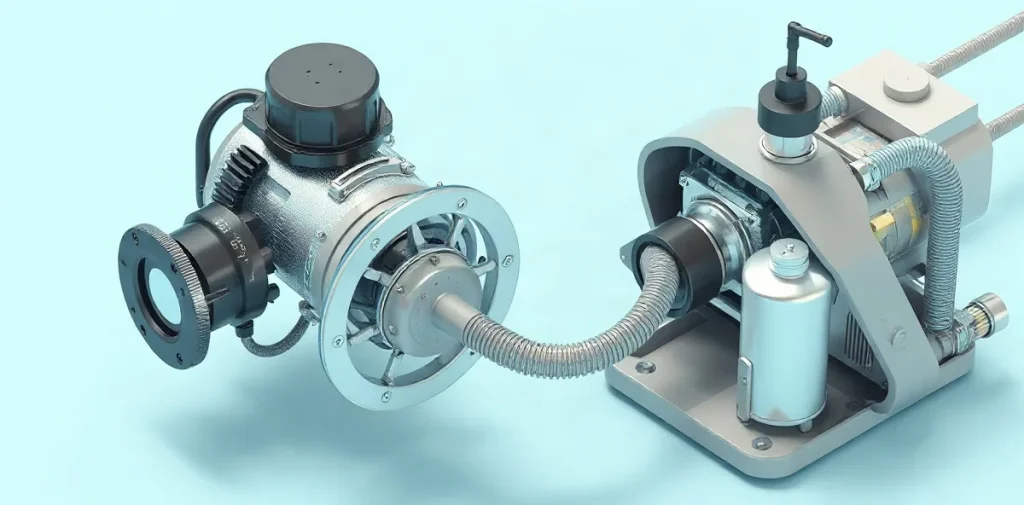
Mixed-gas closed-circuit rebreathers combine a reusable breathing loop with gas mixtures chosen for underwater work. In deep scientific diving, their use raises questions about oxygen control, carbon-dioxide removal, decompression and equipment reliability. Understanding those interacting demands matters to divers planning complex missions and to the clinicians and teams managing their risks.
What makes a rebreather “closed circuit”?
A diver exhales into a breathing loop rather than releasing each breath directly into the water. A scrubber removes carbon dioxide, while oxygen is added to replace what the diver’s body consumes; the diver breathes the remaining loop gas again. This can reduce gas consumption and bubbles compared with open-circuit scuba.
Closed circuit does not mean that the gas mixture stays fixed. Oxygen is consumed during the dive, and the loop’s composition must be managed. In mixed-gas systems, diluent gas helps maintain loop volume and adjust oxygen concentration. The diver’s depth, workload and system operation all affect what is breathed.
Why mix gases for deeper dives?
As depth increases, pressure raises the partial pressure of each gas in the breathing mixture. Oxygen partial pressure must remain within a suitable operating range: too little can impair consciousness, while too much can cause oxygen toxicity. Nitrogen can contribute to narcosis, and helium may be used in breathing mixtures to address some deep-diving constraints.
Choosing a mixture is therefore not simply a matter of having enough gas. It involves the dive profile, the rebreather’s operating limits, the diver’s workload and the planned decompression. Scientific missions add task demands: a diver may need to observe, measure or collect data while maintaining awareness of the breathing system.
Which physiological problems shape the dive?
Carbon dioxide is a central concern because the scrubber must remove it from every breath. A depleted, unsuitable or malfunctioning scrubber can allow carbon dioxide to accumulate. The resulting symptoms can interfere with judgment and physical performance, while exertion increases the body’s carbon-dioxide production.
Oxygen exposure is another constraint. The loop’s oxygen partial pressure changes with depth and gas addition, so it requires active monitoring and control. Decompression also remains essential: inert gases dissolved in body tissues during the dive must be managed during ascent, according to the exposure and the planned profile.
- Oxygen control: maintain an appropriate oxygen partial pressure as depth and loop conditions change.
- Carbon-dioxide removal: ensure the scrubber is correctly prepared and functioning throughout the dive.
- Gas composition: account for the effects of pressure on oxygen and inert gases.
- Decompression: plan the ascent for the dive’s depth, duration and breathing mixture.
- Task loading: consider how scientific work competes with equipment monitoring and situational awareness.
How is this research area approached?
Research and technical evaluation of mixed-gas rebreathers bring together equipment performance and human physiology. Questions can include how reliably a system controls oxygen, how effectively its scrubber removes carbon dioxide, and how the diver’s breathing gas changes during a planned profile. The results of any particular evaluation depend on the equipment, procedure and conditions being examined.
Scientific diving provides a practical setting for these questions because research tasks may require time underwater and careful work at depth. But the scientific objective does not change the physiology: gas choice, breathing-loop function, decompression and emergency planning remain linked. The broader field draws on diving physiology, equipment engineering and operational safety rather than treating any one component in isolation.
For dive teams, preparation includes checking the rebreather and its consumables, confirming the gas plan and rehearsing responses to equipment problems. The appropriate procedures depend on the system and the dive. Divers with medical concerns or questions about fitness for rebreather diving should consult a physician experienced in diving medicine.
Frequently asked questions
How does a closed-circuit rebreather save gas?
Why does gas composition matter more at depth?
What should scientific divers consider before using a rebreather?
An original research-library explainer written by the Rubicon editors. It is not a summary of a specific publication.
Related reading on Rubicon
- Scientific Diving Course: Curriculum, Skills, Certification
- Diving Physics: Gas Laws, Pressure Effects, and Safety
- The Physiology Behind Oxygen Toxicity in Deep Dives
- Gas Laws Every Diver Must Know for Safe Diving Practice
- Pulmonary Function and Deep Mixed-Gas Diving
- Mixed-Gas Closed-Circuit Rebreathers in Diving
- More on Diving Science
- Browse the Research Library