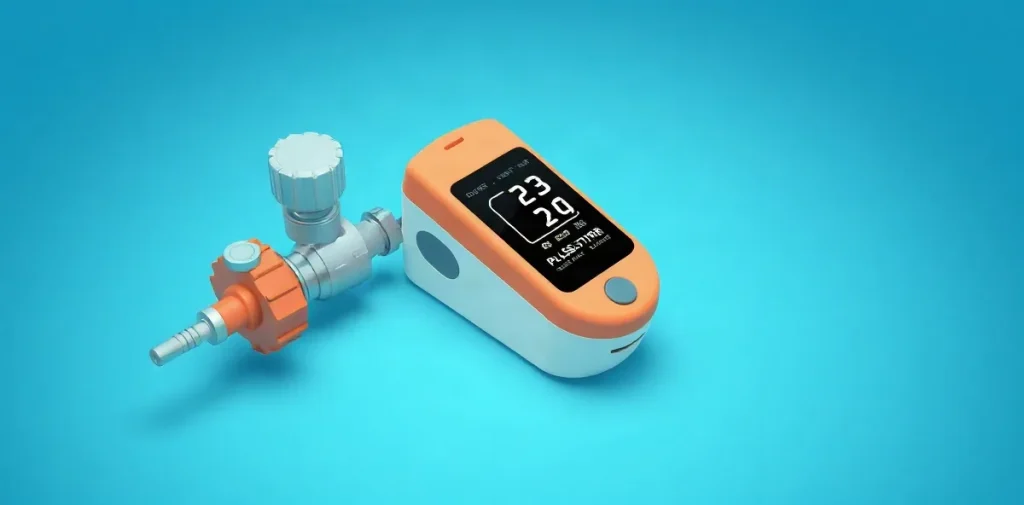
Pulse CO-oximetry is a non-invasive approach to estimating carbon monoxide in the blood, a problem that can be difficult to recognise from symptoms alone. For divers, the subject connects equipment and breathing-gas hazards with oxygen delivery, emergency assessment and decisions about treatment in a hyperbaric setting.
Why is carbon monoxide hard to assess?
Carbon monoxide (CO) is a colourless, odourless gas. When inhaled, it binds to haemoglobin—the protein in red blood cells that carries oxygen—forming carboxyhaemoglobin. This both reduces the blood’s capacity to transport oxygen and interferes with its release to tissues.
Headache, dizziness, nausea, weakness and confusion can occur after exposure, but these symptoms are not unique to CO poisoning. In diving, they may overlap with other medical problems and with the effects of an incident or stressful ascent. A reliable assessment therefore needs to consider the exposure circumstances as well as clinical signs.
Ordinary pulse oximeters estimate oxygen saturation but cannot reliably distinguish carboxyhaemoglobin from oxyhaemoglobin. A reassuring-looking oxygen saturation reading can therefore fail to rule out CO exposure. This is why clinicians may use blood testing that measures different haemoglobin species directly.
What does a pulse CO-oximeter measure?
A pulse CO-oximeter uses light absorption at multiple wavelengths to estimate the proportions of haemoglobin carrying oxygen, carbon monoxide or other forms. Unlike a blood sample analysed by a laboratory instrument, it is designed to make a non-invasive estimate at the skin, commonly at a finger.
The distinction between an estimate and a direct blood measurement matters. A device reading is one part of an assessment, not a diagnosis on its own. Interpretation depends on the patient, the measurement conditions and the device’s ability to separate signals from blood flow and surrounding tissue.
- Carboxyhaemoglobin: haemoglobin bound to carbon monoxide.
- Oxyhaemoglobin: haemoglobin carrying oxygen.
- Pulse oximetry: an optical estimate of oxygen saturation that does not, by itself, identify CO-bound haemoglobin reliably.
- Multiwavelength measurement: an approach intended to distinguish several haemoglobin forms through their different light-absorption patterns.
How is reliability assessed?
Device-validation research asks whether a non-invasive estimate agrees closely enough with a reference measurement to be useful for its intended purpose. For CO-oximetry, that means comparing the device’s estimate with blood analysis while considering the range of readings and the conditions under which measurements are taken.
Agreement is not the same as usefulness in every clinical situation. Researchers and clinicians also need to consider whether the device misses meaningful exposure, produces misleading readings, or performs differently as the measured level changes. A device can be convenient without being sufficient to exclude poisoning.
Motion, poor peripheral circulation, cold skin, sensor placement and other optical interference can complicate measurements made at the finger. Timing matters too: the amount of CO bound to haemoglobin changes as exposure stops and treatment begins. A reading should be interpreted alongside the exposure history, examination and, when indicated, laboratory testing.
Why does this matter to divers and hyperbaric teams?
CO exposure is relevant to diving wherever breathing gas may be contaminated. A diver who becomes unwell after breathing suspect gas needs prompt evaluation; symptoms alone do not identify the contaminant, and a normal conventional pulse-oximeter reading does not safely settle the question.
In a hyperbaric service, clinicians assess the whole case, including exposure, neurological or cardiac features and test results. Oxygen treatment and the possible use of hyperbaric oxygen are clinical decisions, not conclusions that can be made from a single device reading. A diving-medicine or hyperbaric physician should guide individual assessment and treatment.
The wider research question is practical: can a rapid, non-invasive measurement support early recognition without creating false reassurance? That question links medical-device validation to prevention, incident response and the quality of breathing gas used underwater.
Frequently asked questions
Can a standard pulse oximeter rule out carbon monoxide poisoning?
Does a pulse CO-oximeter replace a blood test?
What should a diver do after suspected exposure?
An original research-library explainer written by the Rubicon editors. It is not a summary of a specific publication.