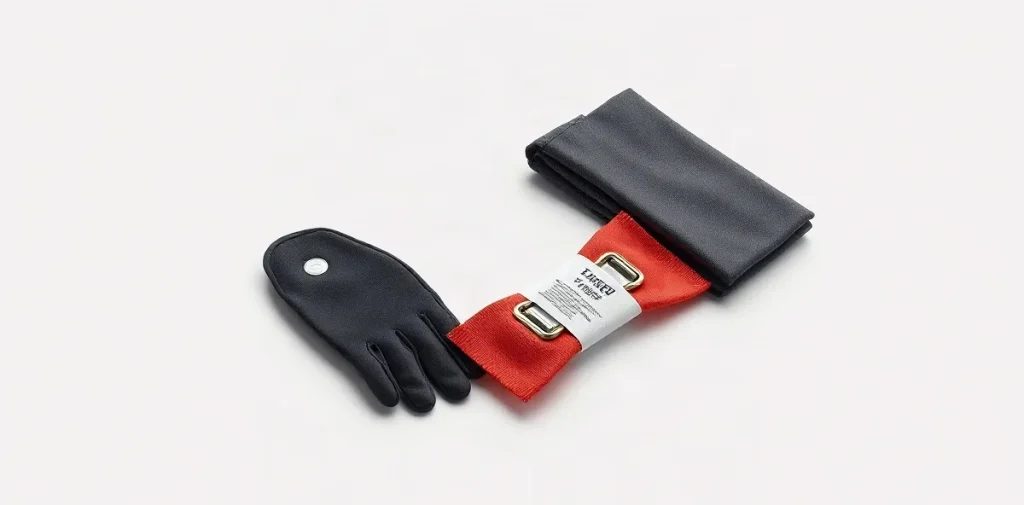
Self-applied tourniquet research examines whether a person can use a limb-compression device to control severe bleeding without help. In diving, the question connects emergency trauma care with the practical limits of treating an injured diver in remote, wet or equipment-constrained settings.
Why does tourniquet research matter to divers?
Severe bleeding can become an immediate threat after an injury on a vessel, shore, worksite or dive platform. A tourniquet is designed to compress the limb’s blood vessels enough to control life-threatening bleeding, usually from an arm or leg. Applying it to yourself is a different task from having a trained person apply it: pain, reduced dexterity, stress and limited visibility can all make the action harder.
Diving adds practical constraints. Gloves, exposure protection and other equipment can obstruct access to a limb or make straps and buckles harder to manipulate. An emergency may also occur where professional medical care is distant, so the injured diver or a nearby teammate may need to act before evacuation is possible.
What does a self-applied tourniquet need to do?
The central clinical purpose is to restrict blood flow enough to control severe extremity bleeding. Compression that is too loose may fail to stop the bleeding; compression is painful and can injure tissue, so a tourniquet is for serious bleeding rather than routine wounds. It does not treat bleeding from the chest, abdomen or other parts of the body where a limb tourniquet cannot be applied.
Research on self-application therefore considers both medical function and human performance. A device must be capable of effective compression, but the wearer must also be able to reach the application site, secure the device and tighten it under realistic conditions. Those demands are especially relevant when a diver is cold, injured, wearing bulky gear or working with one usable hand.
- Bleeding control: whether compression can restrict blood flow from a serious limb injury.
- Reach and access: whether the wearer can position the device on the injured limb.
- Operation: whether straps, fasteners and tightening mechanisms can be managed under stress.
- Fit and placement: whether the device stays in position and applies compression where intended.
- Training: whether people can learn and retain the steps needed to use it correctly.
How are devices and users evaluated?
Evaluation can examine the device itself and the person using it. Device-focused questions include how securely it fastens, whether its tightening mechanism works as intended and whether it remains usable when access or manual control is limited. User-focused assessment asks whether a person can apply it correctly without assistance, not merely whether the device can produce compression in a controlled setting.
Testing conditions matter. A result from an uncomplicated practice setting may not transfer to use while wearing gloves or protective clothing, or when the user is under physical and psychological stress. For diving applications, studies can also ask how equipment layers, environmental exposure and the transition from underwater activity to surface first aid affect access and task performance.
These are distinct questions: a device may be mechanically capable yet difficult to use, while a user may understand the procedure but be unable to reach the correct position. Evaluation that separates device function, usability and training can help identify where a failure is most likely to occur.
What changes in a diving emergency?
Most tourniquet use concerns a limb injury after the person has reached a place where first aid can be given. A diver’s immediate priorities may also include ending the dive safely, reaching the surface, removing or managing equipment and assessing other hazards. The sequence depends on the incident; bleeding control must fit into a broader response that includes evacuation and medical care.
Wet hands, limited space and exposure suits can complicate access. A diver may need to expose the injured limb or have a teammate assist, and a self-applied device may not be practical if the injury affects the hand or arm needed to operate it. Planning should account for who can provide assistance and where first-aid equipment can be reached without delaying a safe exit from the water.
How does this fit into diving medicine?
Diving medicine covers more than pressure-related illness. It also addresses trauma, emergency response and the constraints of providing care in remote environments. Tourniquet research sits within that wider field because it examines how a familiar medical intervention performs when the injured person may be isolated, equipped for a dive and responsible for acting before definitive care is available.
The broader lesson is to assess the whole care pathway: recognize serious bleeding, reach the injury, apply an appropriate intervention and arrange urgent medical evaluation. Tourniquet use is not a substitute for professional care. After a serious injury, seek emergency assistance; for questions about dive fitness or return to diving, consult a diving-medicine physician.
Frequently asked questions
What is a self-applied tourniquet?
Can a tourniquet treat any kind of bleeding?
Why might self-application be difficult during a dive emergency?
An original research-library explainer written by the Rubicon editors. It is not a summary of a specific publication.
Related reading on Rubicon
- The Diving Reflex: What Happens Underwater
- Scuba Diving Fins: Split vs. Paddle Designs
- Scuba Diving Regulators: Balanced vs. Unbalanced
- Scuba Diving Buddy Checks: Catch Problems Early
- Self-Applied Tourniquets in Diving and Combat Care
- Thesis Research in Diving and Hyperbaric Medicine
- More on Dive Medicine
- Browse the Research Library