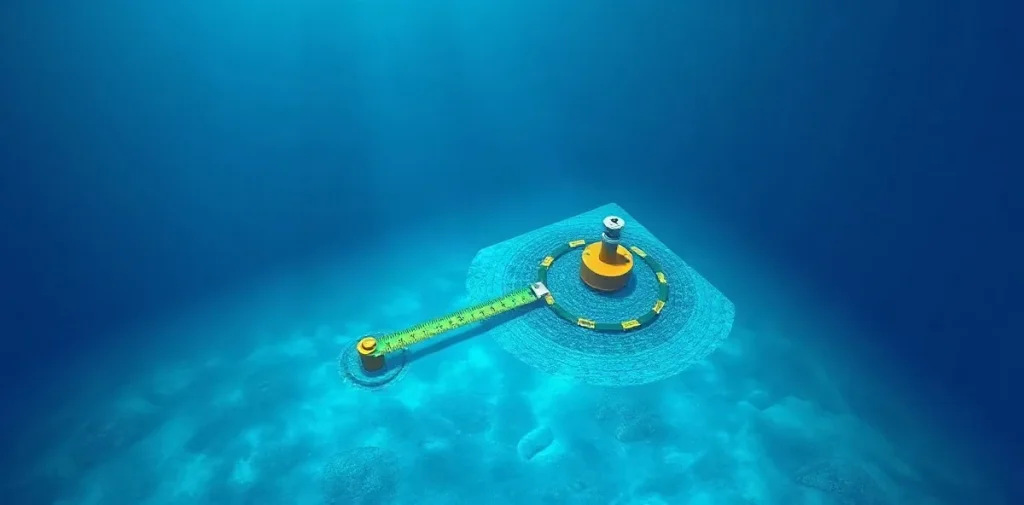
Seafloor monitoring examines the condition of the seabed and how it changes over time, including in areas associated with offshore resource activity. It matters because reliable observations can distinguish natural variation from possible disturbance, helping researchers plan surveys and scientific divers work safely around complex underwater sites.
What questions does seafloor monitoring ask?
At its core, monitoring asks what is present on the seabed, where it occurs, and whether its distribution changes. Researchers may be interested in habitat structure, sediment, organisms, or signs of physical disturbance. Repeated observations make change easier to assess than a single survey alone.
The comparison depends on context. Seafloor communities vary naturally across depth, substrate, currents, and location; seasonal and longer-term changes can also affect what a survey records. A sound monitoring question therefore considers both the observed area and suitable comparison conditions.
How do researchers observe the seabed?
Survey design follows the question and the environment. Divers can make direct observations and document features at close range, while instruments and remote imaging can extend coverage or record conditions that are difficult to inspect by eye. The methods are complementary: imagery preserves a record, and direct inspection can add detail about the setting.
Monitoring also depends on consistency. Researchers need to record where and how observations were made, use comparable survey procedures over time, and note conditions that could affect visibility or detectability. Without that context, an apparent difference between visits may reflect the survey rather than a real change.
- Baseline: a description of conditions against which later observations can be compared.
- Repeated survey: observations made again using comparable locations and methods.
- Environmental context: factors such as depth, substrate, currents, and visibility that shape what can be observed.
- Detectability: the likelihood that a feature or organism will be noticed and recorded during a survey.
Why do baselines and repeated observations matter?
A baseline helps define the condition of a place before, or at the start of, monitoring. It does not by itself explain why a later difference occurred. To interpret change, researchers consider natural variability, the timing of observations, and whether the comparison areas and methods are appropriate.
Monitoring is most useful when it can separate a meaningful pattern from uneven sampling. A change in sediment or the organisms recorded may matter, but its interpretation depends on where it occurred, how widespread it was, and whether the same features were measured consistently. Those questions make survey design central to environmental assessment.
What does this mean for scientific divers?
Scientific divers may collect observations that cannot be captured as effectively by remote methods, especially when a study requires close inspection of a feature or habitat. Their work is part of a broader survey system: a dive must fit the sampling plan, and observations need enough location and environmental context to be useful beyond that individual dive.
Seafloor surveys also take place in an environment where depth, visibility, currents, and task demands affect both data quality and diver exposure. Planning must account for the actual site and work profile. If a diver has a medical concern or a question about fitness for a particular task, a diving-medicine physician should be consulted.
How does this research area fit into diving science?
Underwater research has long relied on divers to observe, document, and sample environments that are otherwise difficult to access. Seafloor monitoring connects that practical tradition with environmental questions about change and disturbance. Its central challenge is not simply seeing the seabed, but building observations that can be compared and interpreted responsibly.
The same principles apply across marine research: define the question, choose methods suited to the setting, record conditions, and distinguish observation from explanation. For readers of underwater science, this is a useful reminder that a dive can contribute to long-term knowledge only when its observations are repeatable and well contextualized.
Frequently asked questions
What is a seafloor baseline?
Why repeat a seabed survey?
Why are divers involved in seafloor monitoring?
An original research-library explainer written by the Rubicon editors. It is not a summary of a specific publication.