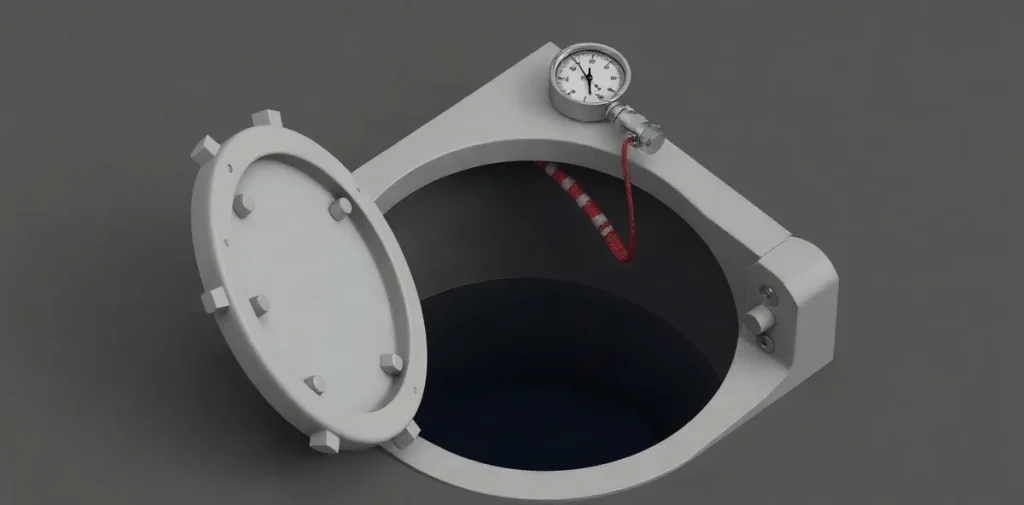
Submarine casualty research examines what happens when a vessel is disabled or flooded, and how people can escape, survive, be rescued and receive care. Its concerns overlap with diving medicine because pressure, breathing gas, cold, injury and delayed treatment shape survival underwater and during recovery.
What does casualty research need to understand?
A submarine casualty is not a single medical event. It can involve loss of a breathable atmosphere, flooding, fire, injury, isolation or a need to leave the vessel under pressure. Each hazard changes the time available, the risks of movement and the conditions in which rescuers may have to work.
The central questions are practical: what threatens life first, which actions preserve survivability, and how can people be moved from a damaged environment into effective medical care? The answers depend on the casualty, the vessel’s condition, depth, available equipment and the time required for assistance.
Why does pressure change escape and rescue?
Pressure affects the gases people breathe and the behaviour of gas in the body. During ascent, surrounding pressure falls; if the ascent is too rapid or breathing gas is trapped, expanding gas can injure the lungs. Dissolved inert gas can also form bubbles during decompression, producing decompression illness.
Those risks make an escape more than a route to the surface. The diver or submariner may face exertion, cold, panic, limited visibility and a changing breathing environment. Rescue operations introduce their own constraints: moving a casualty, maintaining an airway and arranging appropriate recompression may all be difficult when access is restricted.
What methods help assess a casualty?
Casualty research brings together engineering, operational planning and medical assessment. Researchers and planners examine how an emergency develops, what equipment and procedures are available, and how different hazards interact. Training and simulated scenarios can help identify where a procedure becomes difficult, but actual conditions can differ sharply from a controlled exercise.
Medical assessment focuses on immediate threats as well as pressure-related injury. Clinicians consider breathing, circulation, consciousness, trauma, cold exposure and the possibility of decompression illness. A person who appears stable after rescue may still need prompt evaluation, particularly after an unusual pressure exposure or a difficult ascent.
- Atmosphere: whether the breathing environment remains usable.
- Pressure exposure: depth, ascent and decompression demands.
- Escape and rescue: access, equipment, movement and time.
- Post-rescue care: injury assessment, warming, oxygen and medical review.
What does this have in common with diving medicine?
Submarine emergencies and recreational or scientific diving are different settings, but they share physiological problems. Both can involve elevated pressure, breathing-gas hazards, cold stress, restricted access to a casualty and a delay before definitive care. Lessons about recognizing deterioration and planning for evacuation are relevant wherever divers work in remote or confined environments.
The wider field also connects with hyperbaric medicine, which studies and treats conditions associated with pressure exposure and uses pressurized environments in clinical care. For diving physicians, casualty planning is one part of a larger task: matching a person’s symptoms and exposure history to the right response, while accounting for transport and access to treatment.
What should divers and clinicians take from the subject?
The useful takeaway is to plan for the whole chain: prevention, response, extraction and medical care. A rescue plan should account for who can reach the casualty, how the person will be moved, what information must travel with them and where pressure-related treatment might be available. These are operational questions, not substitutes for clinical assessment.
If a diver has symptoms after pressure exposure, or an escape or ascent has been difficult, seek urgent professional evaluation. Decisions about oxygen, transport and recompression depend on the circumstances; a diving-medicine physician should be consulted.
Frequently asked questions
Is submarine casualty research the same as diving medicine?
Why can escape from depth cause medical problems?
When should a diver seek medical advice after an incident?
An original research-library explainer written by the Rubicon editors. It is not a summary of a specific publication.
Related reading on Rubicon
- The Diving Reflex: What Happens Underwater
- Why Divers Get Cold Faster Underwater
- Diving Safety: Key Insights into Underwater Exploration
- Diving: Exploring Underwater Activities, Science, and Safety
- Hydrodynamic Drag in Underwater Swimming
- Divers and Underwater Sound at 800–2250 Hz
- More on Safety
- Browse the Research Library