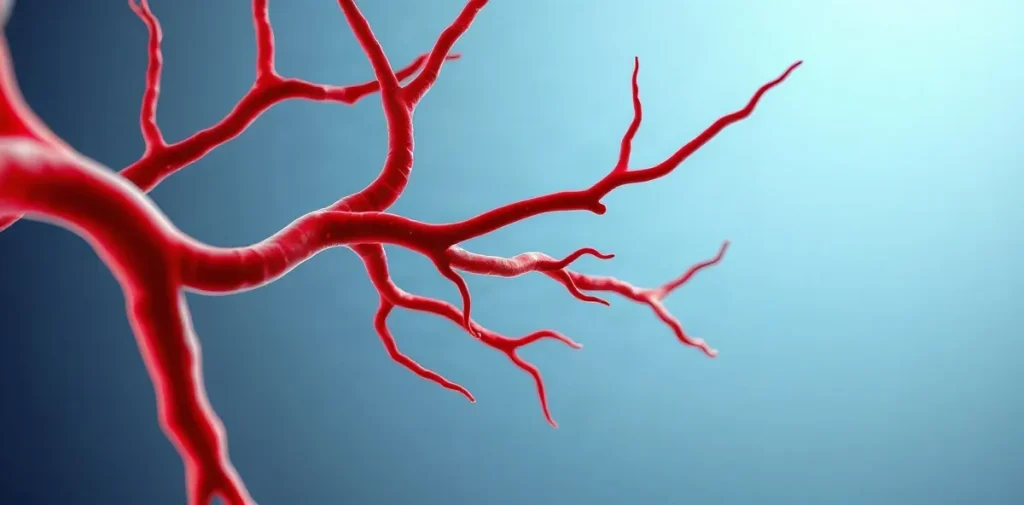
Blood-bubble interaction research examines how gas bubbles formed or enlarged during decompression encounter the circulation and affect the body. The subject matters because decompression sickness is not only a problem of gas leaving tissues: bubbles can influence blood flow and vessel function, linking dive exposure to symptoms that require medical assessment.
Why does the interaction between blood and bubbles matter?
During a dive, increased pressure causes more inert gas to dissolve in the body. As pressure falls during ascent and after surfacing, that gas moves back towards the lungs for elimination. If local conditions allow bubbles to form or grow, their effects depend not just on their presence but also on where they are and how they interact with blood and vessel walls.
Circulating bubbles can obstruct small vessels, disturb local flow and activate responses involving the vessel lining and blood components. These processes help explain why decompression sickness can affect different parts of the body and produce varied symptoms. The relationship is complex: a bubble signal does not, by itself, establish that a diver has clinical decompression sickness.
What questions does this research area ask?
Researchers consider how bubbles arise, move and change in the circulation, and how their physical contact with blood affects the surrounding tissues. They also ask how pressure exposure, gas exchange and the body’s response combine to influence whether bubbles remain harmless, cause local disturbance or contribute to illness.
These questions connect decompression physiology with vascular biology. A useful way to organise the subject is to distinguish the bubble itself from the response it provokes:
- Bubble dynamics: formation, growth, movement and dissolution as pressure changes.
- Circulatory effects: changes in flow, including possible obstruction in small vessels.
- Blood and vessel responses: interactions with blood components and the vessel lining.
- Clinical relevance: how physiological processes relate to symptoms and the assessment of decompression illness.
Each part can be studied separately, but divers’ health depends on their combined effects. The central question is not simply whether bubbles exist, but how their location, behaviour and biological consequences relate to a particular exposure and clinical picture.
How can investigators study bubbles in blood?
Research approaches can include controlled pressure exposures, observation of bubbles in circulation, laboratory examination of blood-vessel interactions and physiological measurements before and after decompression. Each method answers a different question. A controlled setting can isolate mechanisms, while observations in divers address how those mechanisms behave in the context of real exposure.
Interpretation depends on what is measured. Detecting circulating bubbles is not the same as diagnosing decompression sickness, and an experimental response does not automatically predict an individual diver’s outcome. Investigators therefore need to consider pressure history, timing, the measurement method and the distinction between a biological marker and a clinical event.
How does this fit into diving medicine?
Blood-bubble research sits within the wider study of decompression: how inert gas enters and leaves the body, how ascent profiles affect that process and why decompression illness sometimes occurs. It complements work on gas uptake and elimination, tissue susceptibility, symptoms, diagnosis and treatment. Together, these areas inform the scientific basis for managing pressure exposure.
The subject also has practical relevance beyond recreational diving. Scientific divers, working divers and people receiving hyperbaric treatment all encounter pressure changes in different circumstances. The exposure and clinical context matter, so a general mechanism should not be treated as a stand-alone prediction of risk.
What does the subject mean for divers and clinicians?
For divers, the physiology explains why decompression procedures matter and why symptoms after a dive should be taken seriously. It does not provide a way to diagnose oneself from a bubble measurement or to decide that symptoms are safe to ignore. Suspected decompression illness calls for prompt assessment by an appropriately qualified diving-medicine clinician.
For clinicians, the interaction between blood and bubbles is one element in a broader evaluation of exposure, symptoms and examination. Research into the mechanism can clarify how decompression illness develops, but care decisions remain tied to the person and the circumstances. When symptoms raise concern, consult a diving-medicine physician.
Frequently asked questions
Does finding bubbles mean a diver has decompression sickness?
Why study blood rather than gas bubbles alone?
What should a diver do about symptoms after a dive?
An original research-library explainer written by the Rubicon editors. It is not a summary of a specific publication.
Related reading on Rubicon
- Decompression Sickness: Causes and Risk Reduction
- How Decompression Sickness Develops: Physiological
- Managing Suspected Decompression Sickness on a Dive Boat
- Safety Dive: Safety Stops vs Decompression Stops
- Decompression Sickness: Bubbles, Risk and Treatment
- Blood-Bubble Interaction in Decompression Sickness
- More on Dive Medicine
- Browse the Research Library