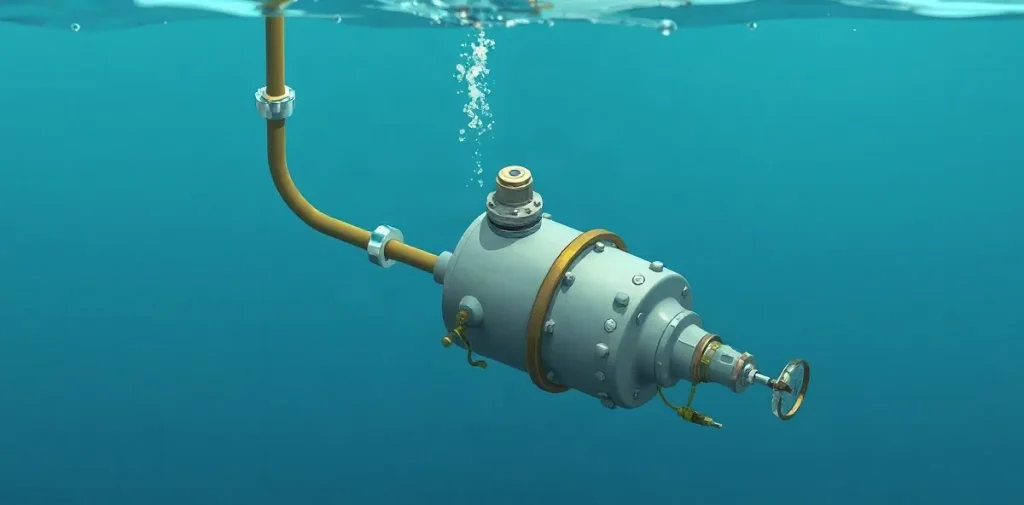
Commercial diving: surface-mixed gas, Sur-D-O2, bell bounce, saturation is a 2006 workshop proceedings paper by Beyerstein G. Its subject is the equipment, breathing-gas strategies and operational methods of commercial diving—topics central to understanding exposure, decompression and the risks of working underwater.
What do the terms in the title describe?
The title brings together several approaches to commercial diving. Surface-mixed-gas diving involves supplying a diver from the surface with a breathing mixture selected for the planned depth and operation. A surface supply can support communication and gas management, but the diver’s exposure still depends on depth, duration, equipment and procedures.
Sur-D-O2 is a named term in the title. The adjacent subjects—bell bounce and saturation—place it within a wider discussion of commercial diving systems and operating modes. Bell bounce generally refers to a short-duration dive using a diving bell, while saturation diving allows divers to remain under pressure for an extended period before returning to surface pressure through a planned decompression process.
- Surface-mixed gas: gas is supplied from the surface, with mixture choice relevant to depth and the dive plan.
- Bell operations: a bell provides a pressurised transfer and working environment for divers during an operation.
- Saturation: divers live under pressure, so decompression is managed around the full exposure rather than each individual excursion.
- Sur-D-O2: a specific term identified by the paper’s title, situated among these commercial diving subjects.
Why does breathing-gas choice matter?
Pressure changes the way breathing gases affect the body. As ambient pressure rises, the partial pressure of each gas in a breathing mixture rises too. This has consequences for oxygen exposure and for inert-gas uptake, which is relevant to decompression planning.
Gas selection is therefore a technical and physiological decision, not simply a matter of supplying enough air. A mixture must suit the intended depth and operation, while its delivery system and monitoring must be considered alongside the diver’s workload and exposure. Commercial work adds practical constraints: divers may need to perform tasks, communicate with a team and manage tools while breathing through a surface-supplied system.
How do bell bounce and saturation differ?
Bell bounce and saturation represent distinct ways of organising exposure at depth. In a bell-bounce operation, the bell is used to transport and support divers for a comparatively brief working dive. The system helps manage the journey between the surface and the worksite, while the dive plan must account for pressure exposure and the return to the surface.
Saturation diving addresses a different constraint: repeated decompression after deep, lengthy exposures can be operationally burdensome. Divers are kept at the working pressure between excursions, then undergo decompression at the end of the saturation period. This changes how exposure is scheduled and managed; it does not remove the physiological demands or the need for careful control.
What physiological and medical issues connect these methods?
All these approaches require attention to pressure, breathing gas and time. Inert gases enter body tissues during exposure and leave them during decompression. If pressure is reduced too quickly for the gas to be eliminated safely, decompression illness can result. The likelihood and presentation of problems depend on the exposure and individual circumstances, so operational planning and clinical assessment are important parts of diving medicine.
Other concerns can include oxygen toxicity, equipment or gas-supply failure, thermal stress and the physical demands of underwater work. A bell or surface-supply system can provide substantial support, but it also introduces equipment, communication and team-coordination requirements. A diving-medicine physician should be consulted for individual health questions, fitness-to-dive concerns or suspected diving illness.
Where does this paper fit in diving research?
Commercial diving sits at the intersection of physiology, engineering and work practice. Research and technical discussion in this field consider how gas mixtures, pressure exposure, decompression procedures and life-support systems interact. Comparing operational modes helps practitioners frame questions about safety and the practical management of underwater work.
Published in the proceedings of the Advanced Scientific Diving Workshop, the paper places commercial-diving subjects in a workshop setting concerned with scientific discussion of diving. Its title makes the range of interest clear: surface-mixed gas, Sur-D-O2, bell bounce and saturation. Together, these topics provide a useful framework for readers exploring how commercial diving systems address the challenges of breathing and working under pressure.
Frequently asked questions
What is surface-mixed-gas diving?
What distinguishes saturation diving from a bell-bounce dive?
Why are these subjects important to diving medicine?
Citation details
- Title: Commercial diving: surface-mixed gas, Sur-D-O2, bell bounce, saturation
- Authors: Beyerstein G
- Year: 2006
- Published in: In: Lang MA, Smith NE (eds). Proceedings of the Advanced Scientific Diving Workshop. Smithsonian Institution, Washington, DC
- Record type: Workshop proceedings paper
- Repository record: Rubicon Research Repository, handle 123456789/4661
This page is an original summary written by the Rubicon editors from the publication’s bibliographic record. It does not reproduce the paper, its abstract or its data; consult the publication itself for its methods and findings.
Related reading on Rubicon
- Diving Physics: Gas Laws, Pressure Effects, and Safety
- Gas Laws Every Diver Must Know for Safe Diving Practice
- Primer on Gas Laws Crucial to Understanding Diving Physics
- Scuba Diving Fins: Split vs. Paddle Designs
- HPNS Suppression in Deep Human Dives: Research Summary
- Flying After Diving: Research Summary
- More on Diving Science
- Browse the Research Library