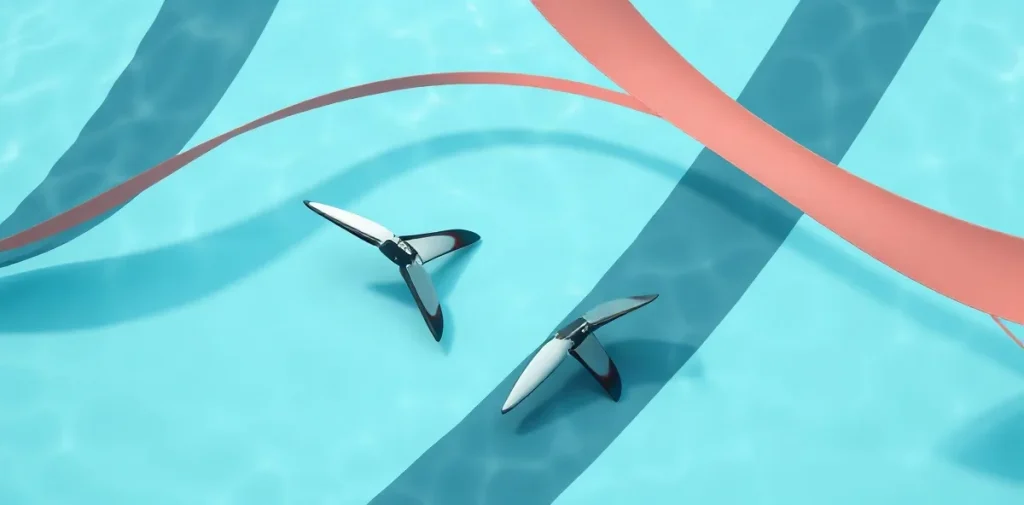
Split fins are designed to flex around a central slit, while paddle fins use a solid blade to push water. Neither design is universally better: the right choice depends on how you kick, how much thrust and control you want, and the conditions in which you dive.
That difference shapes how each fin feels underwater. This guide to scuba diving fins compares split and paddle designs, helping you weigh propulsion, manoeuvrability and effort against your own diving style.
| Criterion | Split fin | Paddle fin |
|---|---|---|
| Blade structure | Two flexible panels | One continuous blade |
| Typical kick to assess | Flutter kick | Flutter and frog kicks |
| Feel to compare | Flexible response | Direct blade resistance |
| Key caution | May feel less firm for forceful manoeuvres | A stiff blade may demand more effort |
- 2 panels The flexible blade sections formed by the opening in a split fin.
- 1 continuous blade The basic blade structure of a paddle fin.
How do split and paddle fins differ underwater?
A paddle fin pushes water back with one continuous blade, while a split fin’s lengthwise opening divides its blade into two flexible panels that bend during the kick. The Scubapro Seawing Nova is a paddle-style example; the Atomic Aquatics SplitFin is a split-style model to compare in a dive shop.
- Scubapro Seawing Nova: Its continuous blade acts as one surface against the water. Blade stiffness, length and channels affect how much load the fin puts on the diver’s legs and how it moves water during a kick.
- Atomic Aquatics SplitFin: Its longitudinal split allows the two panels to flex rather than behave as one solid blade. That different blade action changes how the fin responds through the kick cycle.
What matters underwater
Neither design has a universal propulsion advantage: the result depends on how the fin fits, its blade stiffness, the diver’s kick technique and the current. Compare the Seawing Nova and Atomic Aquatics SplitFin in the intended size and, where possible, with the kick style and water conditions in which you plan to use them.
Which fin makes flutter kicks feel easier?
Split fins may make flutter kicks feel easier for divers who prefer a relaxed, steady rhythm: their blades flex during the kick rather than pushing against the water as a single rigid surface. Paddle fins give a more direct, solid response, which can make resistance and changes in thrust easier to feel.
That difference is a matter of feel, not a guarantee that one design takes less effort. A stiff paddle blade may demand more leg work, especially when a diver’s kick is short or poorly controlled; a flexible blade may suit that movement better. Neither design can be judged reliably from a brand’s performance claim alone.
Compare the kick, not the label
- Split fins: try them with a relaxed, steady flutter and notice whether the blade’s flex feels comfortable and controlled.
- Paddle fins: use the same flutter and check whether the firmer response helps you sense water resistance and adjust each kick.
- For a fair comparison: wear the same boot with both designs and keep the kick controlled; compare comfort and control rather than relying on marketing claims.
Which fin gives better control for a frog kick and tight spaces?
A paddle fin generally gives clearer control for frog kicks and precise positioning because its continuous blade responds directly to the kick’s outward-and-inward sweep. A split fin is not automatically easier for back-kicking or small corrections; blade shape and stiffness matter too.
- Paddle fin: Its continuous surface gives the frog kick’s bent-knee sweep a direct, predictable response, which can help when aiming thrust backward.
- Split fin: The split design alone does not determine how well a fin handles gentle back-kicks; consider the blade’s shape and stiffness as well.
Practise before entering confined spaces
In a wreck or above a fragile seabed, compact, deliberate kicks can limit unwanted water movement, but no fin makes careless finning safe. Before relying on a new fin in an overhead or confined environment, test both frog kicks and gentle back-kicks in open water.
How should current, workload and diver experience guide the choice?
Choose fins by matching their propulsion to the planned dive, your workload and your ability to control the kick: current may favour a paddle fin’s direct resistance, while an easy flutter in calm water may feel less demanding with a flexible split fin.
- Current: A paddle fin can suit a diver seeking forceful, controlled thrust, provided they have the conditioning to work against its resistance. A split fin may feel comfortable during a gentle flutter, but that comfort in calm water does not establish how much control it will provide in current.
- Calm reef swimming: A flexible split fin may feel less demanding for steady, easy flutter-kicking; assess it in the water rather than treating that impression as proof it suits every dive.
- Frog kicks and precise positioning: Try the fin with the kick and control demands you plan to use. Frog-kick practice and holding a precise position call for different propulsion choices than relaxed reef swimming.
For new divers, a secure fit, manageable stiffness and practice with basic kicks matter more than choosing by experience level alone. Neither being new nor being experienced determines which blade is best: evaluate how the fin feels under the workload and manoeuvres of the planned dive.
When can split or paddle fins disappoint?
Split fins can disappoint divers who want a firm blade for forceful manoeuvres, while an overly stiff paddle fin can tire a diver’s legs. Neither design is automatically the better choice: how a fin feels depends on its stiffness, fit, kick style and intended conditions.
Fit and technique matter as much as blade design
A split or paddle fin can move around or press uncomfortably if its foot pocket is the wrong size or does not suit the diver’s boot. Try fins with the actual exposure protection you plan to wear, since a bare-foot fit may not reflect how the fin sits over a dive boot.
- Split fin: assess whether its flex and feel provide the response you want for forceful manoeuvres.
- Paddle fin: check that its stiffness is manageable for your legs and kick style.
- Either design: look for a secure, comfortable fit with your actual boot, and consider the conditions in which you will use it.
A powerful paddle blade cannot compensate for poor technique: bicycle-kicking can waste effort and stir up silt. Choose by trying the fit and stiffness, and by matching the fin to your kick and diving conditions—not by the split-versus-paddle label alone.
What should divers check before buying scuba fins?
Before buying scuba fins, try them with your actual dive boots and check fit, ankle comfort and control in the water. Open-heel fins are designed to be worn with boots, while full-foot fins have a foot pocket intended for use without that separate boot; testing the wrong combination can give a misleading fit.
Check fit and compare blade designs
- Scubapro Seawing Nova: Its blade design provides one example of a different fin concept to compare with a split blade. Check how it feels with your boot, particularly whether the heel strap holds securely without painful pressure.
- Atomic Aquatics SplitFin: Use it as a split-blade comparison, not as evidence that split fins suit every diver. Check that the foot pocket stays secure and that the blade does not force your ankle into an uncomfortable position.
When possible, test both styles in a pool or controlled dive before taking them into demanding conditions. Practise flutter kicks, frog kicks and back-kicks with each pair; a fin that feels comfortable during one kick may feel awkward during another.
FAQ
Are split fins better for beginner scuba diving?
Are paddle fins better in a current?
Can you frog-kick in split fins?
Should I choose open-heel or full-foot fins?
