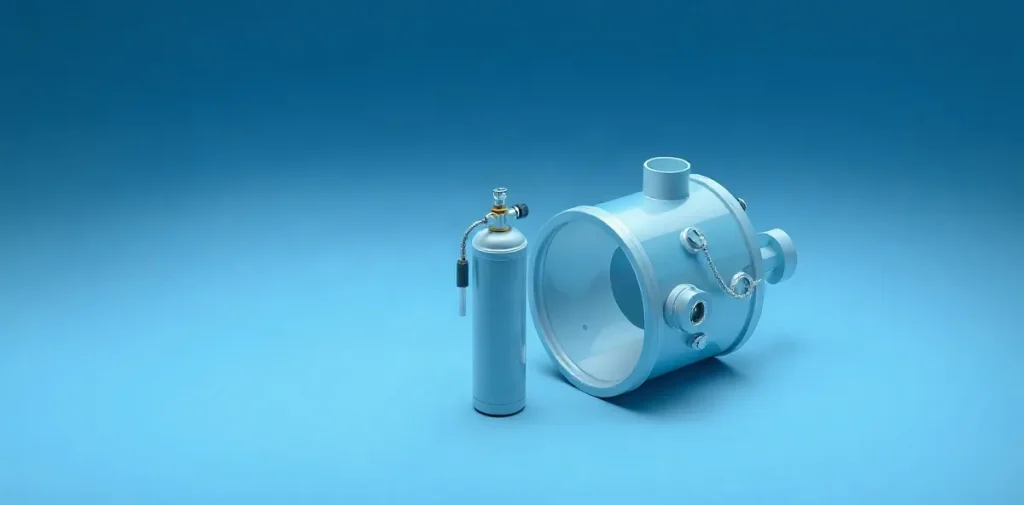
First aid normobaric oxygen for the treatment of recreational diving injuries is a 2007 publication by Longphre and colleagues in Undersea & Hyperbaric Medicine. It addresses oxygen given at ordinary surface pressure as early care for injuries associated with recreational diving—a topic that connects dive-site response, decompression physiology and specialist medical treatment.
What does “normobaric oxygen” mean in diving first aid?
Normobaric oxygen is oxygen delivered at the pressure found at the surface, rather than under increased pressure in a hyperbaric chamber. In diving emergencies, the distinction matters: oxygen can be started during initial care, while recompression is a separate treatment delivered in a chamber under medical supervision.
Decompression illness is an important concern after diving. It includes decompression sickness, associated with inert gas coming out of solution and forming bubbles in tissues or blood, and arterial gas embolism, in which gas obstructs circulation after lung overexpansion injury. Their signs can overlap, and suspected cases need prompt assessment rather than self-diagnosis.
Why is oxygen relevant after a diving injury?
Breathing oxygen increases the oxygen available to the lungs and body while reducing the proportion of inert gas in the breathing mixture. In decompression-related illness, this can support oxygen delivery to tissues and promote inert-gas elimination. These physiological effects explain why oxygen is a central subject in early diving-emergency care.
Oxygen at the surface does not reproduce the pressure conditions of recompression treatment, nor does it establish what injury a diver has sustained. Its role is considered within a chain of care: recognise a possible emergency, provide appropriate immediate support, and arrange urgent evaluation by qualified medical professionals.
What questions does research on first-aid oxygen address?
Research on this subject examines how oxygen used before definitive treatment fits into the management of recreational diving injuries. Relevant considerations include when oxygen is started, how it is delivered, the diver’s clinical condition, and how first aid relates to subsequent assessment and hyperbaric care.
- Timing: the point in the response when oxygen becomes available.
- Delivery: the equipment and method used to provide a suitable oxygen supply.
- Clinical context: the symptoms and circumstances that shape assessment and treatment decisions.
- Continuity of care: coordination between initial responders and medical or hyperbaric services.
These questions sit within a broader effort to improve recognition and treatment of diving-related illness. They also highlight why the practical value of an intervention must be considered alongside training, equipment, evacuation, diagnosis and access to specialist care.
How does first aid relate to hyperbaric treatment?
Hyperbaric oxygen treatment involves breathing oxygen at increased ambient pressure, commonly in a recompression chamber. The increased pressure changes the physical and physiological environment in ways that surface-pressure oxygen cannot. A clinician determines the appropriate course of care after considering the diver’s presentation and circumstances.
First aid is therefore not a substitute for medical evaluation or a reason to delay referral. In suspected decompression illness or another serious diving injury, responders focus on immediate safety and urgent access to professional care. Decisions about oxygen delivery and further treatment depend on the situation and should be guided by trained personnel.
What should divers and clinicians take from this subject?
The publication’s subject is relevant to divers, dive teams, physicians and hyperbaric clinicians because early actions can occur far from a chamber or hospital. Preparedness includes knowing how to activate emergency support, use available oxygen equipment within one’s training, and communicate the dive history and symptoms to responders.
Oxygen equipment brings its own operational responsibilities. Oxygen supports combustion, so equipment must be handled with appropriate fire precautions, kept free of contamination and used by people trained in its operation. For an individual with possible diving-related illness, a diving-medicine physician or emergency medical service should be consulted; general information cannot replace clinical assessment.
Frequently asked questions
What does normobaric oxygen mean?
Is first-aid oxygen the same as recompression treatment?
What should someone do if a diver may be injured?
Citation details
- Title: First aid normobaric oxygen for the treatment of recreational diving injuries
- Authors: Longphre, JM; Denoble, PJ; Moon, RE; Vann, RD; Freiberger, JJ
- Year: 2007
- Published in: Undersea & Hyperbaric Medicine 2007 Jan-Feb;34(1):43-9
- Identifiers: PMID 17393938
- Repository record: Rubicon Research Repository, handle 123456789/5514
This page is an original summary written by the Rubicon editors from the publication’s bibliographic record. It does not reproduce the paper, its abstract or its data; consult the publication itself for its methods and findings.
Related reading on Rubicon
- First Aid Essentials for Diving Ear Barotrauma
- Scuba Diving Basics: Gear, Training, First Steps
- Understanding Hypoxia Risks in Recreational Diving
- The Physiology Behind Oxygen Toxicity in Deep Dives
- Oxygen-Enhanced Breath-Hold Diving: Research Summary
- HPNS Suppression in Deep Human Dives: Research Summary
- More on Dive Medicine
- Browse the Research Library
