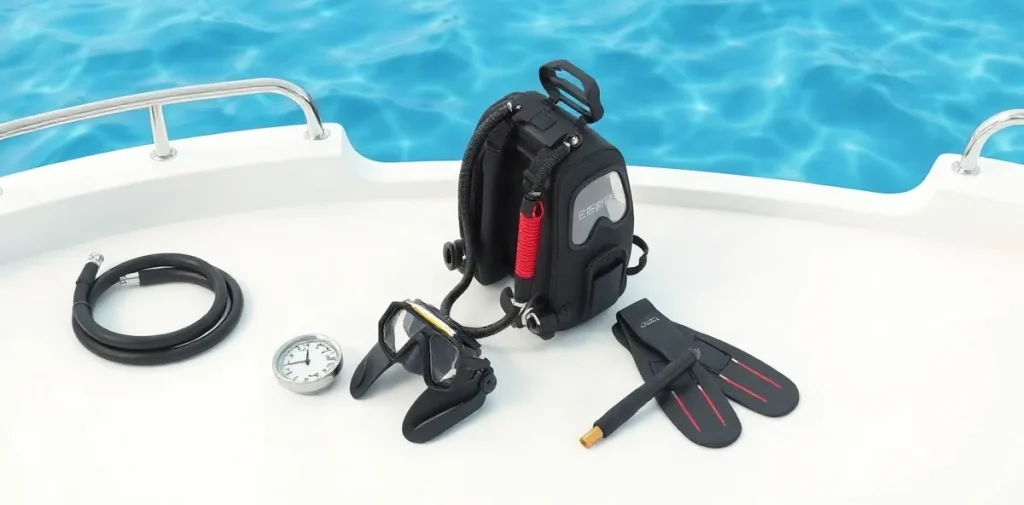
Scuba diving basics are a mix of the right gear, proper training, and a careful first entry into the water. If you understand what each piece of equipment does, complete a beginner course, and take your first dives slowly, you build the foundation for safe, confident diving.
That is the practical starting point for anyone exploring the main topic of scuba diving basics: gear, training, and first steps. The equipment helps you breathe, move, and stay comfortable underwater; the training teaches you how to use it correctly; and the first dives turn theory into calm, repeatable habits.
If you want the wider picture, see our overview «Diving: A Complete Guide to Types, Destinations, Gear, and Planning». This introduction focuses on the essentials that matter most at the beginning, so the next steps feel less intimidating and more achievable.
| Item | Why it matters | Best first step |
|---|---|---|
| Mask | Controls fit and visibility | Buy early |
| Fins | Improves propulsion and comfort | Buy early |
| Regulator set | Delivers breathing gas from the cylinder | Rent first, then buy |
| Dive computer | Tracks depth and no-decompression time | Rent first, then buy |
| Buoyancy compensator | Helps control depth and surface flotation | Rent first, then buy |
- 3 parts Typical entry-level training format: theory, confined water, open water
- 1st stage Main pressure-reducing component of a scuba regulator
- 1 breath at a time The basic breathing rule for scuba: never hold your breath
- 0 surface breathing What distinguishes scuba from snorkeling: you do not breathe from the surface
What is scuba diving, and what makes it different from snorkeling?
The core idea
Scuba diving is underwater swimming with your own breathing system: the diver carries a cylinder, a regulator, and a buoyancy control device instead of relying on air from the surface. The term scuba stands for self-contained underwater breathing apparatus, and the basic setup also includes a tank, a first stage and second stage regulator, a pressure gauge, and a buoyancy compensator.
That equipment changes the whole experience. A snorkeler stays near the top and breathes through a tube, while a scuba diver can remain below the surface for longer periods and move through the water column, not just skim the top layer. If you want the wider context, see our overview “Diving: A Complete Guide to Types, Destinations, Gear, and Planning.”
Why it opens up more of the dive
- Breathing source: scuba uses a carried cylinder; snorkeling depends on the surface.
- Position in the water: scuba allows movement below the surface; snorkeling keeps you at the top.
- Core hardware: tank, first stage, second stage, pressure gauge, and buoyancy compensator work together as one system.
That difference matters because scuba is built for time and depth, not just a quick look from above. The regulator reduces cylinder pressure in two steps, the gauge tells you what remains, and the buoyancy device helps you stay stable while you descend, hover, and rise in control.
Which gear do new divers actually need first?
Rent first, buy later
New divers usually need a mask, fins, snorkel, wetsuit or other exposure suit, and a buoyancy compensator first; a full beginner kit can often be rented at dive centers, so there is no need to buy everything before the first course. That makes the early learning phase simpler, cheaper, and easier to change if fit or comfort is wrong.
What belongs on the checklist
A regulator set normally includes a first stage, a primary second stage, and an alternate air source, plus a submersible pressure gauge or console for monitoring remaining gas. Entry-level dive computers from Suunto, Garmin, and Shearwater are common choices for tracking depth and no-decompression time, so many beginners add one after the basics are sorted.
- Buy or rent the core kit first: mask, fins, snorkel, exposure suit, and buoyancy compensator.
- Check the life-support package: first stage, primary second stage, alternate air source, and submersible pressure gauge or console.
- Add electronics when ready: a dive computer from Suunto, Garmin, or Shearwater for depth and no-decompression tracking.
How does training work before your first open-water dive?
Three parts of entry-level training
Before a first open-water dive, most new divers complete a certification course that moves through classroom or e-learning, confined-water practice, and open-water dives. PADI, SSI, and NAUI are among the major training agencies, and the order can vary, but every path still requires basic safety skills before certification.
That structure matters because the classroom portion introduces the “why” of diving, the pool or shallow-water sessions build comfort in a controlled setting, and the open-water dives show whether those skills hold up in real conditions. A good course also covers dive planning, hand signals, and how to check a buddy’s equipment before entering the water.
The skills you repeat until they feel automatic
Entry-level training usually drills a short list of core actions until they become reflexes rather than tasks you have to think through. The most common are mask clearing, regulator recovery, buoyancy control, and air-sharing drills, because those are the skills that help a beginner stay calm and solve small problems early.
- Mask clearing so a flooded mask does not become a distraction.
- Regulator recovery so you can find your second stage quickly if it slips free.
- Buoyancy control so you can hover, descend, and stop without rising or sinking unexpectedly.
- Air-sharing drills so you know the procedure before you ever need it.
What safety limits should a beginner understand on day one?
Breathing and pressure
Beginner scuba safety starts with three non-negotiables: never hold your breath, equalize early on descent, and stop if pressure discomfort builds in the ears or mask. Breathing must stay continuous and controlled through the regulator, because underwater air is delivered for steady inhalation, not for breath-holding pauses.
Equalization should begin before discomfort becomes strong, then continue often as you go down. The same rule applies to the mask: a small adjustment early is easier than forcing through pressure later. A new diver should treat any pinch, squeeze, or blocked-ear feeling as a signal to slow down, not to push deeper.
Gas, depth, and time
Stay inside the depth and time limits given in your training and in the instructor’s briefing for that specific dive. A beginner should also plan to surface with reserve gas, because the pressure gauge is the only practical way to keep track of a finite air supply during the dive.
- Depth limit: the instructor’s briefing for the dive, not a guess or a buddy’s comfort level.
- Time limit: the planned bottom time for that dive, with enough gas left to leave early if needed.
- Air check: the pressure gauge, monitored throughout the dive, because the cylinder does not refill underwater.
For a first dive, the safest habit is simple: watch depth, time, and gas together, and end the dive before any one of them becomes a problem. That discipline matters more than staying down longer, because good scuba habits are built on controlled exits, not on stretching limits.
When does scuba diving not work well, or what are the trade-offs?
Where beginners should start
Scuba diving works poorly as a spontaneous outing: the kit is heavier than snorkeling gear, and the setup, briefing, entry, and exit all take time. Beginners are usually better off starting in calm, protected water where they can move slowly and build habits before adding complexity.
- Calm sites: sheltered water with little current keeps the first dives simpler.
- Pool practice: extra time in a pool helps with mask clearing, breathing, and buoyancy before open water.
- Heavier kit: carrying cylinders, buoyancy gear, and exposure protection is less casual than carrying a snorkel set.
Why the learning curve matters
Cold water, strong current, and poor visibility raise task load, so a new diver has to manage more at once: breathing, trim, hand signals, and navigation. People who cannot equalize comfortably, or who are not ready for that underwater workload, often need more pool time before they move into open water.
Scuba also has ongoing costs that make it less like a one-off leisure activity. Training, cylinder fills, servicing, and periodic replacement of items such as masks, fins, and exposure suits all add up over time, so the real trade-off is convenience and comfort versus commitment and maintenance.
How much does a first scuba setup usually cost?
What to rent first
A first scuba setup usually costs the most when you add certification plus core gear, but many beginners keep that first bill down by renting the heavy items for the course and buying only a few personal pieces at the start.
- Rent for the first course: regulator, buoyancy compensator, and dive computer if the shop offers them in the training package.
- Buy first: mask and fins, because fit and comfort matter immediately and those items are easier to choose once and keep.
- Delay: the regulator, buoyancy compensator, and dive computer until you know your size, style, and preferred features.
What to own first
The smartest early purchases are usually the items that touch your face and feet, since a well-fitting mask and fins improve comfort on every dive and are not expensive compared with the rest of the kit. A diver can then spread the larger costs over time instead of buying everything before the first open-water session.
The later budget usually includes a regulator, buoyancy compensator, and dive computer, plus recurring costs such as tank fills, annual servicing, and travel to dive sites. That means the first purchase is only the start of the budget, not the full price of diving.
Frequently asked questions
Do I need to be a strong swimmer to start scuba diving?
What is the first piece of gear most new divers buy?
Can I learn scuba diving without buying all the equipment?
What should a beginner remember underwater?
Key takeaways
- Scuba is built around a cylinder, regulator, and buoyancy control device.
- Training usually combines theory, confined water, and open-water dives.
- Mask fit and regulator comfort matter more than flashy accessories.
- Beginners should start in calm water and within instructor-set limits.
