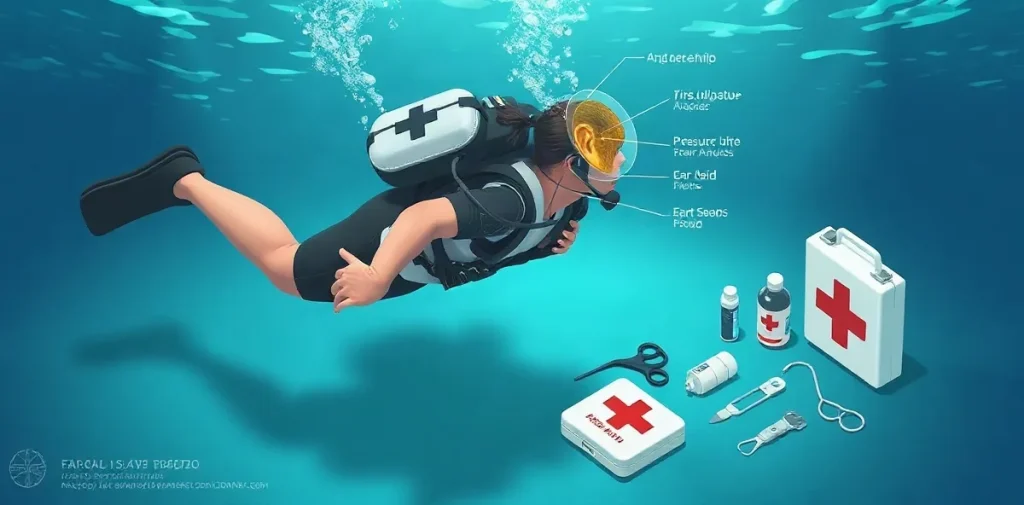
What are the immediate symptoms of diving-related ear barotrauma?
Diving-related ear barotrauma typically manifests as ear pain, a feeling of fullness, muffled hearing, or dizziness during or immediately after a dive. These symptoms result from pressure differences between the middle ear and the external environment, causing stress on the eardrum and middle ear structures. Common signs include sharp or dull pain, tinnitus (ringing), and sometimes mild bleeding from the ear canal if the eardrum ruptures.
According to a 2023 review in the Journal of Diving Medicine, up to 40% of divers report mild ear discomfort related to pressure changes during descent or ascent. Prompt recognition of these symptoms is crucial to prevent progression to severe injury.
How should first aid be administered immediately after suspected ear barotrauma?
Immediate care for ear barotrauma aims to equalize middle ear pressure and reduce discomfort. The diver should first cease further diving activity to avoid worsening the injury. Gentle autoinflation techniques, such as the Valsalva maneuver, can help open the Eustachian tubes and balance pressure, but these should be done cautiously and never if there is severe pain or bleeding.
Over-the-counter oral analgesics like ibuprofen or acetaminophen (priced typically between $5 and $15 for a standard pack) can be used to manage pain. Use of decongestant nasal sprays like oxymetazoline (available from companies such as Bayer under the brand name Afrin) may assist Eustachian tube function, but should not exceed three days of use to avoid rebound congestion.
Immediate care steps:
- Stop diving and avoid flying for at least 48 hours
- Use gentle pressure equalization techniques if tolerable
- Administer oral analgesics for pain relief
- Apply warm compresses to the affected ear
- Use nasal decongestants cautiously
When is medical evaluation necessary for diving-related ear barotrauma?
Medical evaluation is advised if symptoms persist beyond 48 hours, worsen, or if there is evidence of complications such as hearing loss, vertigo, or ear discharge. Rupture of the tympanic membrane or inner ear barotrauma requires specialist assessment, often by an otolaryngologist or dive medicine physician.
Delays in treatment can lead to chronic ear problems or permanent hearing impairment. The Divers Alert Network (DAN) recommends urgent medical consultation if a diver experiences severe vertigo, persistent tinnitus, or noticeable hearing deficit after a dive.
Signs requiring prompt medical care:
- Persistent or worsening ear pain after 48 hours
- Hearing loss or muffled hearing
- Vertigo or balance disturbances
- Bleeding or fluid discharge from the ear canal
- Fever or signs of infection
What are the risks of untreated ear barotrauma in divers?
Untreated ear barotrauma can lead to chronic Eustachian tube dysfunction, tympanic membrane perforation, or middle ear infections (otitis media). In severe cases, inner ear barotrauma can cause permanent sensorineural hearing loss or vestibular damage resulting in ongoing dizziness.
A 2025 study published in the International Journal of Hyperbaric Medicine found that approximately 10% of divers who delayed care for ear barotrauma suffered long-term hearing deficits. Early intervention significantly reduces these risks.
Which products or tools are recommended for managing ear pressure during diving?
Several products assist divers in preventing or managing ear barotrauma by facilitating pressure equalization and protecting the ear canal:
- Earplugs: Moldex Dive Plugs, designed to equalize pressure without sealing the ear canal completely, priced around $20 for a pair.
- Nasal sprays: Oxymetazoline-based sprays like Afrin to reduce nasal congestion, cost approximately $8–$12 per bottle.
- Equalization devices: The Otovent system, used for Eustachian tube inflation, available for about $30.
- Warm compresses: Reusable gel packs such as Thermacare, priced near $15.
| Product | Function | Price Range (USD) | Usage Notes |
|---|---|---|---|
| Moldex Dive Plugs | Pressure equalization protection | $15–$25 per pair | Allows controlled water flow; suitable for divers with mild barotrauma |
| Afrin Nasal Spray | Decongestant to aid tube function | $8–$12 per bottle | Use limited to 3 days to avoid rebound congestion |
| Otovent System | Eustachian tube inflation | ~$30 per kit | Requires training; effective for pressure equalization |
| Thermacare Warm Compress | Pain relief and circulation improvement | ~$15 per pack | Reusable; apply for 15–20 minutes as needed |
How can divers prevent ear barotrauma during future dives?
Preventing ear barotrauma relies on proper equalization techniques and avoiding conditions that impair Eustachian tube function. Divers should equalize early and often during descent, avoid diving with nasal congestion or upper respiratory infections, stay hydrated, and ascend slowly.
Training organizations such as PADI emphasize the importance of the Frenzel maneuver and the Toynbee maneuver as effective equalization methods. Using well-fitted equalizing earplugs and practicing controlled breathing also reduce risk.
- 40% percentage of divers experiencing mild ear discomfort during diving
- 48 hours recommended waiting period before flying after ear barotrauma
- 10% rate of long-term hearing deficits from untreated barotrauma
- $5–$30 price range for common first aid and preventive products
Frequently asked questions
Can ear barotrauma heal on its own without treatment?
Is it safe to use the Valsalva maneuver if I have ear pain?
When can I safely fly after experiencing ear barotrauma?
Are there any medications to prevent ear barotrauma?
Key takeaways
- Diving ear barotrauma causes pain, hearing changes, and balance disturbances due to pressure differences.
- Immediate first aid includes stopping diving, gentle equalization, pain relief, and cautious use of nasal decongestants.
- Persistent or severe symptoms require prompt medical evaluation to avoid long-term damage.
- Products like Moldex Dive Plugs and Otovent devices assist pressure management during diving.
- Prevention relies on proper equalization techniques and avoiding diving with congestion.
In conclusion, ear barotrauma is a common but manageable diving injury. Recognizing symptoms early and applying appropriate first aid can prevent progression to serious complications. Divers should be aware of safe equalization techniques, utilize recommended products, and seek medical care when necessary to ensure ear health and safe diving experiences.