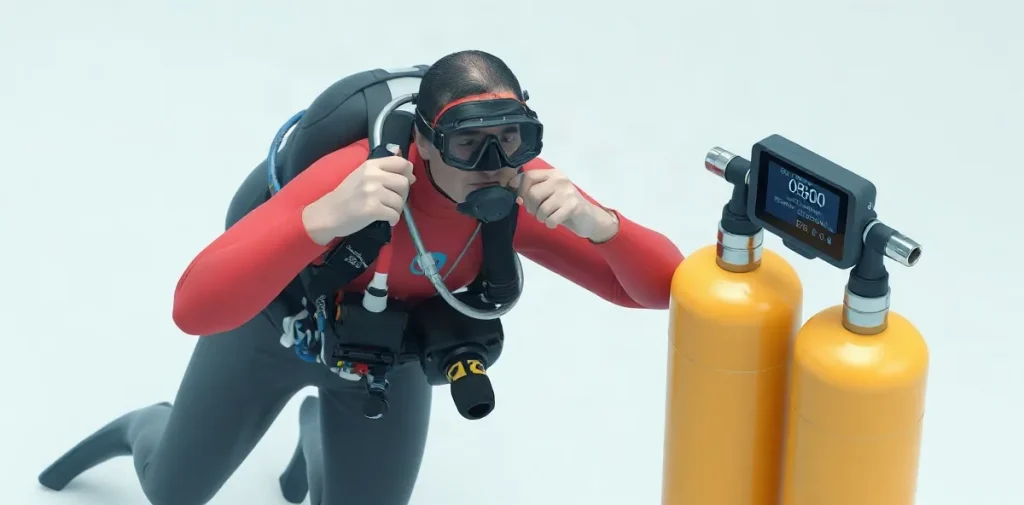
What are the most common mistakes divers make with gas switching?
Divers frequently err in gas switching by confusing gas mixtures, switching at incorrect depths, or neglecting to confirm cylinder content before breathing. Typical mistakes include switching too early or too late, using the wrong gas for decompression stops, and failing to monitor partial pressures of oxygen (PPO2), which can lead to oxygen toxicity or decompression sickness. Awareness of these errors is critical because gas switches are pivotal moments during technical dives where incorrect choices can escalate risk substantially.
For example, switching from a bottom mix such as Trimix 21/35 (21% oxygen, 35% helium) to a decompression gas like Nitrox 50 (50% oxygen) too deep can increase PPO2 beyond safe limits, risking CNS oxygen toxicity. Conversely, switching too shallow can reduce inert gas washout efficiency, prolonging decompression obligations.
How can divers verify correct gas mixtures before and during the dive?
Proper gas analysis and labeling are essential to prevent gas switching errors. Divers should use reliable oxygen analyzers—such as the Analox O2EII, priced around $700 to $900—to measure the oxygen fraction in each cylinder before the dive. Checking for helium content requires gas blending logs or sending cylinders to certified gas suppliers like Air Liquide or Praxair, which provide documented gas analyses.
Effective gas verification steps
- Analyze each cylinder’s oxygen fraction with a calibrated oxygen analyzer.
- Confirm helium content via supplier certification or mixing records.
- Label each cylinder with clear, waterproof tags indicating gas type and maximum operating depth (MOD).
- Cross-check gas mixtures with the dive plan and decompression tables.
- Brief dive team members on gas assignments and switching procedures.
Failure to perform these verifications has been linked to incidents of divers breathing inappropriate gases at depth, causing accidents. According to the Divers Alert Network (DAN) 2024 annual report, 15% of technical diving incidents involved improper gas usage, underscoring the need for rigorous checks.
When should divers switch gases during a technical dive?
Gas switches should occur at precise depths planned to optimize decompression efficiency and minimize inert gas load. Switching too deep to a high-oxygen decompression gas risks oxygen toxicity; too shallow, and inert gas elimination slows.
Recommended gas switching depths for common technical mixes
| Gas Mix | Recommended Switch Depth (msw) | MOD (msw) |
|---|---|---|
| Trimix 21/35 | Below 45 meters | 55 meters |
| Nitrox 50 | Between 21 and 12 meters | 21 meters |
| Nitrox 80 | Between 12 and 6 meters | 12 meters |
Dive computers like the Shearwater Perdix AI calculate MOD and PPO2 limits and can alert divers when to switch. The Perdix AI costs approximately $1,200 and includes features like multiple gas management and real-time decompression tracking, supporting safer gas switches.
Why is monitoring partial pressure of oxygen critical during gas switches?
Oxygen partial pressure (PPO2) management prevents oxygen toxicity and ensures adequate oxygen for decompression. PPO2 should generally stay between 1.3 and 1.6 atmospheres absolute (ATA) during decompression stops.
Consequences of PPO2 mismanagement
- High PPO2 (>1.6 ATA) can cause central nervous system (CNS) toxicity, leading to seizures underwater, a life-threatening event.
- Low PPO2 (<0.21 ATA) risks hypoxia, which can lead to unconsciousness.
- Incorrect PPO2 prolongs decompression time, increasing risk of decompression sickness.
Divers should use dive computers that allow programming of multiple gas mixes with PPO2 alarms. For instance, the Garmin Descent Mk2i, retailing near $1,500, supports advanced multi-gas CCR and PPO2 monitoring, reducing human error during gas switches.
How can divers train to avoid gas switching errors?
Proper training through recognized technical diving agencies such as TDI (Technical Diving International) or GUE (Global Underwater Explorers) is essential. Courses emphasize strict gas management protocols, emergency procedures, and practical drills to master switching skills.
Key components of effective gas switching training
- Classroom instruction on gas physiology, PPO2 limits, and decompression theory.
- Hands-on practice with actual gas switches in controlled pool sessions.
- Use of checklists and buddy verification systems.
- Simulated emergency drills for gas contamination or wrong gas switching scenarios.
According to TDI’s 2025 training statistics, divers who completed the Advanced Nitrox and Decompression Procedures courses reduced gas switching errors by approximately 40% in field dives.
What equipment can aid safe gas switching underwater?
Modern diving equipment enhances safety by facilitating effective gas management and switching. Key gear includes:
- Dive computers with multi-gas support: Models like Shearwater Perdix AI and Garmin Descent Mk2i provide visual and audio alerts for gas switches and PPO2 monitoring.
- Cylinder labeling systems: Durable, color-coded silicone bands and laminated tags prevent confusion between gases.
- Primary and backup regulators: Dedicated regulators for each gas mix minimize cross-contamination risks.
- Gas switching manifolds: Configurations that allow seamless regulator switching without valve manipulation.
Investing in reliable equipment with a budget of $1,000 to $2,000 for computers and labeling accessories is a worthwhile safety measure that reduces the likelihood of errors.
- 15% of technical diving accidents involve gas switching errors (DAN 2024 report)
- $700–$900 cost of a reliable oxygen analyzer for gas verification
- 1.3–1.6 ATA recommended PPO2 range during decompression
- 40% reduction in gas switching errors after advanced training (TDI 2025)
- $1,200–$1,500 price range for multi-gas dive computers with PPO2 alarms
Frequently asked questions
How do I know when exactly to switch gases during a dive?
What should I do if I accidentally breathe the wrong gas at depth?
Can I rely solely on visual labels to identify gases?
Are dive computers accurate enough for managing multiple gases?
Key takeaways
- Gas switching errors contribute to a significant portion of technical diving accidents.
- Accurate gas analysis and clear cylinder labeling are foundational safety practices.
- Switch gases at planned depths respecting PPO2 limits to avoid toxicity and decompression issues.
- Use advanced dive computers with multi-gas and PPO2 monitoring capabilities.
- Comprehensive training dramatically reduces gas switching mistakes.
Conclusion
Gas switching is a critical skill in technical diving that demands precise planning, equipment, and training. Avoiding common mistakes—such as incorrect gas identification, improper switch timing, and PPO2 mismanagement—greatly enhances diver safety and decompression efficiency. By committing to rigorous pre-dive checks, using advanced dive computers, and undertaking thorough training, divers can confidently manage gas switches and reduce the risk of serious incidents underwater.