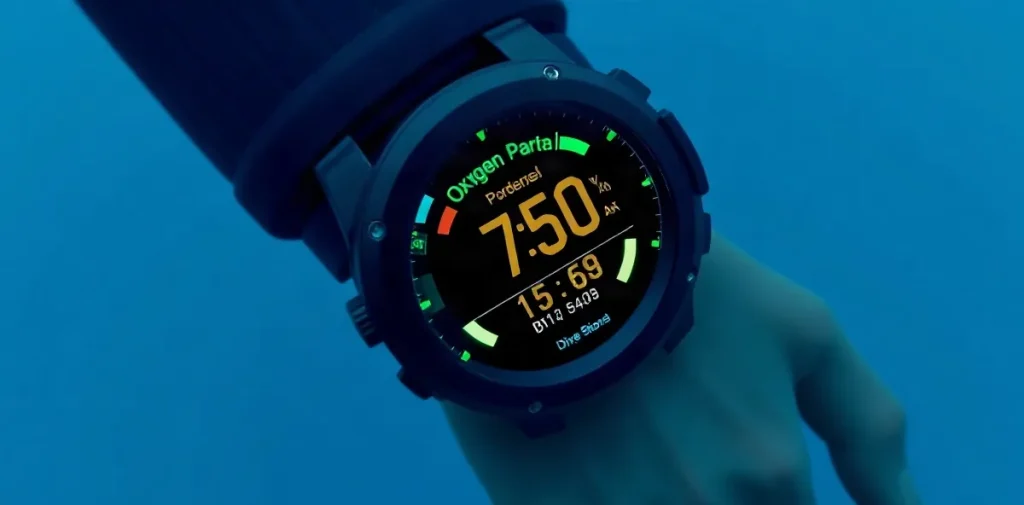
Oxygen partial pressure (PPO₂) directly influences dive safety and performance by balancing oxygen’s life-sustaining benefits against its potential toxicity. Controlling PPO₂ within established limits reduces the risk of central nervous system oxygen toxicity while allowing longer, more efficient dives.
What is oxygen partial pressure and why does it matter in diving?
Oxygen partial pressure is the measure of oxygen concentration in a gas mixture inhaled by a diver, expressed in atmospheres absolute (ATA). It determines the physiological effects of oxygen on the diver’s body underwater. Safe diving protocols maintain PPO₂ typically between 0.16 ATA (minimum for consciousness) and 1.4 ATA (recommended maximum for recreational diving) to avoid toxicity.
Physiological basis of PPO₂
At sea level, oxygen constitutes about 21% of atmospheric pressure, resulting in a PPO₂ of approximately 0.21 ATA. As depth increases, ambient pressure rises, and so does PPO₂ proportionally, increasing oxygen’s physiological impact. Elevated PPO₂ can cause harmful effects such as seizures, lung damage, and oxidative stress, making monitoring essential.
How does managing oxygen exposure improve dive safety?
Managing oxygen exposure by limiting PPO₂ reduces the incidence of oxygen toxicity, a critical factor in dive safety. Most dive organizations, including NOAA and PADI, recommend a PPO₂ ceiling of 1.4 ATA during active diving and up to 1.6 ATA during decompression stops.
Oxygen toxicity symptoms and prevention
- Central nervous system toxicity: headache, nausea, visual disturbances, seizures
- Pulmonary toxicity: coughing, chest tightness, decreased lung function
- Preventive measures: depth limits, gas mix adjustments, controlled exposure times
What are the safe PPO₂ limits for various dive profiles?
Safe PPO₂ limits vary by dive type and duration. Recreational dives typically adhere to a maximum PPO₂ of 1.4 ATA, while technical and decompression dives may allow up to 1.6 ATA during specific stages. Exceeding these levels increases oxygen toxicity risk exponentially.
| Dive Type | Max PPO₂ (ATA) | Typical Gas Mix |
|---|---|---|
| Recreational | 1.4 | Air (21% O₂) or Nitrox (32-36% O₂) |
| Technical | 1.6 (decompression) | Trimix, Nitrox blends |
| Decompression stops | 1.6 | Pure oxygen or enriched mixes |
How does PPO₂ management support longer dive times?
By optimizing oxygen fractions in breathing gases, divers extend bottom times while minimizing decompression obligations. Using enriched air nitrox with controlled PPO₂ allows longer no-decompression limits compared to air. Technical divers employ trimix blends to reduce nitrogen and oxygen partial pressures, extending safe exposure.
Technologies enabling PPO₂ control
- Advanced dive computers (e.g., Shearwater Perdix, Suunto D5) continuously monitor PPO₂ and alert divers
- Closed-circuit rebreathers (manufactured by companies like Inspiration and Poseidon) adjust PPO₂ dynamically to optimize gas usage
- Gas analysis tools (e.g., Oxygen Analyzers by Analytical Industries) ensure accurate gas mix verification pre-dive
What are the risks of improper PPO₂ management?
Improper PPO₂ management leads to oxygen toxicity or hypoxia, both dangerous to divers. Oxygen toxicity can cause life-threatening seizures underwater, while hypoxia can result in unconsciousness. Both conditions increase the risk of drowning and decompression sickness due to impaired physiological functions.
Consequences and mitigations
- Seizures from high PPO₂ require immediate ascent and emergency protocols
- Hypoxia from low PPO₂ often occurs with faulty gas mixes or equipment malfunction
- Strict adherence to standards like those from NOAA and DAN reduces these risks
- 1.4 ATA maximum PPO₂ for safe recreational diving
- 1.6 ATA maximum PPO₂ during decompression stops
- 32-36% typical oxygen fraction in Nitrox for extended bottom time
- Shearwater Perdix advanced dive computer model monitoring PPO₂ in real-time
- $1,200–$1,800 price range for modern oxygen analyzers used in dive centers
Frequently asked questions
What happens if PPO₂ exceeds 1.6 ATA during a dive?
Can oxygen toxicity occur at shallow depths?
How do rebreathers help manage PPO₂?
Is Nitrox safer than air for all dives?
Key takeaways
- Oxygen partial pressure controls the balance between oxygen’s benefits and toxicity risks in diving.
- Maintaining PPO₂ below 1.4 ATA for active diving and 1.6 ATA for decompression is essential for safety.
- Advanced dive computers and rebreathers enable precise PPO₂ monitoring and control.
- Proper gas mix selection and verification prevent hypoxia and oxygen toxicity incidents.
- Understanding PPO₂ limits allows divers to extend bottom times safely and improve performance.
In conclusion, oxygen partial pressure is a fundamental parameter in dive planning and execution, directly impacting diver safety and performance. Effective management through established PPO₂ limits, advanced technology, and informed gas selection enables longer, safer dives by minimizing oxygen toxicity and hypoxia risks. As diving technology evolves, precise PPO₂ control remains central to advancing dive safety standards and optimizing underwater exploration.