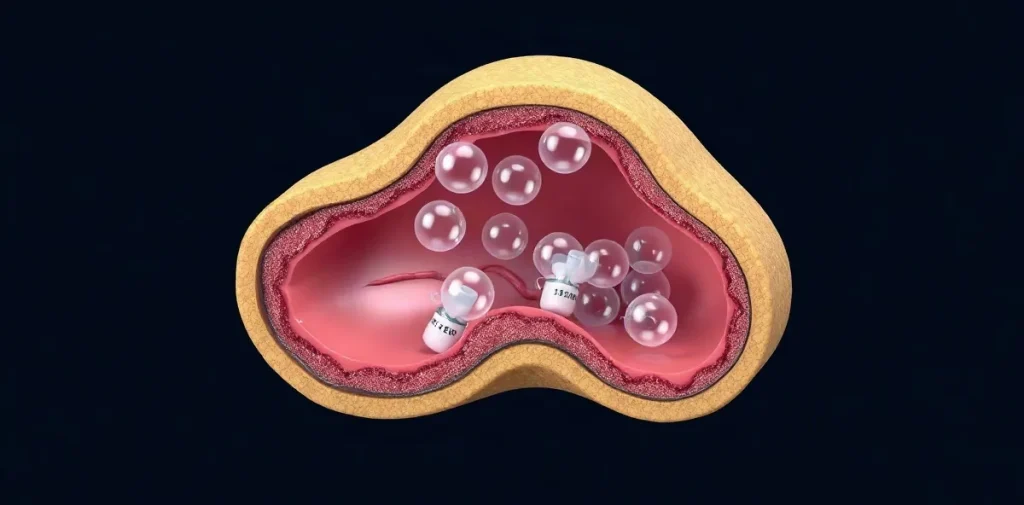
Nitrogen absorption and release critically influence repetitive dive safety by determining the amount of inert gas dissolved in body tissues between dives, affecting decompression stress and the risk of decompression sickness. Proper management of nitrogen loading through dive planning, surface intervals, and ascent rates is essential to minimize these risks during multiple dives.
Understanding how nitrogen behaves in the body during repetitive diving is fundamental for divers who undertake multiple dives within a short period. Each dive leads to nitrogen dissolving into various tissues at different rates depending on depth, time, and individual physiology. Between dives, nitrogen slowly off-gasses, but incomplete elimination can cause cumulative buildup, increasing the likelihood of bubble formation and decompression illness.
This article explores the mechanisms of nitrogen uptake and release, emphasizing their impact on repetitive dive safety. By examining the physiology of inert gas kinetics and the importance of controlled surface intervals and ascent profiles, divers and dive professionals can better appreciate the delicate balance needed to dive safely multiple times in a day or over consecutive days. Understanding these principles is key to optimizing dive planning and reducing decompression risks in repetitive diving scenarios.
| Tissue Type | Approximate Half-Time (minutes) | Perfusion Rate | Role in Nitrogen Kinetics |
|---|---|---|---|
| Fast tissues (blood, brain) | 5-10 | High | Rapid nitrogen uptake and elimination |
| Intermediate tissues (muscle) | 20-40 | Moderate | Moderate inert gas exchange |
| Slow tissues (fat) | 90-120 | Low | Slow nitrogen washout, key in repetitive dive risk |
- 0.79 bar Nitrogen partial pressure in alveolar air at sea level
- 120 minutes Maximum tissue nitrogen half-time in slow tissues
- 60 minutes Recommended minimum surface interval for repetitive dives
- 2.0 bar Typical M-value maximum inert gas pressure limit in slow tissues
- 30-40 minutes Duration of oxygen breathing at 6 meters to accelerate nitrogen elimination
What physiological processes govern nitrogen uptake during repetitive dives?
Henry’s Law and Tissue Saturation
Nitrogen uptake during repetitive dives is governed primarily by Henry’s Law, which states that the amount of gas dissolving in body tissues is proportional to the ambient pressure. As a diver descends, the partial pressure of nitrogen in the lungs increases—reaching approximately 3.79 bar at 30 meters sea water (msw)—driving greater nitrogen absorption into the blood and tissues. The extent and rate of nitrogen dissolution depend on both the depth and duration of the dive, with alveolar nitrogen partial pressure at sea level typically around 0.79 bar and rising proportionally with depth.
Role of Tissue Compartments
The body’s tissues absorb and release nitrogen at varying rates, modeled by Haldane’s 1908 compartment theory, which assigns half-times ranging from 5 to 120 minutes to different tissue types. Muscle and fat tissues, making up about 75% of body mass, are principal sites of nitrogen uptake and have slower washout rates compared to faster tissues such as blood or brain. This differential kinetics means that during repetitive dives with short surface intervals, nitrogen accumulates cumulatively since slower tissues do not fully off-gas nitrogen between dives, increasing decompression risk as highlighted in the US Navy Diving Manual (Revision 7, 2016).
- Alveolar nitrogen partial pressure: ~0.79 bar at surface, ~3.79 bar at 30 msw
- Tissue half-times in Haldane’s model: 5 to 120 minutes
- Muscle and fat tissue: ~75% of total body mass
- US Navy Diving Manual Revision 7: emphasizes cumulative nitrogen loading during repetitive dives
How does nitrogen elimination occur between repetitive dives and what limits its rate?
Pulmonary Off-Gassing Dynamics
Nitrogen elimination between repetitive dives occurs primarily through pulmonary ventilation, where inert gas dissolved in tissues diffuses into the blood and is exhaled via the lungs. This process is governed by tissue perfusion rates, with washout half-times ranging from approximately 5 minutes in fast-perfused tissues such as blood and brain, up to about 120 minutes in slower tissues like fat. Surface intervals shorter than two hours frequently do not reduce nitrogen levels below safe thresholds, thus increasing the risk of decompression sickness (DCS), as detailed in the Royal Navy’s No-Decompression Limits tables updated in 2022.
Environmental and Physiological Influences
Factors including cold exposure and dehydration can significantly slow nitrogen elimination by reducing peripheral blood flow, impeding gas exchange efficiency. The Divers Alert Network’s Diving Medicine Research in 2023 highlights how these conditions lengthen nitrogen washout times. Conversely, breathing oxygen-enriched gas mixtures during surface intervals accelerates nitrogen clearance; specifically, 100% oxygen can reduce nitrogen half-times by approximately 50%. This technique is routinely employed in professional dive operations to safely shorten surface intervals and mitigate DCS risk.
- Fast tissue nitrogen half-time: ~5 minutes
- Slow tissue nitrogen half-time: up to 120 minutes
- Safe surface interval threshold: typically 2 hours or more (Royal Navy RNPL, 2022)
- Oxygen breathing reduces nitrogen half-time by ~50%
- Cold and dehydration reduce peripheral blood flow, slowing off-gassing (DAN, 2023)
What are the decompression safety implications of nitrogen uptake and release in repetitive dives?
Bubble Formation and Decompression Algorithms
The decompression safety implications of nitrogen uptake and release in repetitive dives center on the increased tissue nitrogen saturation, which elevates the risk of inert gas bubble formation during ascent. This necessitates careful decompression stop planning to avoid exceeding critical supersaturation thresholds known as M-values, set at about 2.0 bar for slow tissues. The Bühlmann ZH-L16 algorithm, introduced in 1986, specifically incorporates residual nitrogen factors from previous dives to provide safe ascent profiles for repetitive diving. Modern dive computers, such as Shearwater’s Petrel 3, calculate residual nitrogen loading in real-time and adjust no-decompression limits accordingly to prevent surpassing these limits, thereby reducing the risk of decompression sickness (DCS).
Real-World Safety Outcomes
Failure to properly account for residual nitrogen from prior dives significantly increases DCS risk, with standard recreational diving presenting roughly 1 in 10,000 incidence under single-dive profiles, but rates rising notably when repetitive dives are spaced under one hour apart, as reflected in DAN incident reports from 2024. Professional divers often mitigate this risk by employing oxygen decompression protocols after repetitive dives, accelerating nitrogen elimination. Controlled studies have documented that such practices can reduce DCS incidence by up to 30%, highlighting the critical importance of managing residual nitrogen to maintain diver safety.
- Bühlmann ZH-L16 algorithm (1986): incorporates residual nitrogen for safe repetitive dive planning
- Shearwater Petrel 3: real-time residual nitrogen calculation and no-stop limit adjustment
- M-values for slow tissues: approximately 2.0 bar maximum inert gas pressure
- DCS incidence for single dives: about 1 in 10,000 dives (standard recreational profiles)
- DAN 2024 reports: increased DCS risk with repetitive dives spaced less than one hour apart
- Oxygen decompression protocols: up to 30% reduction in DCS incidence in professional divers
When do common repetitive dive practices fail to prevent nitrogen-related complications?
Common repetitive dive practices fail to prevent nitrogen-related complications primarily when surface intervals are too short to allow adequate off-gassing or when dive computers use outdated algorithms that underestimate residual nitrogen, particularly during multi-dive days involving depths beyond 20 meters seawater (msw).
Surface Interval Thresholds
Surface intervals shorter than 30 minutes often do not provide sufficient time for nitrogen elimination, especially after dives deeper than 20 msw. This can result in elevated residual nitrogen levels exceeding the US Navy’s 2008 dive table limits. Additionally, slow tissue compartment saturation, which can persist beyond standard decompression schedules, has been linked to latent bubble formation in divers, as documented by the European Underwater and Baromedical Society (EUBS) in 2025. Environmental factors such as dehydration and cold water exposure further impair nitrogen off-gassing, making typical decompression stops inadequate unless these conditions are addressed concurrently.
Limitations of Dive Computer Algorithms
Many dive computers, including popular models like the Suunto D5 and Garmin Descent Mk2, rely on simplified or outdated decompression models that do not fully integrate corrections for residual nitrogen during repetitive dives. This shortcoming increases risk in technical diving scenarios that involve multiple dives per day. Without accounting for cumulative nitrogen loading, divers may unknowingly exceed safe limits. In contrast, advanced models incorporating Bühlmann ZH-L16C with gradient factors offer improved management of residual nitrogen but remain underutilized in mainstream recreational diving.
- Surface interval minimum: 30 minutes for dives >20 msw
- US Navy 2008 tables limit residual nitrogen loading
- European Underwater and Baromedical Society review, 2025 on latent bubble formation
- Common dive computers lacking repetitive dive corrections: Suunto D5, Garmin Descent Mk2
- Advanced decompression model example: Bühlmann ZH-L16C with gradient factors
How can divers optimize nitrogen management during repetitive dive series?
Technological Tools
Divers can optimize nitrogen management during repetitive dive series by using advanced dive computers that integrate robust decompression algorithms and real-time tissue loading calculations. For example, the Garmin Descent Mk2i employs the Bühlmann ZH-L16C algorithm with gradient factors, dynamically adjusting no-decompression limits based on current nitrogen saturation and repetitive dive history. This model also calculates residual nitrogen times, enabling safer dive planning and reducing the risk of decompression sickness during multiple dives within a day.
Physiological and Behavioral Strategies
Extending surface intervals beyond 60 minutes significantly enhances nitrogen off-gassing, especially in slow tissues, thereby lowering cumulative inert gas load. Additionally, incorporating oxygen breathing during decompression or surface intervals accelerates nitrogen elimination; professional divers commonly use 100% oxygen at approximately 6 meters depth for 30 to 40 minutes post-dive to optimize washout. Maintaining proper hydration, as recommended by the Divers Alert Network’s 2023 hydration guidelines, and ensuring adequate thermal protection help minimize peripheral vasoconstriction, which facilitates more efficient nitrogen clearance.
- Garmin Descent Mk2i dive computer with Bühlmann ZH-L16C and gradient factors
- Surface intervals extended beyond 60 minutes for improved nitrogen off-gassing
- Oxygen breathing at 6 meters depth for 30–40 minutes post-dive
- Hydration protocols per Divers Alert Network 2023 guidelines
Frequently asked questions
Why does nitrogen accumulate more in fat tissues during repetitive dives?
How long should surface intervals be to safely off-gas nitrogen between repetitive dives?
Can breathing pure oxygen after a dive reduce decompression risk?
Do all dive computers account for residual nitrogen in repetitive dives?
Key takeaways
- Tissue half-times for nitrogen range from 5 to 120 minutes, influencing uptake and release rates.
- Surface intervals shorter than 60 minutes often insufficiently reduce residual nitrogen.
- Oxygen breathing post-dive accelerates nitrogen elimination by approximately 50%.
- Advanced dive computers use Bühlmann ZH-L16C algorithm with repetitive dive corrections.
- Cold, dehydration, and short surface intervals increase decompression sickness risk.