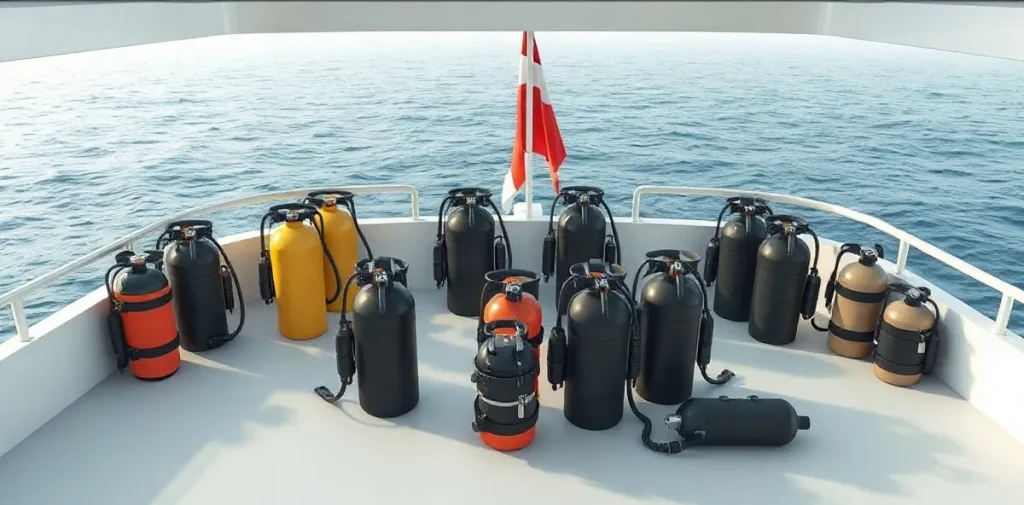
Liveaboard diving requires careful selection of essential gear and thorough preparation to ensure safety, comfort, and enjoyment during extended sea trips. Key items include reliable dive equipment, appropriate clothing, personal essentials, and planning for limited space and variable conditions aboard the vessel.
Embarking on a liveaboard diving adventure means spending days or even weeks living and diving from a boat, often far from shore. This unique experience demands more than just standard dive gear; divers must consider packing efficiently, managing their equipment in confined quarters, and preparing for changing weather and sea states. Understanding these requirements helps divers maximize their underwater exploration while minimizing potential challenges.
For a broader understanding of diving gear and techniques, as well as ideal dive destinations, see our detailed overview in «Diving Essentials: A Comprehensive Overview of Techniques, Equipment, and Destinations». This article focuses specifically on the nuances of liveaboard diving preparation to help divers get the most out of their extended trips at sea.
| Model | Price (USD) | Features | Battery Type |
|---|---|---|---|
| Shearwater Perdix AI | 1,200 | Air integration, multi-gas, large color display | Rechargeable |
| Suunto D5 | 900 | Wireless tank pressure, customizable display | Rechargeable |
| Garmin Descent Mk2i | 1,500 | GPS, air integration, multisport functions | Rechargeable |
| Cressi Leonardo | 500 | Basic air integration, easy interface | Replaceable CR2450 battery |
- 7 mm Recommended wetsuit thickness for temperate liveaboard diving
- 300 bar Standard pressure rating for steel dive tanks on liveaboards
- 20-25 kg Typical checked luggage allowance on liveaboard dive trips
- $900-$1,200 Price range for advanced dive computers suited to liveaboard diving
What specialized dive computers and gauges are essential for liveaboard diving?
Primary dive computers
Specialized dive computers essential for liveaboard diving must support air integration and multi-gas capabilities to handle repetitive dives over several days safely. The Shearwater Perdix AI, priced around $1,200, offers these features, allowing real-time tank pressure monitoring and managing nitrox or trimix gases, which are critical for extended dive schedules commonly encountered on liveaboards. Another key option is the Suunto D5, retailing near $900, which features a customizable display and wireless tank pressure monitoring, enhancing underwater situational awareness and safety during multiple daily dives.
Backup monitoring devices
Reliable backup devices are crucial during liveaboard trips where multiple dive sessions increase the risk of primary device failure. A standard Submersible Pressure Gauge (SPG) with at least a 300 bar pressure rating is necessary to match the typical steel tanks used on liveaboards, ensuring accurate monitoring of remaining air supply. Additionally, redundant timing devices like the Citizen Promaster Marine dive watch, priced at approximately $350, provide a waterproof and robust backup for tracking dive duration, ensuring divers maintain safe bottom times even if electronic computers fail.
How should wetsuit selection differ for liveaboard dives versus day trips?
For liveaboard diving, wetsuit selection prioritizes thicker neoprene and durability to accommodate multiple daily dives and extended immersion in cooler waters, unlike day trips where lighter suits may suffice. This approach ensures thermal protection and gear longevity over several consecutive days at sea.
Thickness and insulation
Liveaboard divers commonly use 7mm neoprene wetsuits that provide effective thermal insulation in temperate water temperatures ranging from 15 to 20°C. For example, the Scubapro Everflex 7mm is a popular model priced around $600, offering warmth for long immersion times typical of liveaboard schedules. Additionally, complementing the wetsuit with neoprene gloves and hoods can add 2–3°C of insulation, which is particularly important during surface intervals on exposed upper decks where wind chill can be significant.
Durability features
- Reinforced knee pads help withstand the wear from repeated gear handling and boat deck contact over 7–10 day trips.
- Zipper guards protect against saltwater corrosion and snagging, extending the wetsuit’s functional lifespan.
- Models like the Scubapro Everflex are designed for repetitive use, justifying their higher price point for liveaboard divers who perform multiple dives daily.
What additional personal equipment is crucial for longer liveaboard stays?
Storage and protection
A large capacity dive gear bag and durable dry bags are essential for protecting and organizing equipment during extended liveaboard trips. For example, the Aqua Lung Explorer dive bag, priced around $200, offers ample space to carry multiple sets of gear needed for 5- to 14-day voyages. Complementing this, dry bags rated between 10 and 20 liters shield electronics and valuables from saltwater exposure and unstable deck conditions, ensuring critical items remain dry throughout the trip.
Safety and visibility
Surface marker buoys (SMBs) with integrated reels and compact dive lights significantly enhance diver safety and visibility on liveaboards. The OMS SMB Reel, costing about $85, is a mandatory safety device during drift dives typical of liveaboard operations, allowing divers to signal their position effectively. Additionally, dive lights such as the Bigblue AL1200XP, priced near $220, enable safe night diving and early morning sessions by providing reliable illumination in low-light underwater environments.
What are common equipment mistakes that can jeopardize liveaboard dive trips?
Redundancy and backups
Common equipment mistakes that jeopardize liveaboard dive trips include underestimating the need for redundant air sources. Carrying only one primary regulator without an octopus backup can increase risk during frequent dives, especially as 24–30 dives are typical on week-long liveaboards. Divers should bring at least one secondary regulator to comply with recreational diving standards such as those from PADI or SSI, which recommend octopus regulators as a safety backup.
Additionally, neglecting to bring modular weight belts or integrated weight pockets can cause discomfort and buoyancy control issues during prolonged dives. The flexibility of systems like the Scubapro Weight Integrated BCD or Dive Rite Modular Weight Belts allows divers to adjust weights easily, preventing fatigue and improving dive safety over multi-day trips.
Battery and power management
Failing to manage batteries for dive computers and underwater lights can lead to equipment failure mid-trip. For example, popular dive computers like the Shearwater Perdix AI have battery lives around 30 to 40 hours of dive time but require recharging or spare batteries for extended use. Carrying spare AA or CR123 batteries or portable USB chargers ensures continuous operation.
Moreover, neglecting to bring a dive logbook or digital app for tracking multiple dives over several days can complicate decompression planning. Using apps like Subsurface or dive computers with built-in logging reduces the risk of missing decompression limits, especially on trips lasting 7 days or more where divers often exceed 20 dives.
How much space and weight allowance should divers expect for their gear on liveaboards?
Weight limits
Most liveaboard dive operators set checked luggage allowances between 20 and 25 kilograms, with an additional carry-on limit of about 8 to 10 kilograms. Since standard steel scuba tanks weigh roughly 15 kilograms empty and are typically supplied onboard, divers rarely need to pack them; however, bringing lightweight aluminum tanks is occasionally allowed but requires careful weight management. Travel regulators such as the Scubapro MK25 Evo, retailing near $800, are popular because their compact design balances high performance with easier transport within these weight constraints.
Gear packing strategies
Optimizing luggage space is crucial when managing dive equipment. Using modular packing systems—packing masks, fins, and wetsuits separately in soft cases—can reduce the volume of checked bags by up to 30%, making it easier to stay within airline and liveaboard limits. Prioritizing lightweight, travel-friendly gear and distributing items between carry-on and checked luggage helps divers avoid excess baggage fees and simplifies handling during transit to the boat.
What essential maintenance and preparation steps should divers perform before a liveaboard departure?
Equipment servicing
Full servicing of critical dive gear like regulators and BCDs within 12 months before departure is essential to guarantee reliable function during daily dives. For example, servicing a first-stage regulator from companies such as Apeks or Scubapro typically costs between $100 and $180, depending on model complexity and service centre location. Dive computers from manufacturers like Shearwater and Suunto require checking for firmware updates regularly; these brands often release important fixes within six months, enhancing safety and dive data accuracy. Servicing also includes inspecting O-rings, hoses, and inflator mechanisms to prevent failures that could compromise underwater safety.
Pre-trip testing and fitting
Pre-trip fitting sessions for wetsuits and weight systems significantly reduce discomfort during prolonged dives, especially on trips exceeding seven days. Ensuring wetsuit thickness matches local water temperatures—typically 5 mm for temperate waters or 7 mm for colder regions—helps maintain thermal protection. Weight systems should be adjusted to achieve neutral buoyancy without excessive bulk, commonly ranging between 4 and 8 kg depending on diver body composition and exposure suit. Waterproof testing of electronics such as dive lights (e.g., brands like Big Blue or Oceanic) and underwater cameras (such as the GoPro HERO11 or SeaLife DC2000) prevents malfunctions in the marine environment, avoiding costly repairs or loss of equipment during the voyage.
Frequently asked questions
Why is a dive computer with multi-gas support important on liveaboards?
Can I rely on wetsuits thinner than 5mm for liveaboard trips?
How can I manage battery life for dive electronics during a multi-day trip?
Are steel tanks usually provided on liveaboard boats?
Key takeaways
- Choose dive computers with air integration and multi-gas capabilities for safety.
- Select 7mm wetsuits with reinforced features to handle repeated dives and surface exposure.
- Pack sufficient personal gear including SMBs, large capacity bags, and dive lights.
- Plan for equipment redundancy and battery management to avoid failures.
- Perform full pre-trip servicing and equipment testing to ensure reliability.