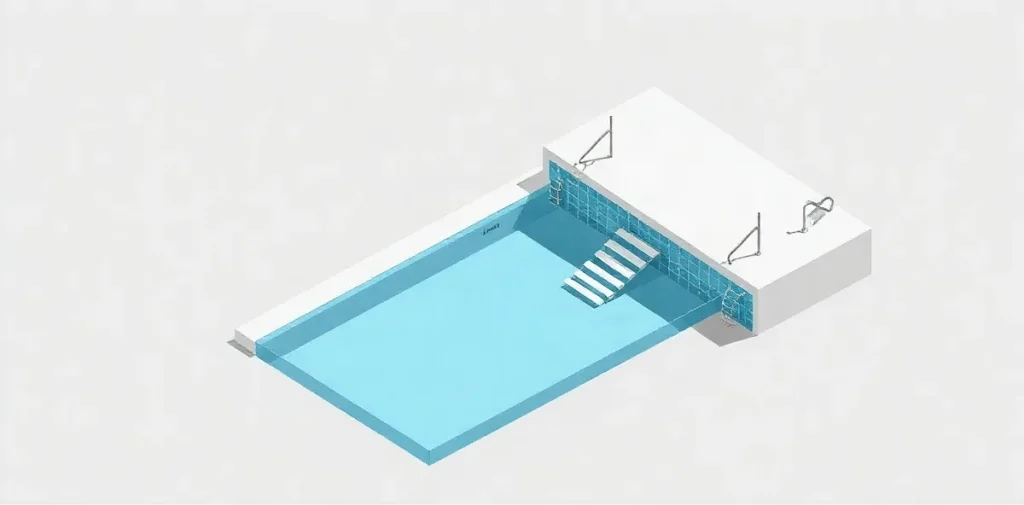
A diving board is a flexible or rigid platform for entering the water; choose one suited to the diver’s ability, the pool and the intended use.
Boards range from fixed platforms to springboards that flex under a diver’s weight. That difference affects how the board feels and how it is used, but neither type makes an unsafe pool or poor technique safe.
This guide explains the main diving board types, the safety features to check and how to choose a board for your setting. Consider the board’s condition, installation and compatibility with the pool before anyone dives.
| Option | Flexibility | Best selection check |
|---|---|---|
| Standard diving board | Varies | Pool shape, depth and model specifications |
| Springboard | Designed as a springing board | Intended use and manufacturer’s specifications |
| Jump rock | Rigid option | Pool layout and intended use |
- 3.65 m water depth specified directly below boards or platforms between 1,000 mm and 3 m above the water
- over 1000 feet/304 meters altitude threshold named in the Dauphin Island Sea Lab manual’s flying-after-diving topic
What is a diving board, and which type fits your pool?
A standard diving board is a relatively rigid pool board, while a springboard flexes to add bounce; choose between them by matching flexibility and intended use to your pool’s shape and depth.
- Standard diving board: It varies in length and flexibility, so check that the specific board suits the pool’s layout and diving area rather than choosing by appearance alone.
- Springboard: Its defining feature is flexibility. Consider it when you want a board that gives under a diver, and verify that the pool’s depth and shape suit its use.
- Jump rock: This is a separate, more rigid option, not a type of board. It may suit a pool setting where an overhanging board is not appropriate.
Check the pool before choosing
Board length and flexibility affect how a board fits the pool; available water depth and the pool’s shape matter too. A board that fits the deck may still be unsuitable for the water below it, so confirm compatibility before buying or installing.
Here, “diving board” means recreational pool equipment. Scientific diving manuals address underwater operations, not how to select a board for a swimming pool.
How do you check whether the pool has enough water depth?
Check the vertical distance from the board or platform to the water, then verify the required depth directly beneath it against the rule used by the pool authority.
The risk-management guidance gives a 3 m water-depth requirement for boards or platforms between 1,000 mm and 3 m above the water. It also calls for 3.65 m of water directly below boards or platforms in that same height range. Because these requirements differ, confirm which rule applies with the pool authority before installation.
Measure at the board’s position, not elsewhere in the pool: the depth directly below the diving point is the relevant check. A board that fits the pool edge is not necessarily suitable; both water depth and pool shape affect compatibility. Ask the pool authority to assess the proposed board against the pool’s dimensions before you buy or install it.
How should you compare board construction and flexibility?
Compare diving boards by their material, finish, intended use and compatibility with the pool; none of those features alone determines safety.
Material and finish
Stainless steel, concrete, acrylic and fiberglass are all used in diving-board construction. Their suitability depends on the specific board design and installation, so compare the manufacturer’s specifications rather than choosing by material name alone.
- Stainless steel: Check the specified construction and finish for the particular board.
- Concrete: Confirm that the design and installation suit the pool.
- Acrylic: Check the manufacturer’s details for finish and pool compatibility.
- Fiberglass: Compare its construction and installation requirements with the pool setup.
Flexibility and intended use
Choose flexibility for the board’s intended use, not as a safety rating. A flexible board may suit a pool intended for relaxed swimming; a springboard is designed for a different feel and function.
Before choosing, check the manufacturer’s specifications for the board’s finish, construction and compatibility with your pool. A material or flexibility preference is not a substitute for confirming that the specific board is suitable for the installation.
How do you install and inspect a diving board safely?
Have a pool professional assess the site and install the diving board, checking that its mounting and placement comply with applicable safety codes.
Before each use, check the board’s surface for secure footing. Risk-management guidance requires diving boards and platforms to have slip-resistant surfaces; keep the board out of service if that surface is damaged.
Installation and ongoing checks
- Mounting: Follow the board maker’s installation and maintenance instructions, and have the mounting inspected for damage or looseness.
- Elevated boards: Check that handrails and warning signage are included in the installation and operating setup.
- Damage: Do not use a board with a damaged surface or mounting. Have it assessed and repaired before returning it to service.
When is a diving board the wrong choice?
A diving board is the wrong choice when the pool’s depth or shape cannot provide a safe landing area for its intended use. A board’s non-slip surface cannot make an unsuitable pool safe.
Check the pool’s depth directly below the board and the available landing area against local safety requirements. The required depth depends on the board or platform’s height above the water: the cited municipal risk guidance specifies 3 m for boards or platforms below 1,000 mm and 3.65 m for those between 1,000 mm and 3 m. Pool shape matters too; adequate depth in one spot does not ensure a clear landing area.
A jump rock is not a like-for-like replacement for a springboard. Its fixed platform changes the take-off and landing conditions, so check the pool layout and intended use before choosing it.
Also check for handrails on an elevated board and sound installation. Have the installation assessed against applicable local safety requirements; a general product description cannot confirm that a particular pool complies.
How does a pool diving board differ from scientific diving equipment?
A recreational diving board is pool equipment for jumping into water; a scientific diving manual covers diver training and underwater operations.
The Dauphin Island Sea Lab’s March 2019 scientific diving manual treats flying after diving or ascending to altitude over 1000 feet/304 meters as a dedicated topic. That subject concerns what divers do after an underwater operation, not the design or selection of a pool board.
When the search is about scientific diving
The Sea Lab’s revision history records that entry-level and scientific diver training requirements were merged in December 2016. The manual therefore addresses training requirements as well as operational topics.
- Pool board: Check pool-specific requirements for the board and its installation.
- Scientific diving: Use the relevant institution’s current diving manual for its training requirements and underwater procedures.
Frequently asked questions
Can I install a diving board in any pool?
What safety features should a diving board have?
Is a springboard the same as a standard diving board?
Which materials are used for diving boards?
Sources
- intactpublicentities.ca — “Risk Management Considerations for Diving Boards”
- lesliespool.com — “Diving Board Buyer's Guide”
- woodendivingboards.com — “Choosing the Right Diving Board: Flexibility vs. Stiffness”
- missionpools.com — “Can I Install a Diving Board in My Pool?”
- bluehaven.com — “Swimming Pool Diving Boards: Choosing the Best Kind for Your”