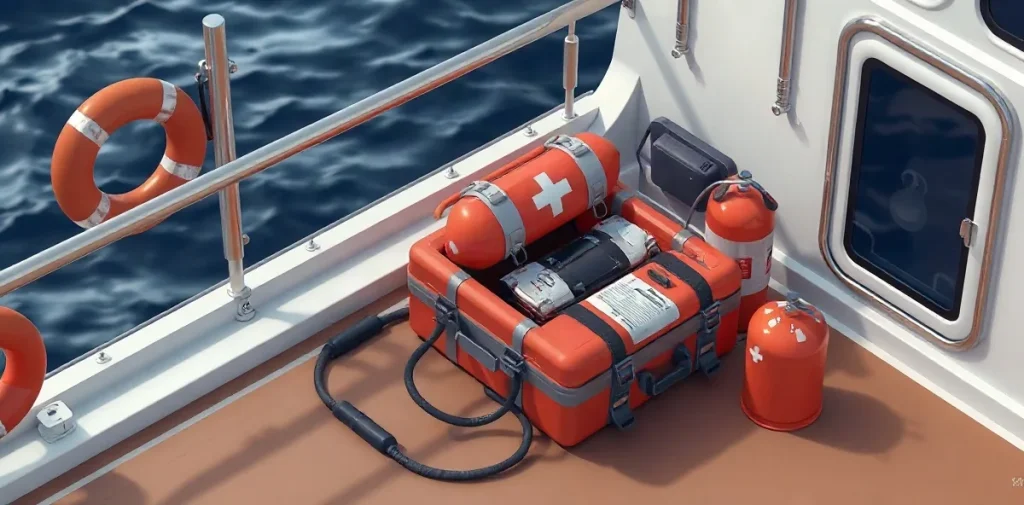
Effective management of dive emergencies onboard requires immediate assessment, clear communication, and prompt application of established first response protocols tailored to underwater incidents. Rapid intervention, including administering oxygen, stabilizing the casualty, and preparing for evacuation, can significantly improve outcomes in critical situations.
Dive emergencies pose unique challenges due to the remote and often confined environment of a dive vessel. Crew members and dive leaders must be well-trained in recognizing signs of distress, understanding the physiology of diving-related injuries, and executing coordinated first response actions. This preparedness is essential not only for the safety of individual divers but also for maintaining the overall safety culture aboard the vessel.
In this article, we explore best practices for onboard first response to dive emergencies. From initial assessment to emergency oxygen administration and communication protocols, understanding these best practices is vital for any dive operation aiming to manage risks effectively and provide timely care when every second counts.
| Equipment | Approximate Cost (USD) | Function | Maintenance Frequency |
|---|---|---|---|
| DAN Dive Oxygen Kit | $350 | Delivers 100% oxygen at 15 L/min | Monthly cylinder pressure checks |
| AED (ISO 13485 Certified) | $1,200–$2,000 | Detects and treats cardiac arrest | Battery and pad replacement every 2 years |
| Satellite Phone | $500–$1,000 | Emergency communication | Battery charging before each dive trip |
| Portable Hyperbaric Chamber Rental | $1,500/day | Definitive treatment for DCS | Equipment inspection before use |
- 15 liters per minute Recommended oxygen flow rate for dive emergency first aid
- 4 hours Critical evacuation window to hyperbaric chamber after decompression sickness onset
- 3 months Recommended frequency of onboard emergency drills
- $1,200–$2,000 Price range for ISO 13485 certified Automated External Defibrillators
What essential medical equipment should be onboard for dive emergencies?
Key Equipment
The essential medical equipment onboard for dive emergencies includes reliable oxygen delivery systems, defibrillation devices, and access to hyperbaric treatment options. A Dive Oxygen First Aid Kit by Divers Alert Network (DAN), priced at around $350, provides 100% oxygen at a flow rate of 15 liters per minute, critical for managing decompression sickness and other dive-related injuries. An Automated External Defibrillator (AED) conforming to ISO 13485 medical device standards is also vital; these units typically cost between $1,200 and $2,000 and are indispensable for responding to cardiac emergencies that may arise during diving operations.
For extended treatment capability, portable hyperbaric chambers can be rented from providers like SOS Hyperbarics, with daily rental fees near $1,500. These units enable immediate onsite recompression therapy, a crucial intervention when evacuating to a formal hyperbaric facility is delayed.
Communication Tools
Reliable communication equipment is indispensable to coordinate emergency response and evacuation. An Emergency Evacuation Kit should include a radio transmitter capable of a minimum 5 km range, ensuring contact with nearby vessels or shore facilities. Additionally, a satellite phone, costing about $500 to $1,000, allows communication beyond local radio coverage, providing a vital lifeline during remote dive emergencies.
- Dive Oxygen First Aid Kit (DAN) – $350, 100% oxygen at 15 L/min
- Automated External Defibrillator (ISO 13485 compliant) – $1,200 to $2,000
- Portable hyperbaric chamber rental (e.g., SOS Hyperbarics) – approximately $1,500 per day
- Emergency radio transmitter – minimum 5 km range
- Satellite phone – $500 to $1,000
How should onboard personnel be trained to respond to dive emergencies?
Training Courses
Onboard personnel should complete specialized dive emergency training, including the DAN Diving Emergency Specialist course, which combines 16 hours of theoretical and practical instruction to build core competencies in managing underwater medical crises. Additionally, certification in CPR and Automated External Defibrillator (AED) use is essential, with courses typically lasting 4 hours and equipping responders to handle cardiac emergencies effectively. These certifications ensure that crew members have both the specific dive-related knowledge and general emergency response skills critical for timely intervention.
Drills and Protocols
Regular practice through onboard emergency drills is vital to maintain readiness, with a recommended frequency of every 3 months to reinforce procedures and identify potential gaps. Familiarity with the latest NOAA Diving Manual emergency protocols, updated in 2023, provides a standardized framework for responding to diverse dive incidents. Effective drills should incorporate scenarios such as suspected decompression sickness and underwater entrapment, testing coordination and equipment use under realistic conditions.
- DAN Diving Emergency Specialist course: 16 hours of training
- CPR and AED certification courses: approximately 4 hours
- Onboard emergency drills: conducted every 3 months
- Reference: NOAA Diving Manual emergency protocols, 2023 edition
What are the immediate steps to take when a diver shows signs of decompression sickness onboard?
Oxygen Administration
When a diver exhibits signs of decompression sickness (DCS) onboard, immediate administration of 100% oxygen via a non-rebreather mask at a flow rate of 15 liters per minute is essential and must begin within five minutes of symptom recognition. This intervention maximizes inert gas elimination and tissue oxygenation, helping to limit the progression of symptoms. The patient should be positioned supine to promote cerebral perfusion, and their body temperature maintained within the normal range of 36.5–37.5°C to prevent hypothermia or hyperthermia, which can exacerbate DCS effects. Continuous monitoring of vital signs every 15 minutes is critical, with detailed documentation of symptoms using the Divers Alert Network (DAN) Diving Emergency Report form to guide subsequent medical care.
Evacuation Procedures
Rapid evacuation to the nearest hyperbaric treatment facility within four hours is recommended by the Undersea & Hyperbaric Medical Society (UHMS) to optimize outcomes. Early recompression therapy significantly reduces the risk of permanent injury. Coordination with emergency medical services should ensure transport readiness and avoid delays. In cases where multiple facilities are accessible, priority should be given to those with certified hyperbaric chambers capable of treating DCS according to UHMS standards. Maintaining comprehensive records of the patient’s status and interventions during transport is vital for the receiving medical team.
- Oxygen flow rate: 15 liters per minute via non-rebreather mask
- Body temperature target: 36.5–37.5°C
- Vital sign monitoring interval: every 15 minutes
- Evacuation timeframe: within 4 hours as per UHMS guidelines
- Documentation tool: DAN Diving Emergency Report form
When might onboard emergency protocols be insufficient, and what are the limitations?
Resource Limitations
Onboard emergency protocols can become insufficient primarily due to limited medical resources and personnel expertise during critical incidents. A significant constraint is the absence of immediate access to a hyperbaric chamber, which delays definitive treatment for decompression sickness and increases the risk of permanent injury; optimal outcomes require recompression within a 6-hour window after symptom onset. Additionally, the effectiveness of resuscitation efforts may be compromised when there are too few crew members trained in advanced CPR and automated external defibrillator (AED) use. For example, vessels often carry AED models like the Philips HeartStart HS1, which require regular maintenance to remain operational. According to ISO 13485 guidelines, oxygen delivery systems and AED batteries must undergo monthly inspections to prevent equipment failure such as cylinder leaks or power depletion. Failure to adhere to these standards can critically impair onboard emergency response capacity.
Environmental Challenges
Adverse weather conditions and remote dive locations further limit the feasibility of timely evacuation and definitive care. Rough seas or storms can delay transfer to shore facilities equipped with hyperbaric chambers beyond the critical 6-hour treatment window for decompression illness, increasing the risk of permanent sequelae. Remote dive sites, sometimes located hundreds of kilometers from the nearest recompression facility, pose logistical challenges that can extend evacuation times by several hours or even days. In such scenarios, onboard protocols serve only as initial stabilizing measures rather than definitive treatment, underscoring the importance of preventive dive planning and contingency arrangements for rapid evacuation when possible.
- Critical recompression treatment window: 6 hours
- Monthly equipment inspections per ISO 13485
- Common AED model onboard: Philips HeartStart HS1
- Evacuation delays: several hours to days in remote or adverse conditions
How does proper documentation and communication improve dive emergency outcomes?
Incident Reporting
Proper documentation through standardized incident report forms significantly enhances dive emergency outcomes by ensuring precise symptom tracking and treatment history. Utilizing forms like those provided by the Divers Alert Network (DAN), which have been refined since their release in 2010, helps record critical data such as onset time of symptoms and gas mixtures used. Detailed dive profiles, including depth and bottom time, are essential for medical personnel to design tailored recompression treatments. For example, recording exact nitrox or trimix gas percentages supports accurate planning of oxygen exposure limits during hyperbaric therapy. Maintaining a log of all first aid interventions onboard also complies with maritime safety regulations, such as the International Maritime Organization’s SOLAS Convention, which mandates documentation for legal and medical accountability.
Communication Channels
Immediate notification to local emergency medical services and hyperbaric facilities using reliable communication channels expedites patient transfer and improves survival rates. VHF radio remains a primary tool onboard vessels, with a typical operational range of 20–30 nautical miles, allowing direct contact with coast guard stations. When beyond VHF range, satellite phones—such as the Iridium 9575 model costing around $1,500—offer global coverage to alert shore-based hyperbaric units swiftly. Prompt communication ensures that recompression chambers, often located within 100 kilometers of popular dive sites, are prepared in advance, reducing time-to-treatment crucial for decompression sickness outcomes. Effective communication protocols also facilitate coordination with emergency medical helicopters, which can cover distances of up to 150 kilometers in under an hour.
- DAN Incident Report Form: standardized since 2010 for symptom and treatment tracking
- VHF Radio Range: 20–30 nautical miles for coastal emergency contact
- Iridium 9575 Satellite Phone: ~$1,500, global communication beyond VHF range
- SOLAS Convention: mandates documentation of first aid under maritime law
- Hyperbaric Chamber Proximity: typically within 100 km of dive sites
- Emergency Medical Helicopter Range: up to 150 km for rapid patient transfer
Frequently asked questions
What oxygen flow rate is recommended for treating decompression sickness onboard?
How often should emergency drills be conducted on liveaboard dive boats?
What certifications should dive boat crew have for effective first response?
Why is rapid evacuation important after a dive-related injury?
Key takeaways
- Onboard oxygen kits like DAN’s provide 100% oxygen at 15 L/min essential for first response
- AED devices compliant with ISO 13485 cost between $1,200–$2,000 and save lives in cardiac emergencies
- Crew training through DAN courses and regular drills improves emergency readiness
- Timely evacuation within 4 hours to a hyperbaric chamber is vital for decompression sickness outcomes
- Documentation using DAN forms and effective communication speeds patient care