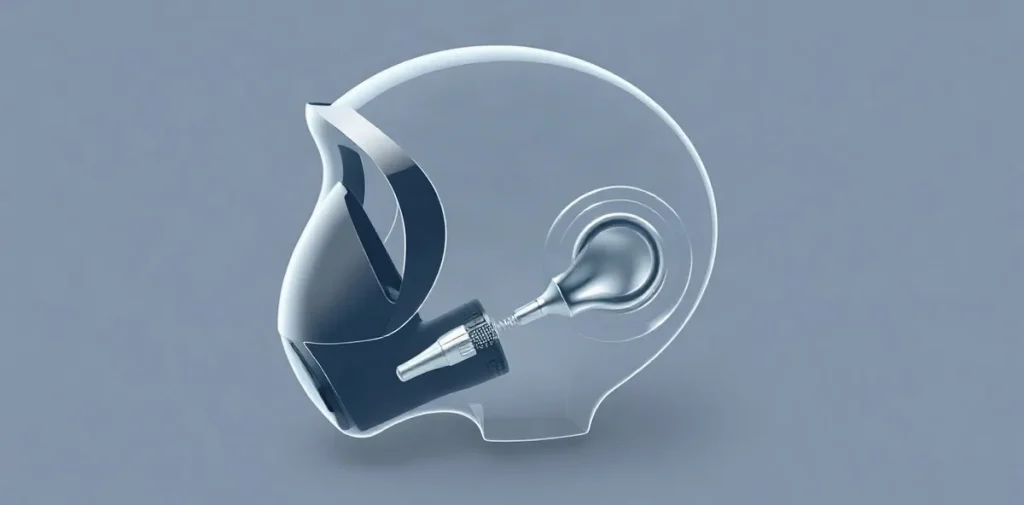
Frenzel works for scuba diving ear clearing by using the tongue and throat to raise pressure in the nasopharynx and open the Eustachian tubes, helping air reach the middle ears as you descend. Because it does not rely on pushing air from the lungs, the technique can offer more controlled equalisation than a forceful Valsalva.
That control matters underwater: pressure changes with depth, and the ears need to equalise early and gently. Understanding how Frenzel works—and what the diver is doing to move air—helps explain why technique can make ear clearing easier, while also clarifying that pain or difficulty is a reason to stop descending rather than force the manoeuvre.
| Method | Nose | Main action |
|---|---|---|
| Frenzel | Pinched | Close glottis; use tongue and throat to push air |
| Valsalva | Pinched | Gently exhale against closed nostrils |
| Toynbee | Pinched | Swallow |
| Yawning or swallowing | Not specified | Engage muscles associated with opening the Eustachian tubes |
- 2 named maneuvers compared directly: Frenzel and Valsalva
- 3 named equalization approaches covered: Frenzel, Valsalva, and Toynbee
- 1 air-filled middle-ear space whose pressure is equalized
What does scuba diving ear clearing equalize?
Scuba diving ear clearing equalizes the pressure difference between the middle-ear air space and the surrounding water, helping keep pressure across the eardrum closer to balance. The middle ear is separated from the outside by the eardrum and connects to the back of the nose and throat through the Eustachian tubes.
On descent, increasing water pressure compresses gas in air spaces, including the middle ear. Boyle’s law describes the relationship: at a fixed temperature, gas volume decreases as pressure increases. If the middle-ear pressure does not rise along with the surrounding pressure, the difference can pull the eardrum inward and cause discomfort or injury.
How Frenzel and Valsalva relate to equalization
Opening the Eustachian tubes allows air to pass from the throat and nose into the middle ear, reducing the pressure difference across the eardrum. Both Frenzel and Valsalva aim to move air toward the tubes, but they use different mechanics: Frenzel uses the tongue and throat with the glottis closed, while Valsalva uses a pressure-producing exhalation against a closed nose and mouth. Neither maneuver makes it safe to force air through a blocked tube; stop descending if clearing does not work.
How does the Frenzel maneuver open the Eustachian tubes?
The Frenzel maneuver opens the Eustachian tubes by using the tongue and throat to compress trapped air toward the nasal cavity while the nose is pinched and the glottis is closed. The resulting pressure can move through the tubes into the middle ear, helping equalize pressure as a diver descends; no air needs to be blown out through the nose.
The role of the closed glottis
With the glottis closed, air is not driven upward by a chest-led exhalation. Instead, the tongue and throat act on the air held above the glottis, directing it toward the nose; pinching the nose gives that pressure a route toward the Eustachian tubes. This is the key distinction from relying on a forceful breath from the chest.
Divers Alert Network lists Frenzel as an ear-equalization method and describes Toynbee as a separate option: pinch the nose and swallow. In Toynbee, swallowing helps open the tubes while the tongue compresses air against them; Frenzel instead uses deliberate tongue-and-throat movement to create pressure. Both methods involve a pinched nose, but the actions that generate pressure differ.
How does Frenzel differ from Valsalva?
Frenzel moves air toward the nasal cavity with the tongue and throat while the glottis is closed; Valsalva instead uses a gentle exhalation against pinched, closed nostrils. Both aim to equalize pressure in the middle ear, but they use different mechanics.
- Frenzel: The closed glottis isolates the air, and tongue and throat movement pushes it toward the Eustachian tubes. The supplied source summary describes this as requiring less effort because it uses smaller muscles and body parts.
- Valsalva: With the nose pinched, the diver gently exhales against the closed nostrils to send air toward the middle ear. Keep the effort gentle; do not force the manoeuvre.
Neither technique is a reason to push through discomfort: choose the one you can perform gently. Swallowing, yawning and chewing are other ways to engage muscles associated with opening the Eustachian tubes; the supplied Miracle-Ear material names the tensor veli palatini and levator veli palatini in connection with these actions. These movements differ from both Frenzel and Valsalva, which use directed air pressure to equalize the middle ear.
When should you stop instead of forcing a blocked ear?
A blocked tube is a reason to pause.
Stop descending if an ear will not clear with a gentle equalization attempt; do not blow harder or repeat forceful Valsalva attempts. Ascend slightly until the pressure eases, then try one gentle equalization again before deciding whether to continue.
Frenzel uses the throat and tongue to move air toward the nasal cavity while the glottis is closed, helping open the Eustachian tubes. That mechanism does not make a blocked ear safe to force: pain, persistent blockage, or continued difficulty equalizing means the dive should not proceed downward until the problem resolves.
Use symptoms, not an invented threshold.
- Ear clears gently: continue only if equalization remains comfortable as you descend.
- Pressure eases after a slight ascent: try a gentle equalization before continuing downward.
- Pain, blockage, or difficulty persists: stop descending; do not try to overcome it with harder or repeated Valsalva efforts.
The supplied material gives no safe numerical depth, force, or repetition limit for equalization. Do not infer one: the practical criterion is whether the ear clears gently and without persistent symptoms.
What common mistakes make ear clearing harder?
Common ear-clearing mistakes are waiting for discomfort, forcing the manoeuvre, confusing Frenzel with Valsalva, and following an invented descent schedule instead of checking whether equalization is comfortable and successful.
- Waiting for discomfort: Ear clearing works best as an early, gentle action. If you wait until pressure or pain is established, you are trying to solve a problem that has already developed rather than equalizing before discomfort begins.
- Using excessive force: A hard effort does not prove that air has reached the middle ear. Force may raise pressure without opening the Eustachian tubes, so stop rather than pushing harder when the ears do not clear.
- Using Valsalva mechanics for Frenzel: These are different techniques. Frenzel uses the tongue and throat to compress air while the glottis is closed; simply straining as if to blow through the nose is not the same action.
Use comfort and results, not a timetable. No fixed descent rate or prescribed interval between attempts is specified here. Treat comfortable, successful equalization as the practical check; if it is not happening, do not keep descending or substitute more force for a clear.
Which equalization method fits the situation?
Choose Frenzel when you can pinch your nose and move air with your tongue and throat while keeping your glottis closed; use a gentle Valsalva if that is the method you can perform comfortably, and try Toynbee when a nose-pinched swallow is easier. No method is a reason to force a blocked ear.
- Frenzel: Pinch your nose, close the glottis, then use the tongue and throat to move air towards the Eustachian tubes. It relies on tongue and throat movement rather than pushing air out with the lungs.
- Valsalva: Pinch your nose and exhale gently against the closed nostrils. If the ear remains blocked, stop rather than increasing the force.
- Toynbee: Pinch your nose and swallow. Divers Alert Network describes this combination as using the tube-opening movement of swallowing alongside tongue motion with the nose closed.
Yawning, chewing, or swallowing may also help open the Eustachian tubes, but these actions do not guarantee that a blocked ear will clear. If the blockage persists during descent, pause instead of continuing down or trying harder; resume only when the pressure equalizes comfortably.
FAQ
Why does the Frenzel maneuver work?
Is Frenzel better than Valsalva for scuba diving?
What should I do if my ear will not clear?
Can swallowing help clear ears underwater?
What this piece draws on
- gofreediving.co.uk — “The Definitive Guide to the Frenzel Technique – With Emma Farrell – Go Freediving”
- Freediving Central — “What is Frenzel Equalisation? And How it Will Improve Your Freediving”
- Miracle-Ear — “How to equalize ear pressure: Frenzel maneuver”
- deepmedcentre.com — “Frenzel equalisation technique for freediving. The ultimate guide – Deep Med”
- dan.org — “6 Methods to Equalize Your Ears – Divers Alert Network”
