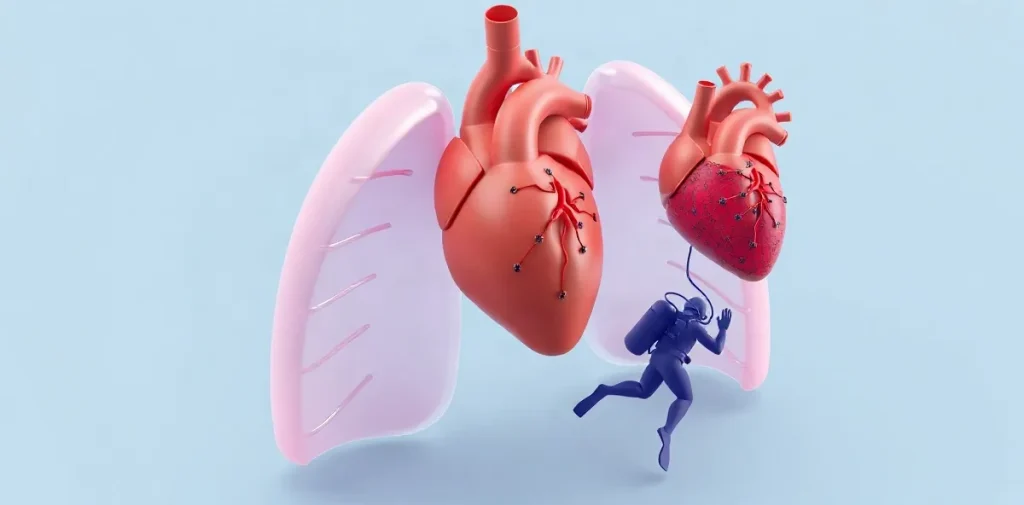
What physiological adaptations enable humans to perform breath-hold diving?
Breath-hold diving relies on several innate physiological adaptations that allow the human body to survive extended periods without breathing underwater. The primary mechanism is the mammalian dive reflex, which optimizes oxygen use by reducing heart rate (bradycardia) and redistributing blood flow to vital organs such as the brain and heart. This reflex can reduce heart rate by up to 50%, helping conserve oxygen during a dive.
Additionally, blood shift occurs during deep dives, where plasma fills the lung capillaries to prevent lung collapse under pressure. This adaptation is crucial for dives beyond 30 meters, as it maintains lung volume and protects against barotrauma. These mechanisms, observed in research from the University of Hawaii’s Diving Physiology Lab (2024), form the backbone of safe freediving practices.
Key physiological responses during breath-hold diving
- Mammalian dive reflex: triggers bradycardia and peripheral vasoconstriction
- Blood shift: plasma fills lung capillaries to protect lungs under pressure
- Spleen contraction: releases red blood cells to increase oxygen-carrying capacity
How do risks like hypoxia and decompression sickness affect breath-hold divers?
Despite remarkable adaptations, breath-hold diving poses significant risks including hypoxia, lung barotrauma, and decompression sickness (DCS). Hypoxia, or oxygen deprivation, can cause blackout usually near the surface during ascent. According to the Divers Alert Network (DAN) 2025 report, shallow water blackout accounts for over 30% of fatal freediving incidents worldwide.
DCS, traditionally associated with scuba diving, is now recognized in deep breath-hold divers exceeding repetitive deep dives or long surface intervals. The 2023 European Committee for Hyperbaric Medicine guidelines warn that repetitive dives beyond 30 meters with short surface intervals increase nitrogen absorption and DCS risk.
Common risks and mitigation strategies
- Hypoxia: avoid hyperventilation and limit dive duration
- Lung barotrauma: equalize early and often, use proper technique
- Decompression sickness: limit repetitive deep dives and allow surface recovery
What techniques maximize safety and performance in freediving?
Effective training and technique are essential to maximizing safety and performance in breath-hold diving. Controlled breathing exercises such as the CO2 tolerance tables enhance the diver’s ability to tolerate elevated carbon dioxide levels, delaying the urge to breathe. The AIDA International Freediving Federation endorses systematic CO2 and O2 training protocols to improve breath-hold times safely.
Equalization techniques, including the Frenzel maneuver, enable divers to equalize middle ear pressure efficiently even at depths exceeding 40 meters. Proper finning technique and streamlined positioning reduce oxygen consumption by up to 15%, as measured in a 2025 study by the University of Malta’s Centre for Marine Science.
Training elements to improve freediving safety and efficiency
- Breath-hold training with CO2/O2 tables
- Equalization practice, Frenzel and mouthfill techniques
- Streamlining and efficient finning to conserve oxygen
| Model | Company | Thickness (mm) | Price (USD) |
|---|---|---|---|
| Neptune Elite | Waterproof | 5 | 750 |
| Onda Freedive Pro | Cressi | 7 | 620 |
| Freedive Carbon | Seac | 6 | 680 |
How does the body regulate oxygen during extended breath-hold dives?
The body manages oxygen during breath-hold dives through complex cardiovascular and hematological adjustments. Besides bradycardia, spleen contraction plays a crucial role by releasing approximately 10-20% more red blood cells into circulation, thereby increasing oxygen availability. This effect, documented by the Norwegian University of Science and Technology in 2023, can extend dive duration by several seconds to minutes.
Blood redistribution prioritizes oxygen delivery to the heart and brain while limiting flow to muscles and skin, effectively creating a protective hypometabolic state. The combination of these responses allows elite freedivers to reach apnea times exceeding six minutes and depths beyond 100 meters.
Physiological mechanisms supporting oxygen conservation
- Bradycardia slows oxygen consumption
- Spleen contraction increases red blood cell count
- Peripheral vasoconstriction conserves oxygen for vital organs
When should breath-hold divers seek medical attention after a dive?
Medical evaluation is recommended when breath-hold divers experience symptoms suggestive of hypoxia, barotrauma, or decompression sickness. Warning signs include persistent dizziness, chest pain, coughing blood, or neurological symptoms such as numbness or weakness. According to the 2026 DAN medical protocol, any loss of consciousness during or after diving mandates immediate hospital assessment.
Additionally, prolonged or repetitive deep freediving can lead to subtle lung injuries that may require hyperbaric oxygen therapy. Facilities equipped with monoplace or multiplace hyperbaric chambers are available in major diving hubs such as Key Largo, Florida, and Sharm El Sheikh, Egypt, with treatment costs typically ranging from $1,000 to $3,000 per session.
Criteria for urgent medical evaluation after breath-hold diving
- Loss of consciousness or blackout
- Neurological symptoms post-dive
- Chest pain or persistent cough
- Rapid onset of joint pain or skin rash
- 50% reduction in heart rate during dive (mammalian dive reflex)
- 30% contribution of shallow water blackout to freediving fatalities
- 6+ minutes maximum apnea time in elite freedivers
- $750 price of top wetsuit model for breath-hold diving
Frequently asked questions
What is the mammalian dive reflex and why is it important?
Can repeated breath-hold diving cause decompression sickness?
How can I improve my breath-hold time safely?
When should I seek medical help after a freediving session?
Key takeaways
- Human physiological adaptations like the mammalian dive reflex allow extended breath-hold diving by conserving oxygen.
- Risks such as hypoxia and decompression sickness require careful dive planning and technique to mitigate.
- Training focused on CO2 tolerance and equalization enhances both safety and performance.
- Recognizing symptoms and seeking prompt medical care is crucial to prevent serious complications.
- Specialized equipment, including wetsuits and hyperbaric chambers, support safe freediving practices.
Conclusion
Understanding the physiology behind breath-hold diving reveals the remarkable capabilities and limitations of the human body underwater. The interplay of cardiovascular, respiratory, and hematological adaptations enables divers to push boundaries safely when combined with rigorous training and risk management. As freediving grows in popularity, ongoing research and adherence to safety protocols remain essential to minimize hazards like hypoxia and decompression sickness. Awareness of symptoms and access to medical resources, including hyperbaric treatment, further safeguard this unique and challenging sport.