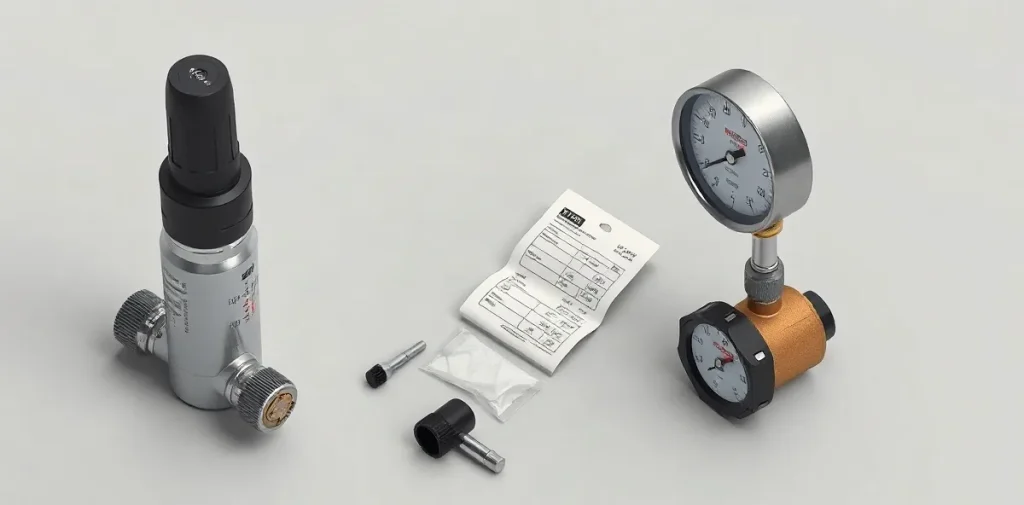
Divers pay for regulator servicing at a rate set by the service provider and the work required. The total may include labour, parts and any additional repairs.
Regulator servicing is not always a single, like-for-like job: the model, its condition and the provider’s service scope can all affect the bill. Check what the quoted price includes, especially replacement parts and work beyond routine maintenance, before comparing costs.
| Option | Listed price | Included work | Important limitation |
|---|---|---|---|
| Bench test | $50 | Pressure check, hose and fitting checks, second-stage retune | Not described as a full service |
| First- and second-stage service | $49.95 | Labor | Parts excluded; a parts-kit charge may apply |
| Regulator servicing | $40 to $150 | Varies by location and model | Parts may be additional |
| Annual service | $100 to $200 | Annual servicing | Some manufacturers cover parts |
- $50 Listed price for a regulator bench test
- $49.95 Listed labor price for first- and second-stage service, excluding parts
- 100 dives General service interval threshold, alongside the annual interval
What does a regulator service quote actually include?
A regulator service quote may cover anything from a bench check and adjustment to disassembly, cleaning, replacement parts, reassembly and performance testing, so ask which components and steps are included.
Bench test versus service
A bench test is a check, not a full service: the listed $50 test includes a pressure check, inspection of hoses and fittings, and retuning of the second stages. It does not describe the full disassembly and maintenance process.
A first- and second-stage service listed at $49.95 covers labor only; parts kits may cost extra. A full service can involve disassembly, cleaning, replacement parts, approved lubrication, reassembly, adjustment to the manufacturer’s specifications, and testing for leaks and breathing performance.
Before you approve the work, ask the shop to spell out what its quote covers:
- Stages: first stage, primary second stage and alternate second stage.
- Other components: hoses and fittings.
- Costs and finish: parts kits, labor, and final adjustment and testing.
How much should you expect to pay, and what changes the total?
Expect a regulator service to cost $40 to $150, depending on location and model, with parts potentially added to the bill; annual servicing is described at $100 to $200.
The final price depends on what the shop includes and whether your manufacturer covers parts. Check that benefit for your specific regulator and service provider before booking.
Compare the quote line by line
- Labor: Ask for the labor charge separately. A labor-only quote is not comparable with an all-in service price.
- Parts: Ask whether a parts kit is included, whether parts are covered by the manufacturer, and what they would cost if they are not.
- Testing: Request a separate amount for testing so you can see whether it is included in the service or billed on top.
Before leaving your regulator, confirm that the shop will call before fitting a parts kit or doing work beyond the quoted inspection. That keeps the approved scope clear before extra charges are added.
When should a regulator be serviced?
Plan a full regulator service every year or every 100 dives, whichever comes first, unless the manufacturer’s instructions for your specific regulator set a different interval.
Some brands recommend servicing every two years. Check the regulator manual rather than applying one schedule to every model; the manufacturer’s interval is the relevant one for your equipment.
Ask the dive shop to record the service date and the regulator’s dive use. Those details give you a practical basis for judging when the next service is due.
Bench test or full service?
A bench test is a pressure check and second-stage retune, useful if you want the regulator assessed or adjusted without booking a scheduled full service. It is not a substitute for that full service: the two cover different work. When arranging a test, confirm with the shop exactly what it includes.
How can you compare quotes without mistaking cheap for safe?
Compare regulator-service quotes by matching the work covered, parts, adjustment and final testing—not by choosing the lowest labor price.
- Stages: Check whether the quote covers the first stage and every second stage you want serviced.
- Hoses and fittings: Confirm whether the shop inspects these, as a bench-test listing may include hose and fitting checks.
- Parts: Ask whether parts are included, whether manufacturer coverage applies to your regulator, and which parts could add a charge. Some service prices cover labor only; parts kits may cost extra.
- Adjustment and testing: Ask whether the regulator will be adjusted and tested after service. A labor price alone does not establish that it was rebuilt and tested to the manufacturer’s specifications.
A bench test is not necessarily a full service. One listed bench test includes a pressure check and second-stage retuning; ask what the shop checks and whether it recommends a full service for your model and service history.
When does the usual annual-service advice not apply?
The annual-or-100-dive service recommendation does not automatically apply when your regulator’s manufacturer gives a different interval, or when its condition or your diving programme calls for another procedure. Check the instructions for your specific model.
Some brands specify a two-year service interval. That does not override a shorter interval in your regulator’s own instructions, and it is not a reason to keep using equipment with a fault.
The Dauphin Island Sea Lab’s scientific diving manual was revised in March 2019. Scientific diving programmes may have their own procedures, so follow the rules that apply to your programme.
The manual lists ascending to altitude over 1000 feet/304 meters in its section on flying after diving or ascending to altitude. That guidance concerns dive planning after a dive; it is not a regulator service interval.
If your regulator leaks, has a breathing fault or is damaged, do not treat the calendar interval—or a low-cost tune-up—as proof that it is safe to use. Stop using it and ask a qualified service provider to assess it.
Frequently asked questions
Does a $50 regulator bench test count as a full service?
Why can the parts charge make a cheap quote more expensive?
How often should I service my regulator?
Are regulator service parts ever covered?
Sources
- scubadiverlife.com — “Servicing Your Gear and Why It's Important • Scuba Diver Life”
- dive-technician.com — “The Complete Guide to Dive Regulator Maintenance: Keep Your Life Support System Running Flawlessly – ASSET Dive Industry Technician Courses”
- Scuba Outfitters, LLC — “Scuba Regulator / BCD Services”
- divers-supply.com — “Scuba Regulator Service 1st and 2nd Stage Only (Parts excluded)”
- blog.padi.com — “How Often Should BCD, Scuba Tank and Regulators Be Serviced?”