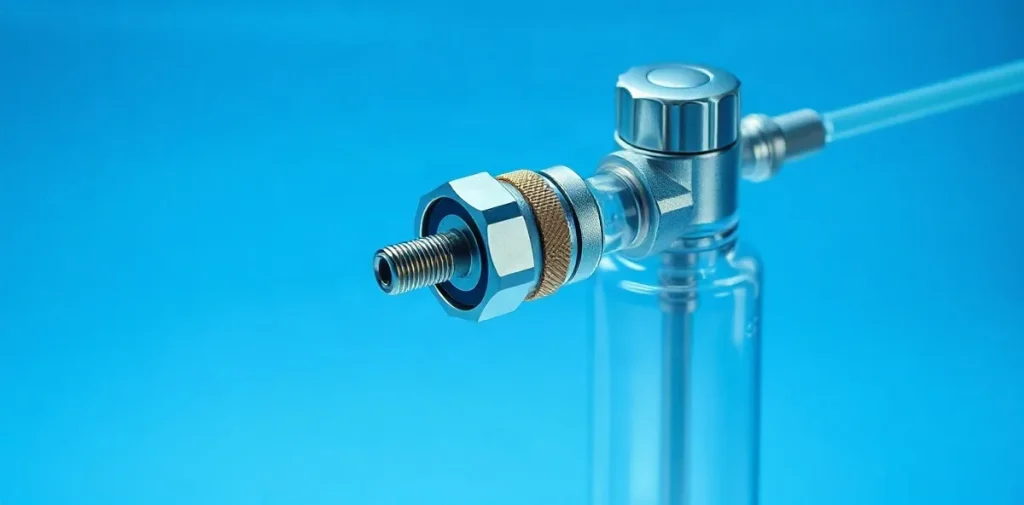
Guide for Oxygen Compatibility Assessments on Oxygen Components and Systems is a 2007 publication by Rosales and colleagues on assessing the compatibility of oxygen-system components and assemblies. The subject matters in diving because oxygen can intensify combustion, making material choice, cleanliness and system design central to equipment safety.
What does oxygen compatibility mean?
Oxygen compatibility is the suitability of a material or component for use in a particular oxygen environment. It is not a simple property that can be judged from a material name alone: pressure, oxygen concentration, temperature, geometry and the way a system is operated all affect risk.
Oxygen supports combustion, but it is not itself a fuel. A fire also needs combustible material and an ignition source. In oxygen-enriched conditions, materials that burn slowly in air may ignite more readily or burn more intensely, so ordinary assumptions about equipment materials may no longer apply.
Compatibility assessment therefore considers the whole system as well as individual parts. A valve, seal, lubricant or contaminant can matter because local conditions—such as rapid compression or friction—may create an ignition pathway.
Why is this relevant to diving?
Divers encounter oxygen in breathing-gas preparation, storage, analysis and delivery. The implications vary with the equipment and gas mixture: a component exposed to high oxygen concentration or pressure may face different hazards from one used under less demanding conditions. The intended operating envelope matters.
Oxygen-rich breathing gases are used in diving for specific purposes, including decompression. Their use makes reliable equipment and disciplined handling important, while the physiology of breathing oxygen also sets limits: exposure to elevated oxygen partial pressure can cause oxygen toxicity, with effects that depend on exposure conditions.
These are related but distinct concerns. Compatibility assessment addresses whether equipment can safely contain or convey oxygen under specified conditions; dive planning and medical practice address the physiological risks to the person breathing it.
What does an assessment need to consider?
A useful assessment looks beyond a component’s label or its performance in ordinary air. It considers operating conditions, potential ignition mechanisms, materials in contact with oxygen and the consequences of contamination or component failure.
- Gas conditions: oxygen concentration and pressure, including changes during operation.
- Materials: components, seals and lubricants that may be exposed to oxygen.
- Ignition pathways: rapid pressurisation, friction, impact or other local heating.
- Cleanliness: oils, particles and other contaminants that can provide fuel.
- System design and use: how components interact and how the equipment is operated and maintained.
These considerations are connected. A material may behave differently when its shape, surrounding parts or operating conditions change. Assessment is therefore a systems problem, not merely a checklist of approved substances.
How does this fit into diving and hyperbaric practice?
Oxygen compatibility sits at the intersection of materials science, engineering and operational safety. It complements work on gas blending, pressure equipment, breathing apparatus and fire prevention. The common concern is how equipment behaves when oxygen conditions differ from those of everyday air.
The publication’s venue, NASA’s Johnson Space Center, places the guide in a technical setting concerned with oxygen components and systems. That subject has relevance beyond diving: the same basic challenge arises wherever oxygen is stored, transferred or delivered under controlled conditions, although the applicable equipment and operating requirements differ.
For divers and operators, the practical lesson is to treat oxygen service as a defined use case. Equipment intended for one gas, pressure or operating procedure should not automatically be assumed suitable for another; check the manufacturer’s specified use and applicable procedures.
What should divers and clinicians keep in mind?
Equipment compatibility and clinical oxygen use should not be collapsed into one question. A system can be suitable for its intended oxygen conditions without making every exposure medically appropriate. Conversely, a clinically indicated oxygen treatment still depends on equipment that can deliver oxygen safely.
Diving physicians and hyperbaric clinicians consider physiological issues such as oxygen partial pressure and exposure duration in the context of the person and the treatment or dive. If you have a medical question about oxygen exposure, consult a diving-medicine physician rather than relying on equipment guidance alone.
For equipment decisions, verify the intended oxygen service, operating limits, cleaning requirements and maintenance procedures with the manufacturer or responsible technical authority.
Frequently asked questions
Does oxygen compatibility mean a material cannot burn?
Is oxygen compatibility the same as oxygen toxicity?
Can ordinary air equipment be used with oxygen-rich gas?
Citation details
- Title: Guide for Oxygen Compatibility Assessments on Oxygen Components and Systems
- Authors: Rosales, K.R; Shoffstall, M.S; Stoltzfus, J.M
- Year: 2007
- Published in: NASA, Johnson Space Center Technical Report NASA/TM-2007-213740
- Record type: Journal article
- Repository record: Rubicon Research Repository, handle 123456789/4861
This page is an original summary written by the Rubicon editors from the publication’s bibliographic record. It does not reproduce the paper, its abstract or its data; consult the publication itself for its methods and findings.
Related reading on Rubicon
- The Physiology Behind Oxygen Toxicity in Deep Dives
- Understanding Oxygen Toxicity Risks and Prevention in Diving
- Myth Busting: Clarifying Oxygen Toxicity Limits in Diving
- The Diving Reflex: What Happens Underwater
- Oxygen-Enhanced Breath-Hold Diving: Research Summary
- First Aid Oxygen for Diving Injuries: Research Summary
- More on Equipment
- Browse the Research Library