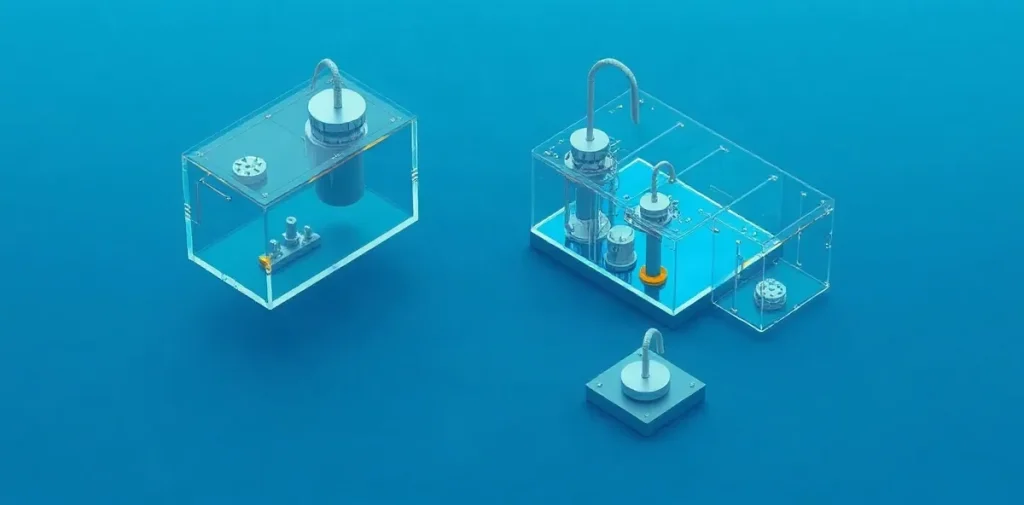
Diving techniques in marine mesocosms, by Lang, MA and Jaap, WC, is a 1989 publication about the methods used by scientific divers working in marine mesocosms. Such controlled marine environments let researchers study ecological processes underwater, while making dive planning and consistent task performance part of the research design.
What does diving in a marine mesocosm involve?
A mesocosm is a contained or bounded environment used to examine ecological processes under conditions that retain important features of the natural environment. In a marine setting, it may involve seawater, organisms and experimental treatments arranged for observation. The title places diving techniques at the intersection of underwater work and experimental ecology.
Scientific divers may need to inspect, sample, maintain or document an experiment while submerged. The exact task depends on the study, but underwater movement, visibility, access and the need to avoid disturbing organisms or equipment can shape how work is done. A technique is useful only if it supports both the dive and the integrity of the experiment.
Why do diver techniques matter to the experiment?
Underwater procedures can affect what researchers observe. A diver may stir sediment, alter the position of equipment, disturb animals or introduce differences between experimental units. Standardising how divers approach and handle a task helps limit variation caused by the work itself, although the appropriate procedure depends on the organism, apparatus and research question.
Repeatability is especially important when measurements are compared across treatments or over time. The diver’s actions, the order of tasks and the way samples are handled can become part of the method, not merely logistics. Researchers therefore need to consider whether a procedure is practical underwater and sufficiently consistent for the intended comparison.
What technical and physiological factors shape the work?
Working underwater changes the physical demands of a task. Buoyancy control, breathing-gas supply, water movement, temperature, visibility and access all affect a diver’s ability to manipulate equipment and complete a sequence of work. A task that seems simple at the surface may become harder when the diver must maintain position and protect nearby experimental structures.
Scientific work also competes with the limits imposed by exposure and dive planning. Time spent handling samples or instruments can increase task loading and distract from monitoring depth, gas and surroundings. Planning needs to account for the work as well as the dive, with procedures that remain manageable in the actual conditions.
- Experimental control: reduce disturbance and keep procedures consistent across observations.
- Buoyancy and positioning: protect organisms, samples and delicate apparatus during close work.
- Task loading: balance scientific steps with attention to the diver’s condition and dive plan.
- Repeatability: make methods clear enough for comparable work by different divers or on different occasions.
Where does this subject fit in diving science?
Scientific diving sits between field research and occupational diving practice. It uses diving as a way to reach and work within an environment that cannot be studied fully from the surface, while requiring attention to training, procedures, equipment and risk. Research in controlled marine settings brings an additional concern: the method must protect the experimental system as well as the diver.
This makes mesocosm work relevant to a wider set of questions in underwater research. Investigators must separate changes caused by the experiment from changes introduced by observation or handling. The same principle applies broadly to underwater sampling and instrument work, even when the study is not conducted in a mesocosm.
What should readers look for when assessing a technique?
Consider whether the procedure matches the research question and the physical layout of the experimental environment. A useful method should make clear what the diver does, how the work is kept consistent and how disturbance is limited. It should also be feasible within the planned exposure and leave enough attention for safe diving practice.
Technique cannot be judged apart from context. Organisms, equipment, water conditions and the diver’s task all influence what is workable. For questions about an individual’s fitness to dive or the medical implications of a particular exposure, consult a diving-medicine physician.
Frequently asked questions
What is a marine mesocosm?
Why might researchers use divers in mesocosm studies?
Why is consistency important in underwater research?
Citation details
- Title: Diving techniques in marine mesocosms
- Year: 1989
- Published in: In: Lang, MA; Jaap, WC (Ed). Diving for Science…1989. Proceedings of the American Academy of Underwater Sciences Annual Scientific Diving Symposium 28 September – 1 October 1989 Wood Hole Oceanographic Institution, Woods Hole, Massachusetts, USA
- Record type: Journal article
- Repository record: Rubicon Research Repository, handle 123456789/10209
This page is an original summary written by the Rubicon editors from the publication’s bibliographic record. It does not reproduce the paper, its abstract or its data; consult the publication itself for its methods and findings.
Related reading on Rubicon
- Diving Essentials: Techniques, Gear, and Top Destinations
- Science Diving: Protocols and Techniques for Underwater
- Diving Techniques, Science, Safety, and Specialized Fields
- Scuba Diving Techniques and Best Practices for Safe Dives
- HPNS Suppression in Deep Human Dives: Research Summary
- Flying After Diving: Research Summary
- More on Diving Science
- Browse the Research Library