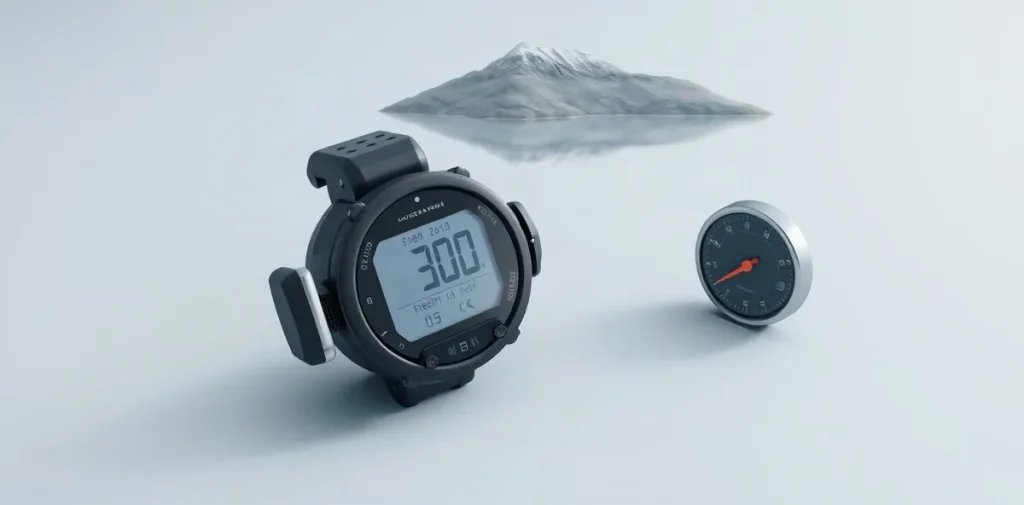
Lake Tahoe is a high-altitude freshwater lake, so diving there combines ordinary underwater pressure changes with the lower atmospheric pressure at the surface. That difference matters when planning decompression: a diver’s tissues respond to pressure during the dive and then to the pressure environment after surfacing.
Why does Lake Tahoe’s elevation matter to divers?
At altitude, atmospheric pressure is lower than at sea level. A dive computer or table designed around sea-level assumptions may therefore require altitude-specific settings or procedures; the relevant approach depends on the equipment and the dive plan.
Decompression is governed by inert gas moving between the lungs, blood and tissues. During descent, increased pressure raises the amount of gas that can dissolve in the body. On ascent, pressure falls and that gas must leave the tissues through the circulation and lungs without forming harmful bubbles.
After a high-altitude dive, the pressure outside the body is lower than it would be at sea level. This changes the pressure gradient that drives inert gas out of tissues. Lake Tahoe is consequently a useful setting for considering how altitude and decompression interact, rather than treating depth alone as the decisive exposure.
How do dive plans account for altitude?
Altitude diving requires a plan suited to the actual elevation and conditions. Depending on the computer, tables or procedure in use, divers may need altitude adjustment, a different way to calculate decompression obligations, or specific guidance for repetitive dives.
The key concepts are related, but not interchangeable:
- Ambient pressure: the pressure surrounding the diver, which changes with depth and is lower at altitude before submersion.
- Inert-gas loading: the uptake and release of gases such as nitrogen as pressure changes.
- Decompression obligation: the ascent constraints used to manage inert-gas elimination.
- Surface interval: time spent out of the water while the body continues to eliminate inert gas.
- Altitude adjustment: a method or setting intended to account for reduced atmospheric pressure; its use must match the device or planning method.
Do not assume a sea-level setting is appropriate simply because the dive is recreational or relatively shallow. Check the computer or table manufacturer’s altitude instructions, and make sure every diver in a team is using a compatible plan.
What physiological issues are relevant underwater?
The central physiological issue is the relationship between pressure and gas exchange. The lungs transfer inert gas to and from the blood, while tissues take up and release gas at different rates. Cooling, exertion, hydration, individual physiology and the dive profile can affect the practical picture, so altitude is one factor in a broader decompression problem.
Ascent remains a period of changing pressure. A controlled ascent and adherence to the planned decompression procedure matter at altitude just as they do elsewhere, but the surface pressure must also be considered. A rapid change in pressure after the dive can add to decompression stress.
Symptoms after a dive that could indicate decompression illness need prompt medical assessment. The presentation can vary, and symptoms should not be dismissed because the dive seemed uncomplicated. A diving-medicine physician should guide decisions about diagnosis, treatment and return to diving.
Why is a lake dive different from a controlled study?
A natural lake presents conditions that can complicate both diving and research. Water temperature, visibility, depth, access and changing weather may affect the exposure or the ability to carry out a planned dive. Researchers studying diving physiology must distinguish the effects they intend to examine from these surrounding conditions.
Lake Tahoe’s altitude makes it relevant to research on decompression procedures and post-dive pressure exposure. Work in this area sits within a wider effort to understand how dive profiles, environmental pressure and individual variation shape inert-gas exchange and decompression risk.
For scientific divers, operational planning is part of the research design. A study dive still requires suitable equipment, trained supervision and a decompression plan that accounts for the site; research objectives do not remove the physiological constraints of diving.
What should divers check before diving there?
Start with the actual site elevation and the altitude guidance for the dive computer or tables being used. Confirm whether the method covers the planned depth, repetitive dives and any surface interval, and avoid mixing procedures that were not designed to work together.
Also consider the entire sequence of exposure, including travel after diving. The timing and pressure conditions of onward travel can matter, so use current advice from the relevant dive-planning system and seek guidance from a diving-medicine physician when medical history, symptoms or an unusual profile raise concern.
Frequently asked questions
Does Lake Tahoe require altitude-aware dive planning?
Why can decompression planning change at altitude?
Who should advise on symptoms after an altitude dive?
An original research-library explainer written by the Rubicon editors. It is not a summary of a specific publication.
Related reading on Rubicon
- The Science of Diving SSI: Education and Physiology Insights
- Diving Science: Physiology and Tech Behind Safe Dives
- The Physiology Behind Oxygen Toxicity in Deep Dives
- Understanding the Physiology of Breath-Hold Diving
- High-Mountain Medicine and Diving Physiology
- Physiology of Breath-Hold Diving: Research Summary
- More on Diving Science
- Browse the Research Library