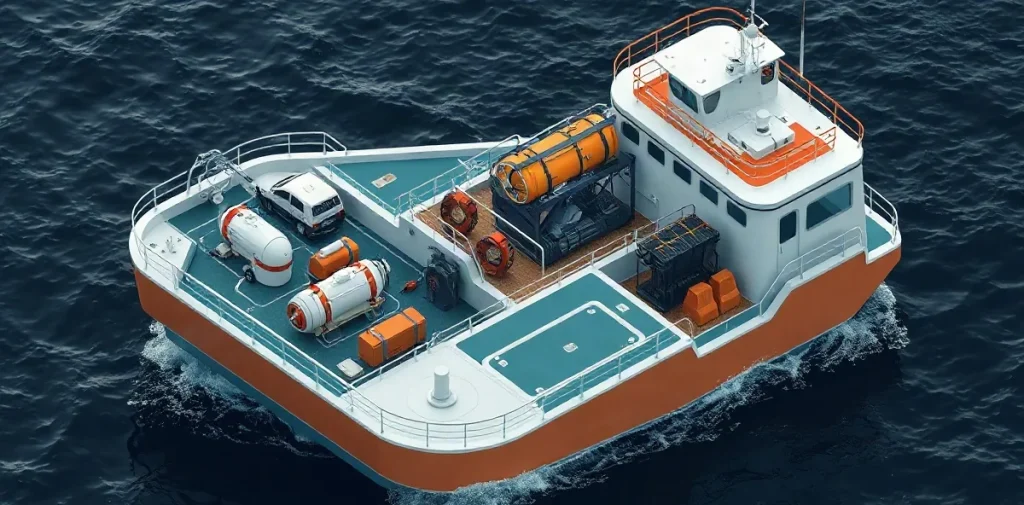
Design of the next generation of research vessels is a 1987 symposium proceedings paper by Griffin JJ and Sharkey PI about vessel design for research. Presented in a cold-water scientific-diving setting, the subject connects the ship’s working environment with the practical demands of underwater science, where safe, reliable access to a dive site is part of the research operation.
Why does vessel design matter to scientific divers?
A research vessel is more than transport to an underwater site. Its layout and systems shape how a team prepares, enters and exits the water, handles equipment, communicates, and responds when conditions change. In cold-water operations, those arrangements have particular importance because exposure, weather and the demands of working in protective equipment can complicate routine tasks.
Vessel design also affects the quality and continuity of scientific work. Researchers may need to move instruments and samples between the ship and the site, keep equipment secure, and coordinate work among divers and non-diving crew. A vessel conceived around these tasks can support a more orderly operation; a poorly suited platform can make routine work less efficient and add avoidable operational pressures.
What does a cold-water diving operation require?
Cold water increases heat loss, while wind and wet conditions can continue to affect divers at the surface. Thermal protection, appropriate exposure management, and a warm place to recover are therefore central considerations. The vessel’s shelter, working deck and access to a protected interior all influence how divers move through the surface phase of a dive.
Scientific diving also involves a wider set of tasks than simply getting into the water. A team may need to prepare instruments, manage lines or sampling gear, protect sensitive equipment, and keep track of the dive plan. Practical design questions include:
- Access: how divers and equipment move between the vessel and the water.
- Work space: whether there is room to prepare, handle and secure scientific gear.
- Recovery: how a diver can return aboard and reach shelter after a dive.
- Coordination: how the vessel’s crew and the diving team communicate and organize operations.
- Environmental protection: how the platform supports work amid cold, wind, motion and changing sea conditions.
How does the vessel fit into diving safety?
Diving safety depends on the whole operation, not only on a diver’s training or equipment. The vessel provides the surface platform for planning, support and recovery, and its capabilities influence which tasks can be carried out and under what conditions. Clear movement routes and suitable handling arrangements can reduce confusion during busy phases such as gearing up or recovering a diver.
Emergency planning is part of this systems view. A team needs to consider how a diver would be brought aboard, kept protected from the environment and assessed if unwell or injured. The vessel’s role in communication, first response and onward access to medical care belongs in operational planning; vessel design alone cannot replace trained personnel, suitable procedures or medical judgement.
What technical and physiological ideas are relevant?
The topic brings together human physiology and marine engineering. Cold exposure can affect comfort, dexterity and the ability to perform tasks, while vessel motion and confined working areas can make equipment handling more demanding. Diving itself adds pressure-related considerations, including the need to manage ascent and decompression appropriately for the planned profile.
These factors are interdependent. A platform’s arrangement can influence how promptly a diver is recovered and how well the team can manage post-dive needs, but the proper response depends on the circumstances and the diver’s condition. Questions about symptoms, fitness to dive or return to diving should be discussed with a diving-medicine physician.
Where does vessel design sit in diving research?
Scientific diving sits at the intersection of research practice, equipment, human factors and safety. Work on research-vessel design belongs to the enabling side of that field: it asks how the platform can support underwater investigation while accommodating the people, gear and procedures that make the work possible. The 1987 proceedings setting places the subject within the history of organized scientific diving discussion.
For readers in diving medicine and hyperbaric practice, the connection is practical. A vessel is not a treatment facility, but its facilities and operational arrangements can affect the transition from underwater work to surface recovery and medical assessment. Understanding that broader context helps clinicians and scientific divers consider risk as a feature of the entire operation, rather than of the submerged phase alone.
Frequently asked questions
Who authored the paper?
When and where was it published?
Why should diving-medicine readers care about vessel design?
Citation details
- Title: Design of the next generation of research vessels
- Authors: Griffin JJ; Sharkey PI
- Year: 1987
- Published in: In: Lang, MA (Ed). Coldwater Diving for Science … 1987. Proceedings of the American Academy of Underwater Sciences Annual Scientific Diving Symposium 31 October – 1 November 1987 Seattle, Washington, USA
- Record type: Symposium proceedings paper
- Repository record: Rubicon Research Repository, handle 123456789/10063
This page is an original summary written by the Rubicon editors from the publication’s bibliographic record. It does not reproduce the paper, its abstract or its data; consult the publication itself for its methods and findings.