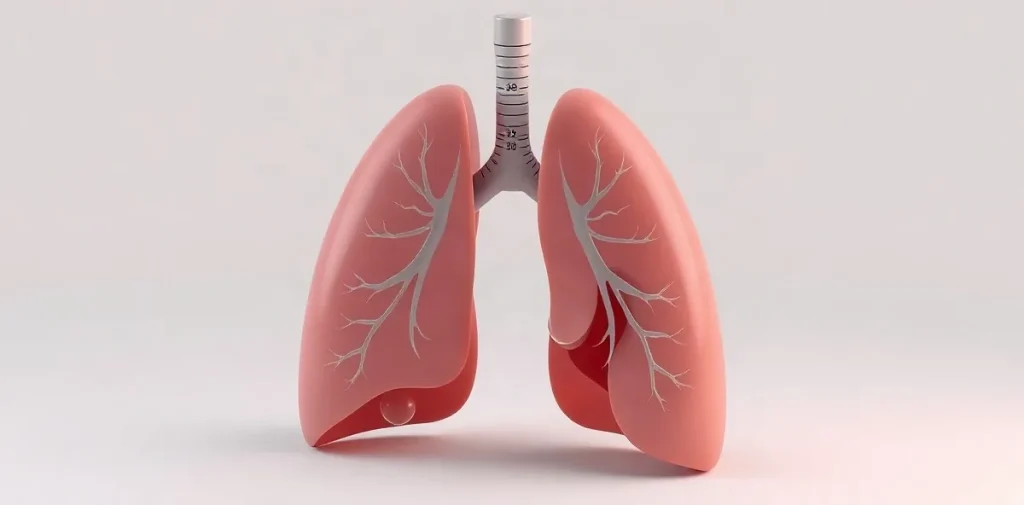
Pulmonary barotrauma is lung injury caused by pressure differences during diving. When expanding gas escapes from the lungs into the mediastinum—the space between the lungs—it can cause pneumomediastinum. Understanding how this can occur, even on shallow dives, matters for recognising symptoms, assessing fitness to dive and preventing a potentially serious event.
How can a shallow dive injure the lungs?
As a diver descends, the pressure around the body rises and gas spaces compress. During ascent, the surrounding pressure falls and gas expands. The lungs normally accommodate these changes as breathing and buoyancy shift, but trapped gas or impaired exhalation can create damaging pressure differences within lung tissue.
Depth alone does not determine risk. A diver can experience substantial pressure change close to the surface, where a small change in depth represents a comparatively large change in ambient pressure. The relevant concern is whether gas can move freely through the airways as pressure changes—not simply how deep the dive was.
What is pneumomediastinum?
Pneumomediastinum means that air has entered the mediastinum, the central compartment of the chest between the lungs. In pulmonary barotrauma, gas can escape through injured lung tissue and track along structures towards this space. It is one possible form of extra-alveolar air leakage; other patterns include air around a lung or gas entering the circulation.
Symptoms can include chest discomfort, breathlessness, cough, difficulty swallowing or a change in voice. These features are not unique to pneumomediastinum, and symptoms after a dive can have several causes. A suspected pressure-related lung injury needs prompt medical assessment, particularly when breathing is difficult or symptoms are worsening.
Why does recurrence change the clinical question?
A repeated episode raises questions beyond what happened during one ascent. Clinicians may consider the dive profile and breathing history alongside respiratory symptoms, examination findings and imaging. They may also assess whether an underlying lung condition, airway obstruction or another factor could have contributed, even when a diver has previously been regarded as healthy.
That assessment is relevant to future diving, not only to the immediate episode. Pulmonary barotrauma can overlap with other serious diving injuries, and the distinction affects treatment and decisions about returning to the water. A diving-medicine physician can interpret the clinical picture and advise on further evaluation and fitness to dive.
What do studies of these cases examine?
Clinical case studies help describe how a pressure-related injury presents, how it is investigated and what alternative explanations clinicians consider. They can make uncommon presentations visible and identify questions that larger studies or clinical practice should address. A single case, however, cannot establish how often an event occurs or determine risk for all divers.
In this area, the key considerations include:
- Pressure change: the relationship between depth, ascent and gas expansion.
- Gas movement: whether air remains within the lungs or escapes into surrounding tissues.
- Clinical assessment: symptoms, examination and imaging, interpreted in context.
- Future exposure: whether the cause is understood well enough to consider diving again.
These questions connect diving medicine with respiratory medicine and the broader study of pressure effects on the body. For divers, the practical value is a clearer account of how an injury can arise and why an apparently modest dive does not rule it out.
What should a diver do after concerning symptoms?
Chest pain, unexplained breathlessness or other new chest symptoms after diving warrant medical attention. Do not assume that a shallow profile makes pulmonary barotrauma impossible, or that a previous episode has resolved the question of future risk. A clinician familiar with diving medicine should assess suspected dive-related lung injury before decisions about further dives.
Emergency symptoms require urgent care. Tell the treating team that symptoms followed scuba diving and describe the dive and the timing of symptom onset; those details help frame the assessment.
Frequently asked questions
Can pulmonary barotrauma happen on a shallow dive?
Is pneumomediastinum the same as a collapsed lung?
When can someone return to diving?
An original research-library explainer written by the Rubicon editors. It is not a summary of a specific publication.
Related reading on Rubicon
- Why Divers Get Cold Faster Underwater
- Scuba Diving Equipment: Essential Gear for Every Diver
- Effects of Cold Water Immersion on Diver Metabolism
- How Hydrodynamics Boost Diver Efficiency and Safety
- Recurrent Pulmonary Barotrauma in a Diver: Research Summary
- Pulmonary Function in Working Divers Using Nitrox
- More on Dive Medicine
- Browse the Research Library