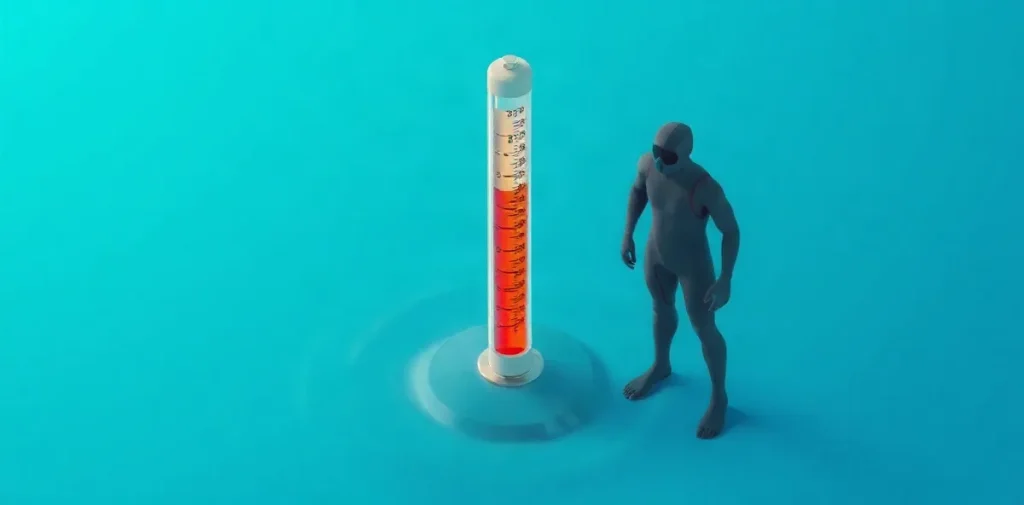
Divers get cold faster underwater because water carries heat away from the body much more efficiently than air. Even when the water feels only cool, a diver can lose heat steadily as it circulates over exposed skin and through a wetsuit, while exercise and breathing also affect how much warmth the body can retain.
That heat loss can be easy to miss at first: a diver may feel comfortable, then become chilled as the dive continues. Understanding why divers get cold faster underwater helps explain why water temperature, exposure time, protection and individual differences all matter to comfort and safety.
| Factor | What changes | Practical consideration |
|---|---|---|
| Water temperature | The temperature gradient driving heat transfer | Plan protection for the actual water conditions |
| Exposure time | How long heat loss continues | Set an exit plan; do not rely on comfort at entry |
| Swimming and current | Water movement over the body and suit | Allow for workload and possible suit flushing |
| Wetsuit fit and condition | How well the warmed water layer is retained | Check for gaps, loose seals and damage |
| Drysuit | Keeps the body out of direct water contact | Still requires suitable fit and thermal protection |
- roughly 25 times Water’s thermal conductivity compared with air
- 1 Medium directly surrounding an immersed diver: water
- 0 Guarantee that any wetsuit prevents hypothermia
Why does water cool the body faster than air?
Water cools a diver faster than air because it transfers heat away from the body more effectively: its thermal conductivity is roughly 25 times that of air. That figure compares the materials’ properties; it does not predict how quickly any particular diver will cool.
Water’s greater heat capacity means it can absorb substantial heat from skin and clothing. Two processes move that heat: conduction transfers it through direct contact, while convection carries warmed water away as it flows over the body, bringing cooler water into contact with the diver.
What determines a dive’s thermal conditions?
Air temperature alone cannot describe how cold a dive will feel. Water temperature, exposure and thermal protection all matter: a diver in a dry suit and a diver in a thin wetsuit can lose heat differently in the same water, and moving water can continually replace the warmed layer next to the body.
How do immersion and exertion increase heat loss?
Fit and flushing
Immersion and exertion increase heat loss because water carries heat away from a large area of the body, while movement can replace warmed water inside a wetsuit with colder water. A wetsuit is not dry insulation: it slows heat transfer by holding a thin layer of water warmed by the diver, but that layer works only while it stays in place. Water entering through the neck, cuffs or poorly fitting panels can flush the warmed layer away and bring colder water against the suit.
Fit determines how well a wetsuit limits that exchange. Openings and loose areas allow more water to move through the suit; a close fit helps retain the warmed layer. The amount of flushing also depends on the dive conditions, so a suit that feels secure while standing still may behave differently once the diver is moving.
Workload in the water
Swimming increases water movement across the outside of a wetsuit, which can raise convective heat loss; the effect varies with fit, pace and conditions. Exertion also produces metabolic heat, so swimming has two opposing effects: it warms the diver through muscular work while potentially increasing heat transfer to the surrounding water. More effort may also drive water through a loose suit, reducing the benefit of its trapped warmed layer.
- Close-fitting suit: better retains the warmed water layer.
- Loose suit or open cuffs: more opportunity for colder water to flush through.
- Faster swimming: greater water movement over the suit, with the outcome shaped by fit and conditions.
How do water temperature and exposure time change the risk?
Water temperature, immersion time and thermal protection work together to determine cooling; none alone predicts an individual diver’s cooling rate. Colder water increases the temperature difference between the body and its surroundings, while a wetsuit’s coverage and fit affect how much heat it retains. The same temperature can therefore feel different across dives and divers.
A long, low-effort dive can still leave a diver cold because heat continues to leave the body throughout immersion, even when exertion is modest. Repeated dives add exposure in the water and may prolong cooling between dives, so feeling comfortable on the first dive does not guarantee comfort on the next. Consider the full day’s immersion, not just the length of one dive.
Plan for the conditions, not a universal cutoff
Choose thermal protection for the actual water conditions and the dive plan, checking both the suit’s coverage and its fit; gaps or poor fit can undermine protection. There is no single temperature or duration cutoff that reliably defines a safe or comfortable exposure for every diver. Reassess protection when conditions, time immersed or the number of dives changes.
What signs of cooling should a diver take seriously?
Take feeling cold, persistent shivering and worsening dexterity seriously: they can signal that a diver is becoming too cold and should not be ignored underwater. Cold hands can make it harder to operate equipment, so declining hand control is also a practical safety concern.
Shivering that continues or grows worse is a reason to end the dive safely, not to push on until the planned duration is reached. Once out of the water, help the diver get warm and assess how they are doing rather than treating the end of the dive as proof that the problem has passed.
Signs that need prompt help
Confusion, unusual drowsiness or difficulty coordinating actions are concerning signs: seek prompt assistance and medical assessment. Do not use one symptom—or an improvised temperature reading—to rule out hypothermia; consider the person’s overall condition and arrange appropriate care.
What reduces heat loss—and when can protection fail?
Choose thermal protection for the expected water conditions and exposure: a well-fitting wetsuit limits water flushing, while a drysuit keeps the body out of direct water contact. Add a hood, gloves and boots because a torso suit alone leaves those areas without dedicated protection.
- Wetsuit: Fit and condition determine how well it insulates; a loose fit can let water circulate, while damaged seams and gaps can compromise protection.
- Drysuit: It separates the body from direct water contact, making it a different option from a wetsuit when choosing protection for the planned conditions.
- Hood, gloves and boots: These protect areas not covered by a torso suit alone.
Protection has limits.
A wetsuit’s insulation can be undermined by worn or damaged seams, gaps, or loose seals that allow water to flush through. Check the suit’s condition and fit, rather than assuming its type alone guarantees warmth.
More insulation is not automatically better: an excessively warm suit can cause discomfort and add workload, while a tight or restrictive fit can impair movement. Choose a fit that allows you to move freely and protection suited to the expected exposure, rather than simply adding insulation.
How should a dive plan account for cold?
Plan for cold by checking the water temperature, expected time immersed, planned workload, and the fit and condition of the suit before entry; agree with your buddy on a conservative exit plan. These checks help match thermal protection and dive duration to the conditions rather than relying on a generic time limit.
During the dive, end it if cold starts to impair comfort, judgement, or equipment handling, and follow the agreed exit plan with your buddy. The key threshold is functional: difficulty making decisions or operating equipment is a reason to leave the water, not to wait for a particular temperature or elapsed time.
After surfacing
After surfacing, stop wet exposure, remove wet gear when practical, and warm the diver gradually while monitoring how they feel and behave. Confusion, unusual drowsiness, or poor coordination calls for assistance and medical evaluation; adding clothing alone is not an adequate response to those signs.
Frequently asked questions
Why can I feel colder underwater at the same temperature?
Does swimming always keep a diver warmer?
Is a wetsuit enough to prevent hypothermia?
When should a diver end a dive because of cold?
Key takeaways
- Water’s thermal conductivity is roughly 25 times that of air.
- Immersion, water movement and exposure time all affect heat loss.
- Wetsuit fit matters because flushing replaces warmed water with colder water.
- Persistent shivering, confusion and impaired coordination are warning signs—not reasons to extend a dive.
