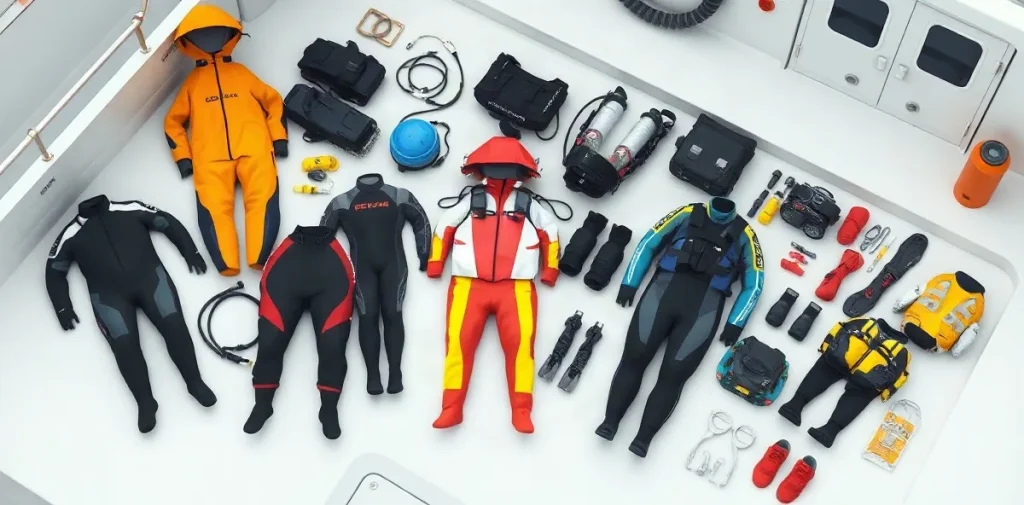
Choosing the right exposure suit requires balancing sufficient thermal protection to prevent hypothermia with enough flexibility to allow comfortable and effective movement underwater. The ideal suit depends on water temperature, dive duration, activity level, and personal tolerance to cold, ensuring safety without sacrificing mobility.
For divers, selecting an exposure suit is more than just picking a piece of gear—it’s a critical decision that impacts comfort, safety, and performance. Exposure suits range from thin wetsuits to thick drysuits, each offering different levels of insulation and freedom of movement. Understanding how to balance these factors is essential for maximizing dive enjoyment and minimizing risks associated with cold stress or restricted mobility.
In this article, we explore the key considerations in choosing the right exposure suit, focusing on how thermal protection and mobility interact. By examining the science behind insulation, material properties, and ergonomic design, divers can make informed choices tailored to their specific diving conditions and personal needs.
| Suit Type | Thermal Protection Range | Typical Price Range (USD) | Mobility |
|---|---|---|---|
| Wetsuit | Above 15°C | $150 – $300 | High flexibility |
| Hybrid Suit | 10°C to 15°C | $600 – $900 | Moderate flexibility |
| Drysuit | Below 10°C | $1200+ | Lower flexibility due to bulk |
- 15°C Minimum comfortable water temperature for most wetsuits
- $1200 USD Starting price for premium drysuits like the Shearwater Apex
- 10°C Threshold below which drysuit use is recommended
- $100-$150 USD Typical annual maintenance cost for drysuits
How do water temperature thresholds determine the choice of exposure suit?
Temperature Ranges
Water temperature thresholds play a critical role in selecting the appropriate exposure suit to ensure both thermal protection and mobility. Wetsuits are generally effective for water temperatures above 15°C, with 5mm neoprene suits recommended specifically for conditions ranging from 15°C to 20°C, according to PADI standards in 2026. When temperatures drop below 10°C, drysuits become essential due to their insulating air layer, which significantly reduces the risk of hypothermia, as emphasized by the Divers Alert Network in 2026. Between these ranges, hybrid suits offer a balance of insulation and flexibility.
Suit Suitability
Choosing the right suit depends on matching the water temperature to the suit’s insulation properties:
- Above 15°C: Wetsuits such as the 5mm neoprene models recommended by PADI provide adequate warmth and mobility for most recreational dives.
- 10°C to 15°C: Hybrid suits like the DUI Hybrid 2 are designed to provide moderate insulation while maintaining greater freedom of movement, ideal for transitional temperature ranges.
- Below 10°C: Drysuits are necessary to prevent hypothermia, offering superior thermal protection through an air-insulated barrier, as confirmed by Diver Alert Network guidelines.
This temperature-based approach allows divers to optimize comfort and safety while minimizing thermal stress and movement restrictions.
What are the mobility differences between wetsuits, drysuits, and hybrid suits?
Flexibility and Bulk
Wetsuits typically offer the greatest mobility due to their thin neoprene construction, with models like the O’Neill Reactor 3mm priced around $150 USD providing excellent flexibility for dynamic diving movements. In contrast, drysuits such as the Shearwater Apex Drysuit, costing approximately $1200 USD, incorporate thicker materials and sealed openings that increase bulk and can limit range of motion, especially around the shoulders and wrists. Hybrid suits attempt to bridge this gap by using stretch panels combined with reduced neoprene thickness, enhancing flexibility while preserving insulation. These suits usually fall in the $600 to $900 USD price range, balancing mobility and thermal protection more effectively than traditional drysuits.
Cost vs. Mobility Trade-off
When selecting an exposure suit, divers must weigh cost against mobility. Wetsuits offer superior flexibility at a lower price point but provide less insulation in colder waters. Drysuits deliver excellent thermal protection but at a higher cost and with some sacrifice in ease of movement. Hybrid suits provide a middle ground by integrating stretch zones to reduce bulk and improve comfort for longer dives in variable conditions. Key considerations include:
- O’Neill Reactor 3mm wetsuit: ~$150 USD, thin neoprene, high flexibility, lower insulation.
- Shearwater Apex Drysuit: ~$1200 USD, sealed design, superior thermal protection, reduced mobility.
- Hybrid suits: $600–$900 USD, stretch panels, moderate insulation, improved mobility over drysuits.
How do activity levels influence exposure suit selection?
Activity levels directly determine the optimal exposure suit choice by balancing mobility needs against thermal protection requirements. High-intensity diving demands suits that maximize flexibility and reduced bulk, while low-intensity diving prioritizes insulation to maintain core temperature during prolonged stillness underwater.
High-Intensity Diving
Active diving styles such as cave diving and technical diving benefit from wetsuits or hybrid suits designed for enhanced range of motion. For example, cave divers frequently select 3mm neoprene wetsuits, which provide sufficient thermal protection while allowing unrestricted movement crucial for navigating tight passages. The International Association of Cave Divers (2026) notes that these wetsuits help maintain flexibility without the added bulk of drysuits. Hybrid suits, combining neoprene with breathable membranes, cater to moderate activity levels and typically cost between $400 and $700, striking a balance between insulation and ease of movement. Suits like the Waterproof D7 Hybrid are popular choices among technical divers for their 4mm neoprene sections paired with lightweight drysuit components.
Low-Intensity Diving
For cold water or low-activity dives—such as underwater photography or extended decompression stops—drysuits are preferred for their superior thermal protection over long periods of minimal movement. Drysuits maintain insulation by keeping divers dry and are essential when water temperatures fall below 10°C (50°F). Models like the DUI TLS 350, with Gore-Tex fabric, can cost upwards of $2,000 but offer reliable warmth and comfort during hours-long dives. This thermal advantage outweighs the reduced flexibility, which is less critical during static dive phases.
- 3mm neoprene wetsuits favored for cave diving flexibility (International Association of Cave Divers, 2026)
- Hybrid suits priced $400–$700 for moderate activity thermal protection
- Drysuits essential below 10°C water temperatures, costing $2,000+ for advanced models like DUI TLS 350
What are the trade-offs and limitations when choosing between wetsuits, drysuits, and hybrids?
Thermal Protection vs. Maintenance
Wetsuits, drysuits, and hybrid suits each present distinct trade-offs between thermal insulation and upkeep demands. Wetsuits provide effective insulation only above approximately 15°C water temperature, with risks of hypothermia rising sharply during prolonged or deep dives below this threshold, as noted by Divers Alert Network in 2026. Drysuits offer superior thermal protection for colder environments but require regular maintenance, including valve inspections and seal replacements, with typical annual servicing costs ranging from $100 to $150 USD. Hybrid suits aim to balance these factors but often fall short of drysuit-level insulation in waters colder than 10°C, limiting their use in very cold conditions.
Cost and Suit Durability
When balancing cost and durability, wetsuits tend to have lower upfront prices but offer less longevity and protection in cold water, while drysuits, such as those from manufacturers like DUI or Santi, involve higher initial investment and ongoing maintenance expenses. Hybrid suits, which may cost more than basic wetsuits, do not always deliver corresponding improvements in insulation, especially in very cold water below 10°C. Divers should consider these criteria:
- Minimum effective insulation temperature: wetsuits ~15°C, drysuits suitable below 10°C
- Annual maintenance cost: drysuits approximately $100-$150 USD
- Upfront cost comparison: hybrid suits generally higher than wetsuits but lower than some drysuits
- Suit longevity and replacement frequency, influenced by material and care
How do price points compare among wetsuits, drysuits, and hybrid suits?
Budget Options
Wetsuits generally offer the most affordable entry point, with models like the Cressi Start 5mm priced between $150 and $200 USD, making them accessible for beginners or recreational divers. These suits provide basic thermal protection but have limitations in colder water. Hybrid suits represent a mid-tier investment, with products such as the DUI Hybrid 2 ranging from $600 to $900 USD depending on added features like enhanced seals or reinforced materials.
Premium Models
Drysuits occupy the high end of the price spectrum, starting around $1,200 USD for models like the Waterproof D7 Pro. Custom drysuits with tailored fittings or specialized materials can exceed $2,000 USD, reflecting their advanced thermal protection and durability for extended or technical dives. These suits offer superior insulation and mobility but come at a significantly higher cost than wetsuits or hybrids.
- Entry-level wetsuits: approximately $150–$200 USD (e.g., Cressi Start 5mm)
- Mid-range hybrid suits: $600–$900 USD (e.g., DUI Hybrid 2)
- Premium drysuits: starting at $1,200 USD, custom options over $2,000 USD (e.g., Waterproof D7 Pro)
Frequently asked questions
Can I use a wetsuit for diving in 10°C water?
How often should drysuits be serviced?
Do hybrid suits compromise on thermal protection?
Are wetsuits more affordable than drysuits?
Key takeaways
- Wetsuits are best above 15°C for flexibility and affordability.
- Drysuits provide superior thermal protection below 10°C but at higher cost and maintenance.
- Hybrid suits fill the temperature gap between wetsuits and drysuits, balancing mobility and insulation.
- Activity level dictates suit choice: high mobility suits for active diving, drysuits for low-activity cold dives.
- Budget considerations include initial price and ongoing maintenance costs.