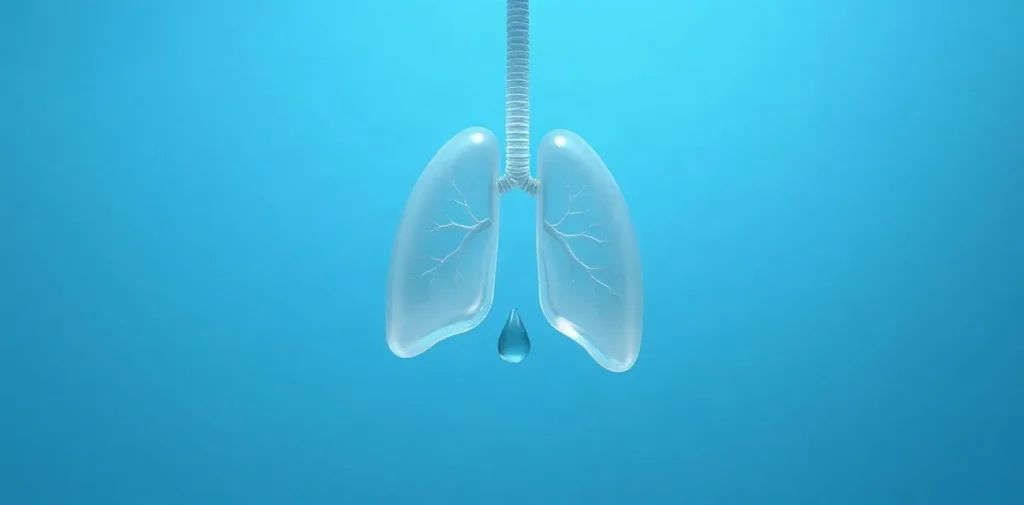
Lipoid pneumonitis is inflammation of lung tissue associated with lipid material entering the airways. In a diver, the subject matters because an injured lung may impair gas exchange and complicate decisions about fitness to dive, treatment and return to underwater work.
How can lipid material reach the lungs?
Lipids are fats and oils. When oily substances are inhaled or aspirated into the lower respiratory tract, they can provoke an inflammatory response; the lungs must deal with material that is not normally present in the air spaces.
Aspiration means material passes into the airway rather than the oesophagus. It can occur when swallowing or airway-protection mechanisms fail, although the route and circumstances vary. The term lipoid pneumonitis describes the resulting lung inflammation, not a single exposure scenario or a uniform clinical course.
Why does this matter for a working diver?
Diving places demands on breathing and gas exchange. Immersion, exertion, breathing equipment and changes in ambient pressure all make respiratory function relevant; lung inflammation can therefore matter beyond the symptoms experienced at the surface.
For commercial divers, respiratory illness can affect safe work underwater and the assessment of fitness to dive. A clinician must consider the person’s symptoms, lung function and recovery rather than assume that a diagnosis alone settles whether or when diving is appropriate.
What do clinicians and researchers examine?
Assessment starts with the history: possible exposure or aspiration, the timing of symptoms, and whether breathing problems began during or after an event. Examination and imaging can help assess lung involvement, while pulmonary-function testing may help characterise the effect on breathing. The choice of tests depends on the clinical picture.
Studies of this kind sit at the intersection of occupational medicine, respiratory medicine and diving medicine. They examine how a particular lung disorder presents in a diving context and what questions clinicians need to resolve about diagnosis, exposure, respiratory function and safe return to work.
- Exposure: what material may have entered the airway and by what route.
- Lung injury: the pattern and extent of inflammation.
- Function: whether breathing and gas exchange are affected.
- Diving relevance: how symptoms and recovery bear on underwater work.
How is this different from other diving lung problems?
Diving medicine also addresses pressure-related lung injury, decompression illness and breathing-gas problems. These have different mechanisms. Lipoid pneumonitis concerns inflammation associated with lipid material in the lungs; it should not be treated as another name for barotrauma or decompression sickness.
The distinction matters because symptoms such as cough or breathlessness are not specific to one cause. Clinicians interpret them in context, including exposure history and the circumstances of a dive. A careful diagnosis helps avoid confusing an inflammatory lung condition with a pressure-related injury.
What should divers and clinicians keep in view?
New or persistent respiratory symptoms after a suspected aspiration or exposure warrant medical assessment, especially when diving is part of the person’s work. A diving-medicine physician can consider both the lung condition and the added demands of immersion and underwater breathing.
Fitness to dive is a clinical decision, not a self-test. The relevant question is whether the lungs have recovered sufficiently for the planned exposure and workload; that depends on the individual case and should be assessed by a qualified diving-medicine physician.
Frequently asked questions
What does lipoid pneumonitis mean?
Is it the same as decompression sickness?
Can someone dive while recovering from it?
An original research-library explainer written by the Rubicon editors. It is not a summary of a specific publication.
Related reading on Rubicon
- The Diving Reflex: What Happens Underwater
- Scuba Diving Regulators: Balanced vs. Unbalanced
- Scuba Diving Buddy Checks: Catch Problems Early
- Scuba Diving: Why Immersion Can Dehydrate You
- Thesis Research in Diving and Hyperbaric Medicine
- Oxygen in Diving and Hyperbaric Medicine
- More on Dive Medicine
- Browse the Research Library