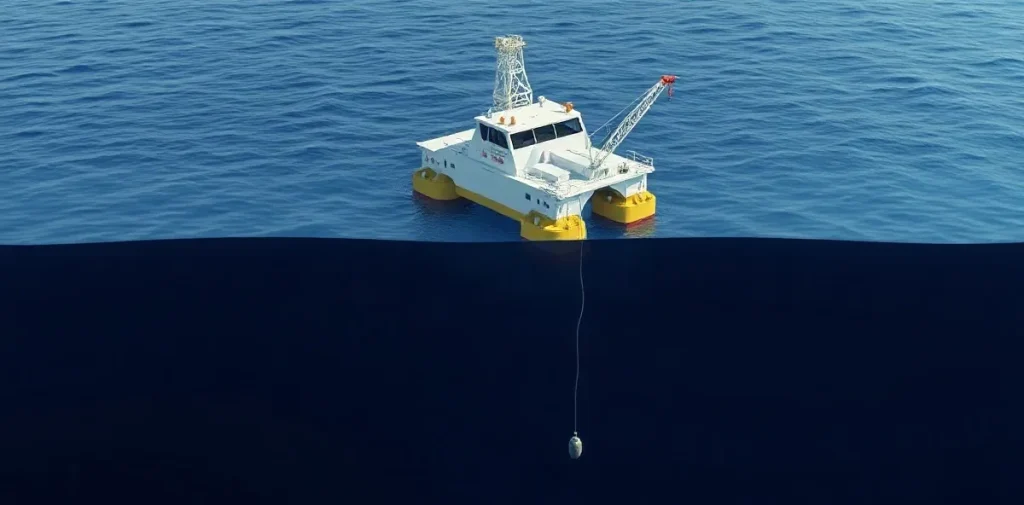
Oil platforms are offshore structures where underwater inspection, repair and construction can require divers to work in demanding conditions. Diving medicine matters because pressure exposure, breathing gas, cold, exertion and restricted access to medical care can interact, shaping both occupational risk and emergency response.
Why does platform work involve diving medicine?
Platform operations depend on submerged equipment, structural components and infrastructure that may need inspection or maintenance. Divers may work below the surface while the platform remains an active industrial site, so medical planning must account for both the underwater task and the working environment above it.
The central physiological issue is pressure. As a diver descends, ambient pressure rises; the body’s air spaces and the gases breathed are affected. A dive profile, breathing gas and time spent at depth therefore matter to decompression planning and to the assessment of pressure-related illness.
Offshore settings can also complicate access to help. A medical problem underwater may require a controlled return to the surface, while evacuation from a remote platform can take time. These constraints make prevention, communication and a rehearsed response part of dive medicine rather than separate logistical concerns.
Which physiological stresses need attention?
Decompression sickness is a concern when inert gas taken up during a dive forms bubbles as pressure falls. The risk depends on the exposure and ascent, and symptoms can affect different parts of the body. Suspected decompression illness requires prompt assessment by professionals familiar with diving medicine.
Pressure changes can also injure air-containing spaces, including the ears, sinuses and lungs, particularly when pressure is not equalised or gas expansion is not managed during ascent. Breathing gas introduces additional considerations: its composition and the depth at which it is used affect gas density and physiological effects.
Physical work adds strain. Exertion, cold, fatigue and stress may affect a diver’s ability to complete a task safely, while equipment or visibility can restrict movement and communication. These factors are assessed alongside the dive itself, not in isolation.
How do dive plans and work systems shape risk?
Planning starts with the task: its depth, duration, required equipment, expected workload and the conditions at the worksite. The plan must also address how divers communicate, how a diver can be recovered, and what support is available if a problem develops.
- Pressure exposure: depth, time and the planned ascent determine the decompression demands.
- Breathing gas and equipment: the system must suit the depth, task and operating conditions.
- Workload and environment: exertion, cold, visibility and access can affect performance and rescue.
- Medical response: teams need procedures for recognising illness, providing initial care and arranging onward support.
Industrial hazards also shape the working environment. A dive plan needs coordination with platform operations so that underwater work and surface activity do not create avoidable conflicts. The details depend on the task and the platform’s procedures; operational controls should be confirmed before diving begins.
What role does hyperbaric care play?
Hyperbaric medicine concerns the effects of pressure and, in clinical settings, the use of treatment in a pressurised chamber. For diving-related illness, recompression may be considered by qualified clinicians as part of care. It is not a substitute for prompt evaluation, first aid and safe transfer.
Offshore response planning has to connect the dive team with medical assessment and the means to reach appropriate care. The distance from shore, transport options and availability of hyperbaric treatment can affect how that plan is organised. A diving-medicine physician should guide assessment and treatment decisions when a diver may have a pressure-related injury.
Chamber operations and underwater work are distinct settings, but both require careful control of pressure, gas and patient or diver status. That shared physiology is one reason offshore diving sits within the wider field of diving and hyperbaric medicine.
What should readers look for in offshore diving research?
Research on platform-related diving can address occupational exposure, dive procedures, equipment, medical preparedness or the interaction between underwater work and industrial operations. Its significance depends on the question being studied: a clinical focus differs from an engineering or safety focus, even when all concern the same worksite.
When assessing a publication, identify the activity and setting it examines, the type of diving involved and the medical or technical issue under discussion. Those distinctions help readers connect offshore work to broader questions in decompression, respiratory physiology, emergency care and occupational safety.
Frequently asked questions
Is every underwater task at an oil platform a commercial dive?
Why does decompression planning matter offshore?
What should happen if a diver becomes unwell after a dive?
An original research-library explainer written by the Rubicon editors. It is not a summary of a specific publication.